

India is a land where mythology, spirituality, and living traditions blend seamlessly with
everyday life. Among the countless sacred places scattered across the country,
Triyuginarayan Temple stands out as a timeless symbol of divine love and eternal
marriage. Nestled in the serene Garhwal region of Uttarakhand, this ancient temple is
revered as the sacred site where Lord Shiva and Goddess Parvati were married. Over
centuries, the temple has evolved from a powerful mythological landmark into one of the
most spiritually significant destination wedding locations in India.
The story of Triyuginarayan Temple is not just about a divine wedding but about devotion,
commitment, and the sacred bond of marriage itself. Today, couples from across the world
visit this holy site to seek blessings or even solemnize their own marriages, inspired by the
celestial union of Shiva and Parvati.
This article explores why Triyuginarayan Temple is considered the wedding place of
Lord Shiva and Parvati, its mythological importance, spiritual symbolism, architectural
beauty, and how it has become a unique choice among the best destination wedding
places in India.
According to ancient Hindu scriptures and local legends, Triyuginarayan Temple is the exact
location where the divine marriage of Lord Shiva and Goddess Parvati took place. The
temple’s name itself is deeply symbolic. The word Triyugi means three yugas—Satya Yuga,
Treta Yuga, and Dwapar Yuga—indicating that the sanctity of this place has remained
unchanged across three cosmic eras.
Legend says that Goddess Parvati performed intense penance in the surrounding mountains
to win the love and acceptance of Lord Shiva. Her devotion impressed Shiva, and the gods
decided to conduct their wedding at this auspicious site. Lord Vishnu is believed to have
acted as Parvati’s brother, arranging the marriage rituals and gifting her divine ornaments.
The sacred fire lit during the wedding, known as the Akhand Dhuni, is believed to have
been burning continuously since that time. Even today, this eternal flame burns in front of the
temple, making it one of the most spiritually powerful symbols of eternal marriage in Hindu
tradition.
One of the most compelling reasons Triyuginarayan Temple is associated with divine
marriage is the eternal sacred fire. In Hindu weddings, the fire (Agni) is considered the
primary witness to the marriage vows. Couples take seven rounds around the fire, promising
lifelong commitment.
At Triyuginarayan Temple, this sacred fire is believed to be the very same fire that witnessed
the wedding of Shiva and Parvati. Unlike ritual fires that are lit temporarily, this flame has
been preserved continuously for thousands of years. Devotees believe that marriages
conducted in the presence of this fire are blessed with stability, harmony, and longevity.
This powerful symbolism has made Triyuginarayan Temple wedding ceremonies deeply
meaningful, especially for couples who value tradition and spirituality over grandeur.
Another important aspect that elevates the significance of this temple is the presence of
Lord Vishnu as the divine host. It is believed that Vishnu took responsibility for arranging
Parvati’s wedding, symbolizing balance, order, and cosmic harmony.
All major deities, sages, celestial beings, and even natural elements are said to have
attended this divine wedding. The mountains, rivers, forests, and skies became silent
witnesses to this sacred union. This belief reinforces the idea that Triyuginarayan Temple is
not just a historical site but a living spiritual space.
The architecture of Triyuginarayan Temple is simple yet deeply symbolic. Built in traditional
North Indian temple style, the structure reflects humility, austerity, and devotion—qualities
closely associated with Lord Shiva.
The temple houses a black stone idol of Lord Vishnu, further reinforcing his role in the
wedding. In front of the temple lies the sacred fire pit, along with three kunds or water tanks
believed to be associated with the gods. These water bodies are said to have been used for
ceremonial purposes during the divine wedding.
Unlike elaborate temples filled with ornate carvings, Triyuginarayan’s simplicity allows
devotees to focus on spirituality rather than visual grandeur.
For centuries, married couples have visited Triyuginarayan Temple to seek blessings for
marital harmony. The belief is that Shiva and Parvati represent the ideal balance between
ascetic discipline and household life.
Shiva symbolizes detachment and spiritual depth, while Parvati embodies devotion, love,
and nurturing energy. Their union represents the perfect marital balance, making this temple
especially sacred for couples.
Performing wedding rituals or vow renewals here is believed to strengthen mutual
understanding, patience, and lifelong companionship.
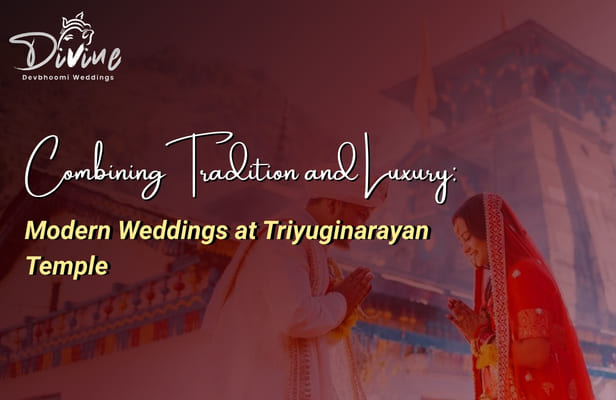
In recent years, Triyuginarayan Temple has gained recognition as a unique choice for
destination wedding India seekers. Unlike luxury palace weddings or beach ceremonies,
this location offers something rare—spiritual authenticity.
Couples who choose a destination wedding in India often look for meaning beyond
aesthetics. A Triyuginarayan Temple wedding offers:
● Deep spiritual significance
● Traditional Vedic rituals
● A serene Himalayan setting
● Minimalistic and sacred ceremonies
● Blessings associated with divine marriage
This makes it stand out among the best wedding destinations in India, especially for
couples who want a sacred beginning to their married life.
When discussing the best destination wedding places in India, Triyuginarayan Temple
holds a special position due to its unmatched spiritual legacy. While places like palaces,
beaches, and hill stations offer luxury and beauty, this temple offers something
eternal—divine blessings.
Reasons it stands apart include:
● Mythological authenticity linked to Lord Shiva and Parvati
● Sacred fire representing eternal commitment
● Natural Himalayan surroundings offering peace and purity
● Vedic wedding traditions rooted in ancient scriptures
● A meaningful alternative to commercial wedding venues
For couples seeking a wedding rooted in faith, culture, and timeless values, this temple
remains unparalleled.
Indian weddings are not merely social events; they are sacred samskaras or life rituals.
Triyuginarayan Temple reinforces this belief by reminding couples of the spiritual foundation
of marriage.
Getting married where the gods themselves were united creates a profound emotional
connection. Many couples describe their experience here as transformative rather than
celebratory, marking a spiritual milestone rather than just a wedding date.
Another reason Triyuginarayan Temple remains relevant is its commitment to preserving
ancient Vedic traditions. The wedding rituals performed here strictly follow scriptural
guidelines, without modern alterations.
This purity of practice attracts couples who want a traditional ceremony free from
extravagance, focused entirely on sacred vows and divine witness.
Even in modern times, Triyuginarayan Temple continues to inspire devotion and reverence.
Pilgrims, spiritual seekers, and newly married couples visit throughout the year.
Its growing popularity as a triyuginarayan temple wedding destination shows how ancient
traditions can harmoniously coexist with modern aspirations.
Triyuginarayan Temple is not just a place of worship; it is a timeless symbol of eternal love,
devotion, and sacred commitment. As the legendary wedding site of Lord Shiva and
Goddess Parvati, it holds unmatched importance in Hindu tradition.
In an era where weddings often focus on grandeur, this temple reminds us of the spiritual
essence of marriage. Its growing recognition as a destination wedding India choice reflects
a deeper cultural shift toward meaningful unions rooted in faith.
Whether viewed as a pilgrimage site, a mythological landmark, or one of the best
destination wedding places in India, Triyuginarayan Temple continues to inspire
generations with its divine legacy and timeless message of eternal togetherness.
1. Why is Triyuginarayan Temple believed to be the wedding site of
Lord Shiva and Parvati?
Triyuginarayan Temple is believed to be the wedding site of Lord Shiva and Goddess Parvati
based on ancient Hindu scriptures and local legends. The presence of the eternal sacred
fire, believed to have witnessed their marriage, reinforces this belief. The temple’s name
itself signifies its timeless sanctity across three yugas.
2. Can people still get married at Triyuginarayan Temple today?
Yes, traditional Hindu wedding ceremonies are still conducted at Triyuginarayan Temple.
These weddings follow strict Vedic rituals and are performed in the presence of the eternal
sacred fire, making them deeply spiritual and meaningful rather than lavish or commercial.
3. Why is Triyuginarayan Temple considered one of the best
wedding destinations in India?
Triyuginarayan Temple is considered one of the best wedding destinations in India due to its
unparalleled spiritual significance, mythological connection to divine marriage, serene
Himalayan environment, and authentic Vedic rituals. It offers a sacred alternative to
luxury-based destination weddings.










From pre-wedding celebrations to grand wedding days, we provide end-to-end services for all functions.
Copyright © 2024 | All Rights reserved by Divine Dev Bhoomi | Designed & Developed by Edtech Innovate Pvt. Ltd.