

Table of Contents
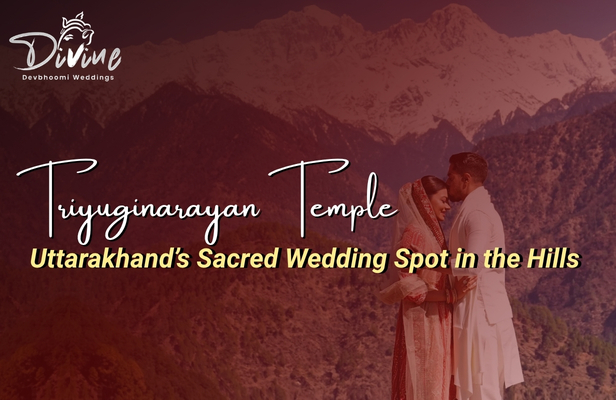
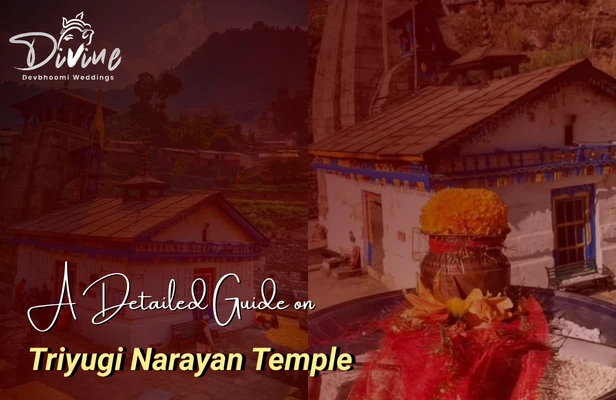
Triyuginarayan Temple stands in a small Himalayan village in the Rudraprayag district of Uttarakhand, at an altitude of roughly 1,980 metres (6,500 ft), near the confluence of the Mandakini and Sone-Ganga rivers.
The name "Triyuginarayan" translates roughly to "Narayan (Vishnu) across three yugas (ages)" — a reference to the belief that the temple's sacred fire has burned continuously since Satya Yuga, the first age in Hindu cosmology.
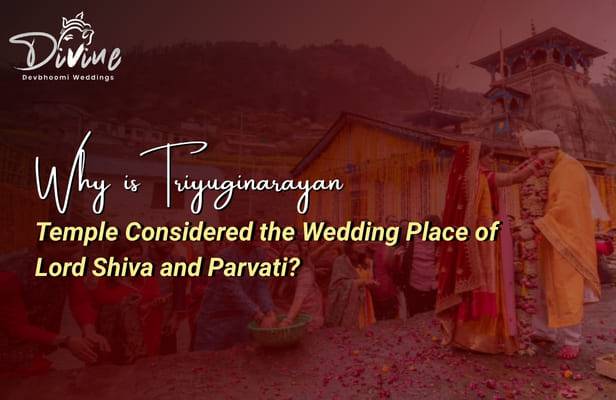
The core legend: According to the Shiv Purana, Goddess Parvati performed intense penance at nearby Gauri Kund to win Lord Shiva's devotion. Their celestial wedding was then held at Triyuginarayan, with Lord Vishnu acting as the divine witness and officiating priest, and Lord Brahma serving as the priest who conducted the rites. A stone slab in the temple courtyard, called the Brahma Shila, is believed to mark the exact spot where the vows were taken.
In front of the temple burns the Akhand Dhuni — an eternal flame said to have been lit at that original wedding and never extinguished since, tended by generations of local priests. Four sacred ponds surround the temple:
This mythology is the single biggest reason the temple has become India's most sought-after "divine wedding" destination.
There's no airport, train station, or major highway anywhere near Triyuginarayan — it's a village accessible only by road, so getting there always happens in stages.
Delhi → Haridwar → Rishikesh → Devprayag → Srinagar (Garhwal) → Rudraprayag → Guptkashi → Sonprayag → Triyuginarayan
Stage 1: Delhi to Haridwar/Rishikesh (~230 km, 5–6 hrs)
Overnight trains, Volvo buses, or private cabs run regularly from Delhi. This is the standard entry point into the Garhwal Himalayas.
Stage 2: Rishikesh to Rudraprayag (~140 km, 5–6 hrs)
Mountain roads begin here — winding but generally in good condition. You'll pass Devprayag, where the Bhagirathi and Alaknanda rivers meet to form the Ganga.
Stage 3: Rudraprayag to Guptkashi (~75 km, 3 hrs)
Slower but scenic stretch, following the Mandakini River valley.
Stage 4: Guptkashi to Sonprayag (~25 km, 1–1.5 hrs)
The final approach into the pilgrim base town. Most travellers overnight in Sonprayag or Guptkashi before continuing.
Stage 5: Sonprayag to Triyuginarayan (~12 km, 45–60 min)
This is the detour stretch. Park at Sonprayag (private vehicles are restricted further during Yatra season), then take:
Stage 6: Final approach on foot
Most vehicles stop a short walk from the temple gate — the last few hundred metres are on foot through the village lanes.
This is the most searched question related to this temple, so here's the fullest possible answer.
| Route Option | Distance | Time Needed | Difficulty |
|---|---|---|---|
| Sonprayag → Triyuginarayan (motorable road) | ~12 km | 45–60 min | Easy (by vehicle) |
| Sonprayag → Triyuginarayan (forest trek) | ~5 km | 2–3 hours | Moderate |
| Sitapur village → Triyuginarayan (alt. trek) | ~7 km | 2–2.5 hours | Moderate |
| Triyuginarayan → Gauri Kund | ~5 km | 1.5–2 hours (trek) | Easy–Moderate |
| Triyuginarayan → Kedarnath (trek) | ~25 km | Full day | Difficult |
Why the 12 km takes almost an hour: The road climbs steadily with tight hairpin bends typical of Garhwal hill roads. Average vehicle speed rarely exceeds 20–25 km/h on this stretch. Rain or fog can slow it further.
Straight-line vs road distance: As the crow flies, Triyuginarayan is only about 5 km from Sonprayag — but the actual drivable road distance, due to the mountain's terrain, works out closer to 12 km. This explains why you'll sometimes see both "5 km" and "12 km" quoted online; they're measuring different things.
Direct voice-search answer: "Sonprayag to Triyuginarayan Temple distance is 12 kilometres by road, taking about 45 to 60 minutes to drive."
| From | Distance | Travel Time |
|---|---|---|
| Delhi | ~460 km | 11–14 hours |
| Dehradun | ~250 km | 8–9 hours |
| Haridwar | ~230 km | 8–9 hours |
| Rishikesh | ~210 km | 8–10 hours |
| Devprayag | ~165 km | 6–7 hours |
| Rudraprayag | ~75 km | 3–4 hours |
| Guptkashi | ~25 km | 1–1.5 hours |
| Sonprayag | ~12 km | 45–60 minutes |
Times assume normal traffic and clear weather. Add 1–2 hours during peak Yatra months (May–June) due to congestion near Sonprayag and Gaurikund.
| Month | Road Status | Notes |
|---|---|---|
| January–March | Often closed/snow-bound | Not recommended for travel |
| April | Reopening, under repair | Roads freshly cleared for Yatra season |
| May–June | Good, busy | Peak season, heavy traffic near Sonprayag |
| July–August | Risk of landslides | Monsoon — avoid unless necessary |
| September–October | Excellent | Best road conditions of the year |
| November | Good, cooling fast | Last comfortable month before snow returns |
| December | Snow begins | Access becomes unreliable |
Always check real-time updates from the Rudraprayag district administration or local Char Dham helpline numbers before setting out, especially during monsoon and early winter.
| Mode | Fare (Approx.) | Best For |
|---|---|---|
| Shared jeep (per person, one-way) | ₹80–₹150 | Solo travellers, budget pilgrims |
| Private taxi (one-way) | ₹1,200–₹2,500 | Families, small groups |
| Private taxi (round trip with wait) | ₹2,000–₹3,500 | Day visits, weddings |
| SUV/Innova for wedding groups | ₹2,500–₹4,000 | Larger wedding parties |
Money-saving tip: Book your Sonprayag–Triyuginarayan taxi the evening before from your hotel or homestay — rates are more negotiable off-season and outside the morning rush.
For travellers who enjoy walking, a forested trail connects Sonprayag to Triyuginarayan in about 5 km, following an old bridle path once used before the motorable road existed. Expect:
An alternate 7 km trek starts from Sitapur village and joins the main road closer to the temple. Both routes are scenic but should be avoided alone after dusk, as they pass through forested stretches with limited mobile network coverage.
Sonprayag functions as the last major vehicle checkpoint before Kedarnath and the Triyuginarayan detour.
| Season | Months | Conditions |
|---|---|---|
| Peak Yatra season | May–June | Pleasant weather, good roads, heavy crowds |
| Monsoon (avoid) | July–August | Landslide risk, road closures possible |
| Post-monsoon (ideal) | September–October | Clear skies, cool weather, fewer crowds — best for weddings and photography |
| Late autumn | November | Cold but clear; last easy-access window |
| Winter (avoid) | December–March | Snow-bound, most facilities shut |
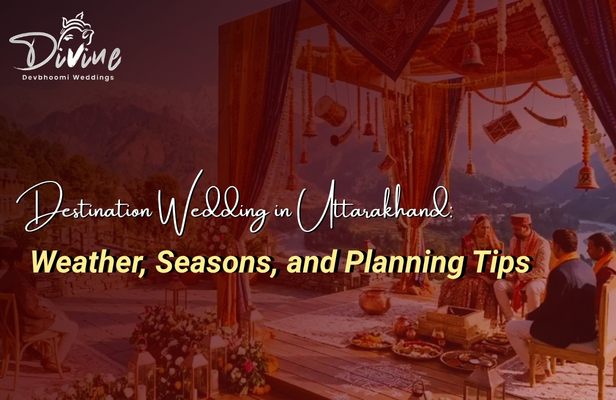
For weddings specifically: October is widely considered the sweet spot — clear Himalayan skies for photos, comfortable daytime temperatures (12–18°C), and thinner crowds than the May–June rush.
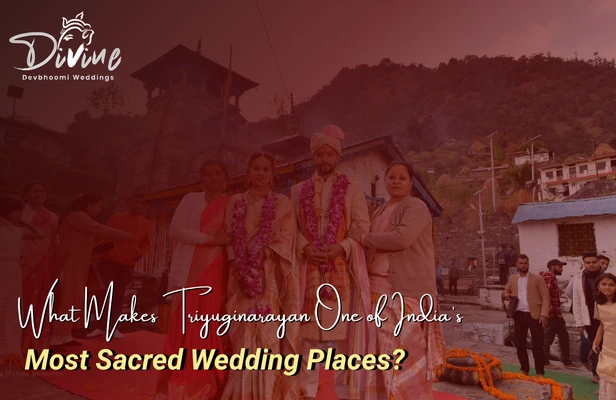
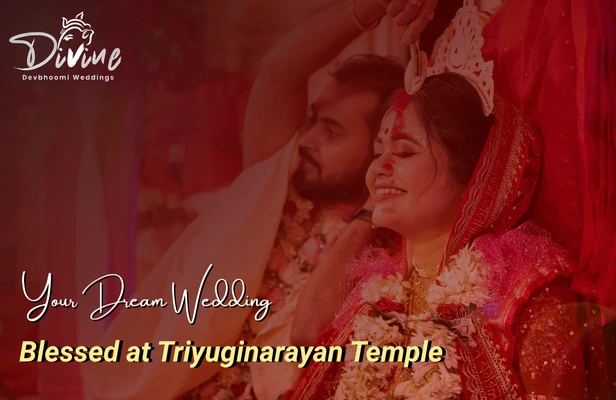
Because Hindu tradition holds that this exact ground witnessed Shiva and Parvati's own marriage, couples believe that solemnising their wedding here — circling the eternal flame during their Saptapadi (seven vows) — brings the same divine, unbreakable bond for seven lifetimes. This belief, combined with the temple's remote, intimate setting, has made it one of India's most meaningful small-wedding destinations, favoured by couples who want spiritual depth over grand scale.
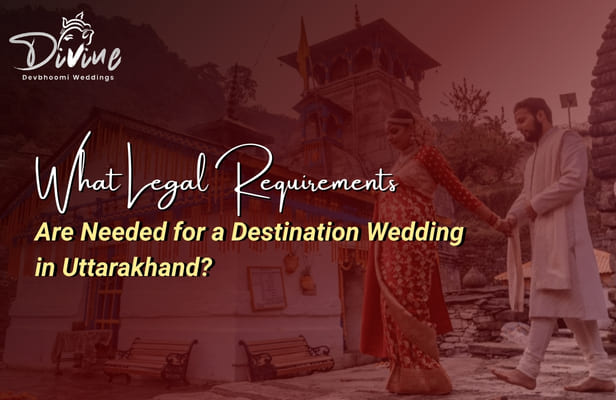
The temple ceremony is spiritually significant but not, by itself, legal proof of marriage under Indian law. To register:
| Wedding Type | Approx. Cost | Includes |
|---|---|---|
| Basic ceremony | ₹20,000–₹50,000 | Priest fees, temple donation, basic rituals |
| Mid-range wedding | ₹50,000–₹1,00,000 | Above + décor, small guest group stay |
| Premium small wedding | ₹1,00,000–₹3,00,000 | Above + professional photography, catering, transport for guests |
| Time | Activity |
|---|---|
| 6:00 AM | Depart Sonprayag/Guptkashi for Triyuginarayan |
| 7:00 AM | Arrive, guest gathering, priest briefing |
| 8:00–10:00 AM | Ritual preparations, mandap setup near Akhand Dhuni |
| 10:00 AM–12:00 PM | Main ceremony, Saptapadi around the eternal flame |
| 12:30 PM | Photographs, blessings |
| 1:00 PM | Lunch/return journey |
(Exact timing depends on the muhurat chosen by your priest.)
| Type | Location | Best For |
|---|---|---|
| Village homestays | Triyuginarayan | Small, intimate weddings; authentic local experience |
| Guesthouses | Triyuginarayan/Sonprayag | Budget travellers, solo pilgrims |
| Hotels | Sonprayag | Moderate comfort, close to the detour point |
| Hotels/resorts | Guptkashi (~25 km) | Larger wedding groups needing more rooms/amenities |
Book at least 4–6 weeks ahead for May–June and September–October — rooms in the village itself are limited.
Options in Triyuginarayan village are simple and mostly home-style:
Note: Given the temple's sanctity, non-vegetarian food and alcohol are not served or permitted anywhere in or near the village.
Day 1:
Day 2:
This sequencing — Triyuginarayan first, Kedarnath second — is considered spiritually meaningful, symbolically moving from Shiva's wedding site to Shiva's own abode.
Safety tips:
Packing checklist:
| Myth | Fact |
|---|---|
| "It's a full-day trek from Sonprayag" | It's a 45–60 minute drive by road; trekking is optional, not required |
| "You need government permission months in advance for any visit" | Only formal weddings typically require temple committee coordination; regular darshan doesn't |
| "The road is closed most of the year" | It's open and motorable roughly April–November; only winter months restrict access |
| "Non-Hindus cannot enter" | The temple welcomes all respectful visitors; specific ritual participation may have its own customs |
Q: How far is Triyuginarayan Temple from Sonprayag?
A: About 12 km by road, roughly a 45–60 minute drive.
Q: How do I reach Triyuginarayan Temple from Delhi?
A: Travel to Rishikesh, then via Rudraprayag and Guptkashi to Sonprayag (about 460 km total), and finish the final 12 km by local taxi or jeep.
Q: What is the Sonprayag to Triyuginarayan temple distance by road vs trek?
A: By road it's about 12 km; the shorter forest trekking route is about 5 km.
Q: Can private cars go all the way to the temple?
A: Yes, generally, but during peak Yatra season many travellers switch to local taxis from Sonprayag due to traffic and parking limits.
Q: Is there a direct bus to Triyuginarayan?
A: No direct bus service exists to the village; buses run to Sonprayag/Guptkashi, and the last leg is by taxi, jeep, or trek.
Q: What is the best time to visit Triyuginarayan in 2026?
A: May–June and September–October offer the best weather and road conditions.
Q: Is Triyuginarayan worth visiting before Kedarnath?
A: Yes — it's a short, scenic detour with deep spiritual significance and far fewer crowds than the main Kedarnath trail.
Q: How much does a wedding at Triyuginarayan Temple cost in 2026?
A: A basic ceremony costs roughly ₹20,000–₹50,000; larger weddings with guest stays and catering can run ₹1–3 lakh.
Q: How do I book a priest for a Triyuginarayan wedding?
A: Through the local temple committee/Tirtha Purohit Samiti, ideally 4–8 weeks in advance.
Q: Is the temple wedding legally valid on its own?
A: No — couples still need to complete formal registration through the Registrar of Marriages in their home city or nearby district.
Q: What documents are needed for marriage registration?
A: Valid ID proof, age proof, and passport-size photographs for both partners.
Q: Are there ATMs near Triyuginarayan?
A: No reliable ATMs in the village — carry sufficient cash from Guptkashi or Rudraprayag.
Q: Is mobile network available at the temple?
A: Coverage is patchy; BSNL and Jio tend to work best, but connectivity is inconsistent, especially on the trekking routes.
Q: Can we stay overnight in Triyuginarayan village?
A: Yes, homestays and small guesthouses are available, though limited — book in advance during peak season.
Q: Is photography allowed inside the temple?
A: General photography is fine in the courtyard; the inner sanctum usually has restrictions.
Q: What is the altitude of Triyuginarayan Temple?
A: About 1,980 metres (6,500 ft) above sea level.
Q: Is the road to Triyuginarayan safe for elderly travellers?
A: The 12 km road is narrow with curves but generally safe with an experienced driver; those with mobility issues should avoid the trekking alternative.
Q: How far is Triyuginarayan from Kedarnath?
A: About 25 km by trekking route, or roughly 27 km by the general road-and-trail path most guides quote.
Q: What is the nearest airport to Triyuginarayan?
A: Jolly Grant Airport, Dehradun, about 220 km away.
Q: What is the nearest railway station?
A: Rishikesh, roughly 210 km from Sonprayag.
Q: Do I need permission from authorities for a wedding here?
A: Formal coordination with the temple committee is required, and during peak season it's wise to lock in your date well in advance — sometimes months ahead.



























































From pre-wedding celebrations to grand wedding days, we provide end-to-end services for all functions.
Copyright © 2024 | All Rights reserved by Divine Dev Bhoomi | Designed & Developed by Edtech Innovate Pvt. Ltd.