
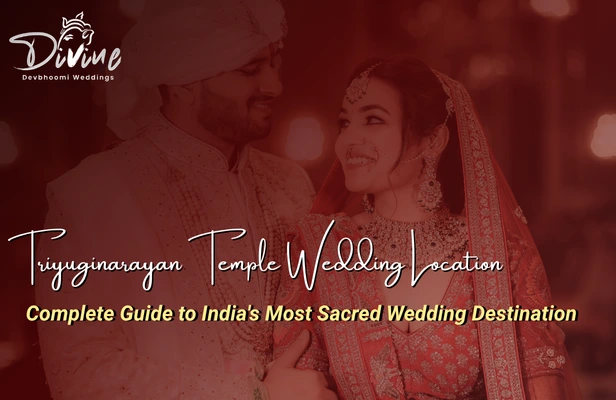
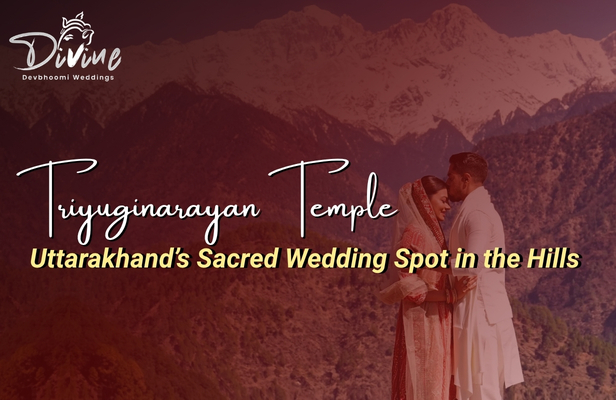
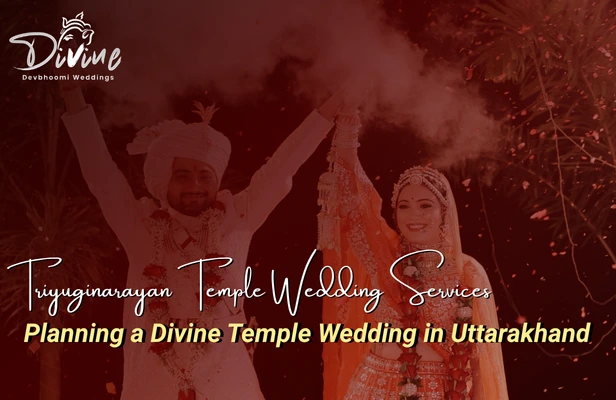
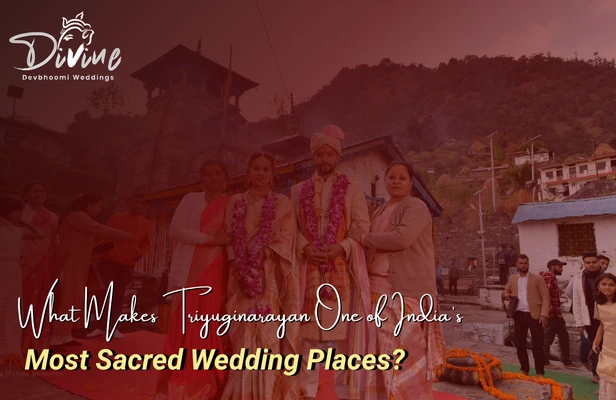
Tucked away in the Garhwal Himalayas, the Triyuginarayan Temple wedding location has quietly become one of the most sought-after settings for couples who want their marriage to mean something more than a checklist of vendors and venues. This is the spot where Hindu tradition places the wedding of Lord Shiva and Goddess Parvati, and an eternal flame said to have burned since that celestial union still flickers in the temple courtyard today. For couples exploring the Triyuginarayan Temple wedding location, the appeal isn't luxury or scale — it's the rare chance to take their vows in front of the same fire that is believed to have witnessed the very first wedding in Hindu mythology. Set in Uttarakhand, a state so closely tied to temples and pilgrimage routes that it is popularly called Devbhoomi, or "Land of the Gods," the temple sits at an altitude of nearly 1,980 metres, surrounded by deodar forests and mountain silence.
This kind of destination wedding has grown steadily in popularity over the last few years, as more couples look past conventional banquet halls in favour of places that carry genuine history and meaning. A wedding at Triyuginarayan isn't just photogenic — it comes with a story that guests will remember and retell for years, and it gives the couple a sense that their marriage is anchored to something larger than a single day's celebration. This guide walks through everything a couple, family, or wedding planner needs to know — from exact directions and travel routes to rituals, costs, accommodation, and the best season to say "I do" in the mountains.
The Triyuginarayan Temple wedding location sits in the Rudraprayag district of Uttarakhand, inside a small Himalayan village of the same name. It lies roughly 12 kilometres from Sonprayag, the last major road-connected point before the Kedarnath trekking route begins, and about 25 kilometres from Kedarnath itself. The temple's elevation of approximately 1,980 metres (around 6,500 feet) keeps the air cool through most of the year and gives the entire village a quiet, pine-scented calm that's hard to find at more commercial wedding venues.
Because the temple is part of the wider Kedarnath pilgrimage circuit, it's easy to locate on any mapping app — searching "Triyuginarayan Temple" on Google Maps will drop a pin directly on the temple courtyard, and most GPS-based cab and taxi apps in the region recognise the name. That said, mobile network coverage becomes patchy beyond Sonprayag, so it's worth downloading offline maps before the final stretch of the journey.
The village surrounding the temple is small, with a handful of shops, a few guesthouses, and little else in the way of infrastructure — which is very much part of its charm. Most visitors experience the last stretch of the journey either by shared jeep along a narrow mountain road or on foot, since the final approach to the temple isn't built for larger vehicles. That short walk or ride, framed by pine forest and mountain air, often ends up being one of the more memorable parts of the whole trip for wedding guests unfamiliar with the Himalayan foothills.
Quick Fact Table
|
|
|
|
District |
Rudraprayag, Uttarakhand |
|
Distance from Sonprayag |
~12 km |
|
Distance from Kedarnath |
~25 km |
|
Distance from Gaurikund |
~15–16 km |
|
Altitude |
~1,980 metres (6,500 ft) |
|
Nearest Airport |
Jolly Grant Airport, Dehradun (~210–230 km) |
|
Nearest Railway Station |
Rishikesh Railway Station (~210 km) |
|
Temple Timings |
6:00 AM – 7:00 PM |
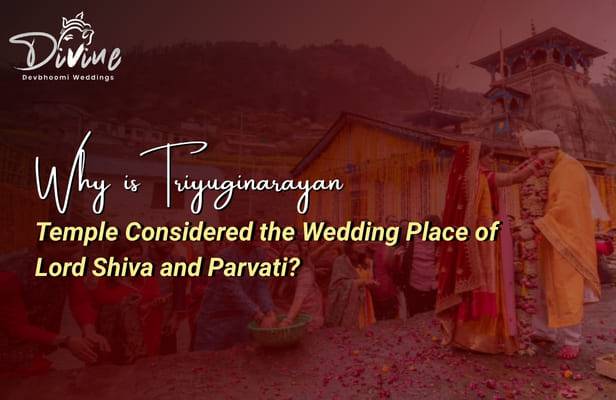
Every Hindu wedding ritual traces its roots back to one story, and this is believed to be the place it happened. According to legend, Goddess Parvati performed intense penance nearby at Gaurikund to win Lord Shiva's acceptance, and once he agreed to marry her, the wedding itself is said to have taken place at Triyuginarayan. Lord Vishnu is described as having given Parvati's hand in marriage, playing the role of her brother, while Lord Brahma conducted the ceremony as the priest. The other gods are said to have attended as witnesses.
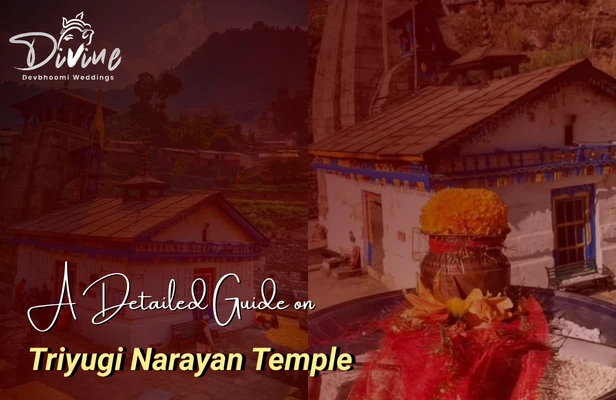
At the centre of the temple courtyard burns the Akhand Dhuni, a fire that devotees believe has never gone out since that original wedding — its name literally comes from "akhand," meaning unbroken. Pilgrims and wedding parties alike bring wood to feed the flame as an offering, and the smoke from this fire is considered a blessing for a long and stable marriage. The temple's own name reflects the belief that this fire has burned through three yugas, or cosmic ages — "tri" (three), "yug" (age), and "Narayan" (a name for Vishnu).
Beyond the mythology, the temple carries real weight in Hindu culture as a symbol of marital permanence. Couples who marry here, or who simply visit after their wedding elsewhere, do so believing that a union blessed at the very site of Shiva and Parvati's wedding is protected in a way that few other ceremonies can match. This is precisely why the Triyuginarayan Temple wedding location keeps coming up in conversations among couples who want their wedding rooted in something older and steadier than trend or tradition for its own sake.
The temple complex itself reinforces this sense of continuity. Close to the main shrine are a cluster of sacred kunds, or ponds — commonly identified as the Brahma Kund, Vishnu Kund, Rudra Kund, and Saraswati Kund — believed to have been used by the gods during the original wedding preparations. Many visiting couples and pilgrims take a ceremonial dip or sprinkle water from these kunds before entering the temple, treating it as a purification step ahead of darshan or their own vows. The combination of the eternal flame, the sacred ponds, and the temple's placement along the broader Kedarnath pilgrimage route gives the site a layered religious identity — it isn't only a wedding venue, but a stop that many pilgrims visit regardless of their marital status, simply to witness a flame with such an old and specific story attached to it.
Plenty of destinations promise a "unique" wedding, but few can offer the specific combination of scale, setting, and spiritual weight found here. A handful of qualities set this temple apart from almost every other wedding venue in India:
For couples drawn to the idea of a spiritual wedding venue over a five-star banquet hall, these details are exactly what makes the Triyuginarayan Temple wedding location worth the extra planning. There's also a practical upside to the intimacy of the setting — with far fewer guests to manage, couples often find they get to actually experience their own wedding, rather than spending the day greeting a long guest list and missing the ceremony's quieter moments.
Reaching this temple requires a mix of flight or train travel followed by a mountain road journey, so it helps to plan the trip in stages.
The nearest airport is Jolly Grant Airport in Dehradun, roughly 210–230 kilometres from the temple depending on the exact route taken. From the airport, taxis and pre-booked cabs are readily available for the onward road journey, which typically takes between 8 and 9 hours covering Rishikesh, Rudraprayag, and Guptkashi before reaching Sonprayag. Flying in is generally the fastest option for guests coming from outside Uttarakhand, especially NRI couples and families travelling with limited time, though it still leaves a full day of road travel ahead, so it's worth planning the flight to land in the morning rather than the evening.
Rishikesh Railway Station is the closest major railhead, at approximately 210 kilometres from the temple. Haridwar Junction, slightly farther away, is a larger station with more frequent long-distance trains and works just as well as a starting point. From either station, hired taxis or shared jeeps cover the mountain stretch to Sonprayag. Travellers coming from Delhi or nearby states often prefer this route since overnight trains to Haridwar or Rishikesh let them start the road journey fresh the next morning rather than driving through the night.
For those driving from Delhi, the typical route runs Delhi → Haridwar → Rishikesh → Rudraprayag → Guptkashi → Sonprayag → Triyuginarayan, covering roughly 440–460 kilometres and taking anywhere from 11 to 13 hours depending on road conditions and stops. From Haridwar alone, the remaining distance is around 230–240 kilometres, or about 9 hours by road. From Sonprayag, the final stretch to the temple is roughly 12 kilometres and can be covered by taxi, shared jeep, or a short trek for those who prefer to walk the last leg. Given the length of the drive, most wedding parties break the journey into two days, stopping overnight in Rudraprayag or Guptkashi rather than attempting the full route in one stretch — this also gives elderly guests time to acclimatise to the rising altitude.
Practical travel tips:
Organising a wedding at a remote Himalayan temple takes more coordination than booking a city banquet hall, but breaking it into stages keeps the process manageable.
Working with a planner who already has local relationships — with the temple committee, priests, drivers, and hotels — removes most of the friction from this process and often saves weeks of back-and-forth coordination that would otherwise fall on the couple's family.
Costs for a wedding at this location vary widely depending on guest count, choice of accommodation, and how much of the celebration happens near the temple versus at a nearby hotel. Unlike a city wedding where pricing tends to follow fairly standard packages, costs here are shaped heavily by seasonality, vendor availability, and how far equipment or supplies have to travel up the mountain — a decorator bringing in materials from Dehradun will naturally charge more than one sourcing everything locally in Guptkashi. Rather than fixed figures, it helps to think in terms of budget tiers across each expense category.
|
|
|
|
|
|
Temple arrangements |
Basic rituals only, immediate family |
Rituals plus small tent for extended family |
Rituals plus dedicated coordination team |
|
Decoration |
Minimal floral offerings |
Themed floral and fabric decor |
Full-scale decor with lighting |
|
Accommodation |
Guesthouses in Sitapur |
Mid-range hotels in Sonprayag/Guptkashi |
Boutique or luxury resorts |
|
Catering |
Simple meals at guesthouse |
Multi-course catered meals |
Curated multi-cuisine catering |
|
Photography |
Local photographer, half-day |
Full-day coverage with editing |
Pre-wedding shoot plus full coverage |
|
Makeup & styling |
Local artist |
Experienced destination-wedding artist |
Premium artist with team |
|
Transportation |
Shared jeeps |
Private cab for immediate family |
Private vehicles for full guest list |
|
Priest services |
Standard temple priest fee |
Priest plus additional ritual items |
Priest plus complete ritual arrangement |
|
Wedding planning |
Self-managed |
Local coordinator |
Full-service wedding planner |
Since prices shift with season, guest count, and vendor availability, it's best to request current quotes directly from temple authorities and local vendors before finalising a budget. As a general rule, costs rise noticeably during the peak summer wedding season, so couples working with a tighter budget often find better rates and more vendor flexibility by planning their wedding for early autumn instead.
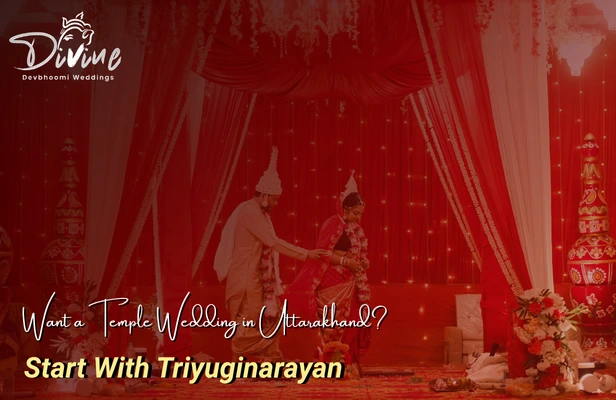
Weddings here typically follow the broader structure of a Hindu wedding, adapted to the temple's setting and the mythology tied to the site.
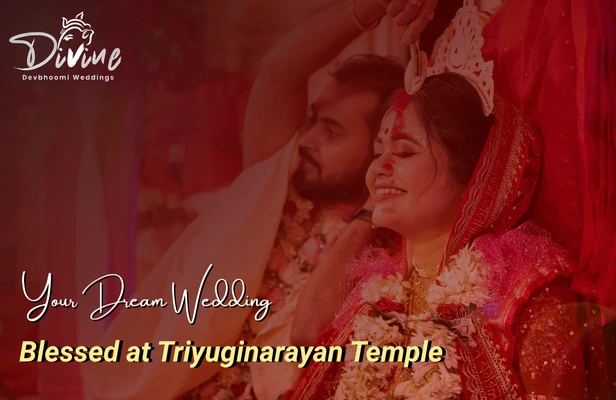
Each of these rituals carries its own symbolism, but performed here — with the mountain air, the old stone temple, and a fire said to be thousands of years old — they take on an added layer of meaning that couples often describe as the reason they chose this venue over anywhere else. Because the temple courtyard is compact, priests here are used to guiding smaller wedding parties through the full ritual sequence in a matter of a few hours, rather than stretching ceremonies across an entire day as is common in larger city weddings.
Since the temple village itself has very limited lodging, most wedding parties stay in nearby towns and travel in for the ceremony.
Whatever the choice, booking early is essential — rooms fill up quickly during the peak Kedarnath pilgrimage season, and options thin out considerably closer to the wedding date if left too late. It's also worth remembering that most properties in this region are built primarily to serve pilgrims rather than wedding guests, so amenities tend to be simple and functional rather than luxurious. Couples planning a larger wedding often split their guest list across two or three properties in the same town, coordinating shared transport to the temple so the group arrives together rather than in a scattered convoy.
The temple's high-altitude setting means the seasons here behave quite differently from the plains, and timing a wedding well makes a real difference to comfort and logistics.
The weather turns pleasant, snow begins retreating from higher points, and the surrounding hills turn green — a good window for both weddings and photography, though nights remain cool and warm layers are still necessary for evening functions.
This is peak wedding season for the region, with clear skies and comfortable daytime temperatures, though it's also the busiest period for accommodation and priest bookings, so early planning matters. Daytime temperatures are mild compared to the plains, which is exactly why many families from Delhi and North India choose to escape the summer heat by holding their wedding here.
Considered by many locals to be the best overall season, autumn brings crisp, clear mountain air, excellent visibility for photography, and noticeably smaller crowds compared to summer, since it falls just after the main Kedarnath pilgrimage rush.
Snowfall and freezing temperatures make travel difficult and sometimes impossible, with several access roads becoming unreliable — generally not recommended for weddings, and many hotels in the region scale down operations or close entirely during the coldest weeks.
Across all seasons, the monsoon months of July and August should be avoided entirely, since landslides and road closures are common through the hill sections of the route.
For guests extending their trip, the region around the Triyuginarayan Temple wedding location has plenty to explore.
For wedding parties planning to stay in the region for two or three extra days, combining a couple of these stops with the main ceremony turns the trip into a genuine getaway rather than a quick in-and-out visit — something many guests end up appreciating even more than the wedding ceremony itself.
Planning a wedding in a remote mountain temple is fundamentally different from booking a city venue, and local expertise makes the difference between a smooth ceremony and a logistical scramble. A team with established relationships in the region can coordinate directly with the temple committee on booking and ritual timing, manage accommodation blocks across Sonprayag and Guptkashi, and bring in decor and catering vendors already familiar with the site's access constraints. Photography and videography teams who know the temple's lighting conditions capture the ceremony far better than a first-time visitor would, and having a coordinator on the ground for transportation and ritual sequencing means the couple and their families can focus on the wedding itself rather than the logistics behind it.
Guest hospitality is another area where local knowledge pays off — knowing which hotels handle large groups well, which drivers are reliable on the mountain roads, and how to sequence the day so guests aren't stuck waiting in the cold all matter more than they might seem from a distance. A planner who has already run several weddings at this exact temple understands its rhythms: how long the priest typically needs for each ritual, when the courtyard gets crowded with regular pilgrims, and how to schedule the ceremony so the family gets a quieter, more personal experience. For a venue this remote and this steeped in tradition, that kind of end-to-end, locally rooted support is less a convenience and more a necessity.
Read More - Triyuginarayan Temple Wedding Best Time
A little extra preparation goes a long way at a venue like this, where the terrain and remoteness leave less room for last-minute fixes than a city wedding would.
None of these steps are complicated on their own, but taken together they're what separates a wedding that goes smoothly from one where the family spends half the trip solving problems instead of celebrating.
Few wedding venues anywhere in India carry the kind of mythological weight found at the Triyuginarayan Temple wedding location. This is a place where the wedding itself becomes part of a much older story — one involving Shiva, Parvati, and a fire that's said to have burned for thousands of years. Between the temple's remote Himalayan setting, its centuries-old architecture, and rituals steeped in tradition, a wedding here is never just an event; it's a pilgrimage the couple and their families make together. Thoughtful planning matters more here than at most venues, given the travel logistics, limited infrastructure, and seasonal weather patterns, but that extra effort is exactly what keeps the experience intimate and meaningful rather than generic. Working with wedding planners who know the region well — its priests, its roads, its accommodation options — takes much of that complexity off a couple's plate. For anyone drawn to the idea of marrying somewhere with real spiritual depth, the Triyuginarayan Temple wedding location remains one of the most sacred and scenic choices in the country.
1. Where is the Triyuginarayan Temple Wedding Location?
It's located in the Rudraprayag district of Uttarakhand, about 12 kilometres from Sonprayag and roughly 25 kilometres from Kedarnath, at an altitude of nearly 1,980 metres.
2. How do I book a wedding at Triyuginarayan Temple?
Bookings are typically made directly with the temple's priests or committee, though most couples work through a local wedding coordinator who can confirm dates, arrange rituals, and handle logistics. It's worth reaching out at least a few months ahead, especially if the preferred date falls during the summer or autumn peak season.
3. What documents are required for a temple wedding?
Couples generally need valid identification, and if legal registration is required, additional paperwork must be filed separately with the local Sub-Registrar's office, since the temple ceremony alone doesn't constitute legal registration.
4. Can international couples marry at Triyuginarayan Temple?
Yes, international and NRI couples can have their wedding rituals performed here, though they should check both Indian visa requirements and any additional documentation needed for legal marriage registration.
5. What wedding rituals are performed at the temple?
Ceremonies typically include Ganesh Puja, Haldi, Mehendi, Kanyadaan, Varmala, pheras around the Akhand Dhuni, the Sindoor ceremony, and a final Ashirwad blessing.
6. How far is Triyuginarayan Temple from Rishikesh, Haridwar, and Dehradun?
It's roughly 210 kilometres from Rishikesh, about 240 kilometres from Haridwar, and approximately 210–230 kilometres from Dehradun, depending on the exact route.
7. What is the best season for a wedding here?
Autumn (September to November) offers the clearest skies and most comfortable travel conditions, though summer (May–June) is also popular; monsoon months (July–August) and peak winter should be avoided entirely due to landslide risk and heavy snowfall respectively.
8. Is photography and videography allowed?
Yes, photography and videography are generally allowed, though it's best to confirm any restrictions with temple authorities in advance, especially for larger equipment or drone use.
9. Are Haldi, Mehendi, and Sangeet functions allowed nearby?
Yes, these pre-wedding functions are usually held at nearby accommodation in Sonprayag, Sitapur, or Guptkashi rather than at the temple itself, given the limited courtyard space.
10. Are customized wedding packages available?
Many local wedding planners offer customizable packages covering rituals, decor, catering, accommodation, and transportation, tailored to guest count and budget.
11. What accommodation options are available for guests?
Options range from budget guesthouses and homestays in Sitapur and the temple village to mid-range and boutique hotels in Sonprayag and Guptkashi.
12. Why is Triyuginarayan Temple considered the wedding place of Lord Shiva and Goddess Parvati?
Hindu tradition holds that this is where the two deities were married, with Lord Vishnu giving away the bride and Lord Brahma officiating, and the temple's Akhand Dhuni is believed to be the very fire that was lit for their wedding.






































From pre-wedding celebrations to grand wedding days, we provide end-to-end services for all functions.
Copyright © 2024 | All Rights reserved by Divine Dev Bhoomi | Designed & Developed by Edtech Innovate Pvt. Ltd.