
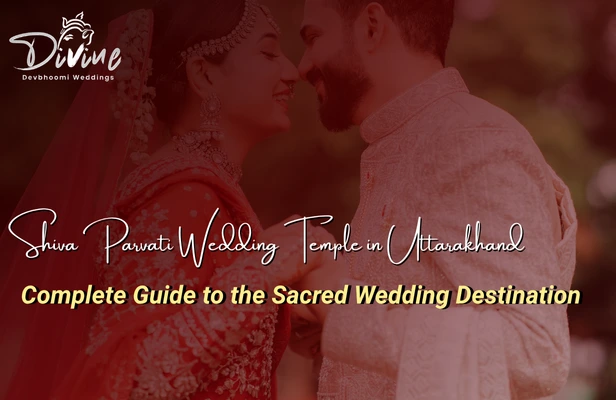
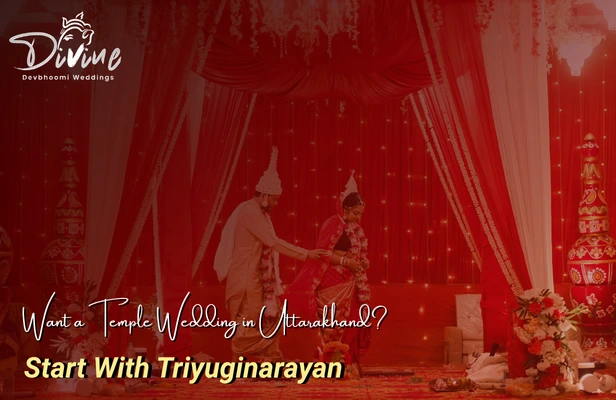
Uttarakhand, fondly known as Devbhoomi or the Land of the Gods, is home to one of India's most spiritually significant wedding venues — the Shiva Parvati Wedding Temple in Uttarakhand, popularly known as Triyuginarayan Temple. Nestled in the Himalayan foothills near Kedarnath, this ancient temple is believed to be the exact spot where Lord Shiva and Goddess Parvati were married in the presence of Lord Vishnu and Lord Brahma.
In recent years, more couples are moving away from conventional banquet-hall weddings and choosing spiritual, meaningful destinations that reflect deeper cultural and religious values. The Shiva Parvati Wedding Temple in Uttarakhand offers exactly this — a rare opportunity to exchange vows at the very place where divine matrimony took place thousands of years ago. Surrounded by snow-capped peaks, pine forests, and the sound of the eternal Akhand Dhuni fire, Triyuginarayan is not just a wedding venue; it is an experience rooted in devotion and legend.
This comprehensive guide covers everything you need to know — from mythology and history to booking, costs, rituals, accommodation, travel, and expert planning tips — to help you plan a truly divine wedding in the heart of the Himalayas.
Triyuginarayan Temple, located in the Rudraprayag district of Uttarakhand, holds a unique place in Hindu mythology as the venue of the celestial wedding of Lord Shiva and Goddess Parvati. According to sacred texts, the marriage was solemnized here across three yugas (eras), which is how the temple derives its name — 'Tri-yugi-narayan.'
Legend states that Lord Vishnu himself acted as Goddess Parvati's brother and performed her kanyadaan, while Lord Brahma took on the role of the priest who conducted the wedding rituals. The temple courtyard houses the Akhand Dhuni — a sacred fire believed to have been burning continuously since the divine wedding took place, symbolizing eternal companionship and marital harmony.
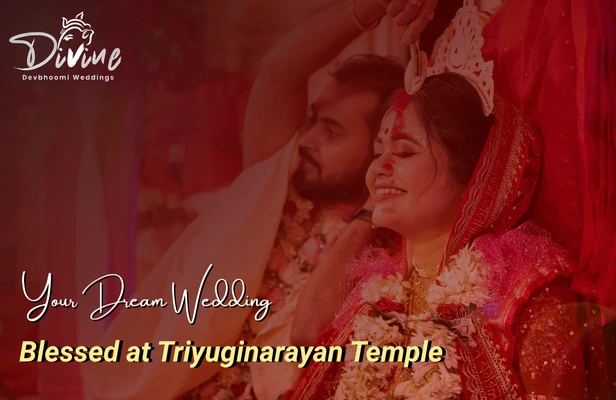
For devout Hindus, this makes the Shiva Parvati Wedding Temple in Uttarakhand far more than a scenic backdrop — it is considered an auspicious site where couples can seek blessings for an everlasting union, mirroring the eternal bond of Shiva and Parvati.
Couples across India and abroad are increasingly drawn to Triyuginarayan for a wedding that feels both sacred and unforgettable. Some of the key reasons include:
The exact date of construction of Triyuginarayan Temple is uncertain, but historians and religious scholars trace its origins back several centuries, with strong associations to the Kedarnath temple complex. Built in classic Himalayan stone architecture, the temple's design reflects the simplicity and spiritual focus typical of ancient Garhwal-region shrines.
Its close proximity to Kedarnath — one of the twelve Jyotirlingas — further reinforces its religious importance, as pilgrims often visit both sites together. References to the temple and its association with the divine wedding appear across various Puranic texts, cementing its place as one of the most sacred marriage-related shrines in Hindu tradition.
The story begins with Goddess Parvati's intense penance to win Lord Shiva as her husband. After years of devotion and tapasya, Shiva finally accepted her prayers and agreed to marry her. The wedding ceremony that followed was attended by gods, sages, and celestial beings from across the three worlds.
Lord Vishnu performed the duties of Parvati's brother, giving her away in marriage, while Brahma conducted the sacred rituals as the priest. The wedding fire lit during the ceremony — the Akhand Dhuni — is said to still burn at the temple today, and ash from this fire is considered holy, often given to newlywed couples as a blessing for a long and harmonious married life.
This story is central to why couples choose the Shiva Parvati Wedding Temple in Uttarakhand — marrying at the very site associated with divine matrimony is seen as deeply auspicious for a Hindu wedding.
Read More - Triyuginarayan Temple Wedding Booking Contact Number
Organizing a wedding at this Himalayan temple involves careful coordination. Here is a step-by-step approach:
Wedding costs vary significantly depending on guest count, season, and service providers. Below is an indicative breakdown to help with budgeting:
|
Expense |
Estimated Range |
Factors Affecting Cost |
|
Temple arrangements & permissions |
Low to Moderate |
Season, ritual complexity, priest fees |
|
Accommodation |
Moderate to High |
Guest count, hotel category, duration of stay |
|
Décor |
Moderate to High |
Theme, floral choices, venue setup |
|
Catering |
Moderate to High |
Menu type, guest count, local vs outside vendors |
|
Priest charges |
Low to Moderate |
Ritual duration, number of ceremonies |
|
Photography & videography |
Moderate to High |
Team size, drone coverage, duration |
|
Transportation |
Moderate |
Distance, vehicle type, guest numbers |
|
Makeup & styling |
Moderate to High |
Artist experience, products used |
|
Wedding planner fees |
Moderate to High |
Scope of services, customization level |
|
Guest count add-ons |
Variable |
Number of attendees across all categories |
Note: These are indicative ranges only. Actual costs vary based on season, guest count, vendor selection, and customization. Always request a detailed quote from your chosen wedding planner before finalizing your budget.
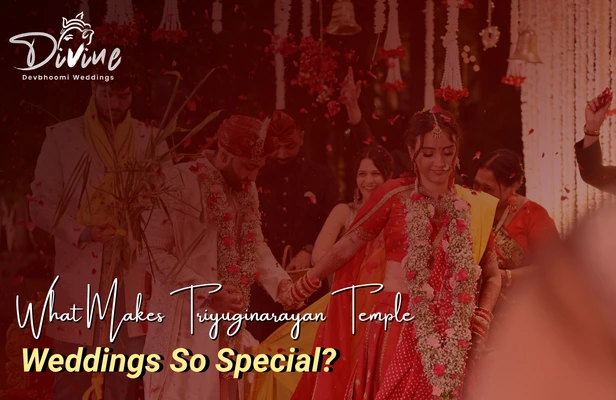
A wedding at this sacred site typically follows traditional Hindu wedding customs, performed with special reverence given the location's mythological importance:
Each ritual carries deep spiritual meaning, and performing them around the eternal flame believed to have witnessed Shiva and Parvati's own wedding adds an extraordinary layer of significance for couples.
Being a remote Himalayan location, accommodation options near Triyuginarayan are more limited than in major cities, but there is enough variety to suit different needs:
Booking accommodation well in advance is strongly recommended, especially during peak wedding season, as options in this region fill up quickly.
|
Season |
Weather & Accessibility |
Suitability for Wedding |
|
Spring (March–May) |
Pleasant weather, clear skies, good accessibility |
Excellent — ideal photography and comfortable ceremonies |
|
Summer (June–August) |
Warm days, monsoon risk with landslides on hill roads |
Avoid — travel disruptions likely |
|
Autumn (September–November) |
Crisp, clear weather with excellent mountain visibility |
Excellent — one of the most popular wedding windows |
Spring and autumn are generally considered ideal, offering pleasant weather, clear mountain views, and easier accessibility, while monsoon months should be avoided due to landslide risks on hill roads.
By Air: The nearest airport is Jolly Grant Airport in Dehradun, well connected to major Indian cities, followed by a scenic road journey to Triyuginarayan.
By Rail: The nearest major railway station is Rishikesh, from where the temple is accessible via a combination of road travel and a short trek.
By Road: Triyuginarayan is well connected by motorable roads from Rishikesh, Guptkashi, and Sonprayag, though the final stretch typically requires a short walk from the parking area.
Travel Tip: Hire experienced local drivers familiar with hill roads, and plan travel during daylight hours for safety.
Planning a wedding in a remote Himalayan location requires local knowledge and reliable coordination. Devbhoomi Weddings specializes in organizing weddings at the Shiva Parvati Wedding Temple in Uttarakhand, offering end-to-end planning support including temple coordination, accommodation booking, décor, logistics, vendor management, and guest hospitality.
With established local relationships and experience navigating the region's unique logistical challenges, Devbhoomi Weddings helps couples focus on the sanctity of their ceremony while handling the practical details of a mountain wedding.
The Shiva Parvati Wedding Temple in Uttarakhand stands as one of India's most sacred and meaningful wedding destinations, offering couples the rare chance to marry at the mythological site of Lord Shiva and Goddess Parvati's own union. From its ancient temple architecture and eternal sacred fire to the surrounding Himalayan beauty, Triyuginarayan offers an experience that goes far beyond a typical destination wedding.
Careful planning — covering booking, rituals, accommodation, and travel logistics — is essential to making the most of this unique venue. With the support of experienced local planners like Devbhoomi Weddings, couples can focus on the spiritual significance of their vows while every practical detail is expertly managed.
If you're seeking a wedding rooted in devotion, legend, and natural grandeur, few places compare to this sacred Himalayan temple. Begin planning your divine wedding at Triyuginarayan today.
What is the Shiva Parvati Wedding Temple in Uttarakhand?
It refers to Triyuginarayan Temple, an ancient Himalayan shrine in Uttarakhand believed to be the site where Lord Shiva and Goddess Parvati were married.
Is Triyuginarayan Temple the place where Lord Shiva and Goddess Parvati got married?
Yes, according to Hindu mythology, this temple marks the exact location of their divine wedding, witnessed by Lord Vishnu and Lord Brahma.
How can I book a wedding at Triyuginarayan Temple?
Bookings can be made by contacting the temple committee directly or through an experienced destination wedding planner familiar with local procedures.
What documents are required for a temple wedding?
Couples typically need identity proof, address proof, and any documentation required for Hindu marriage registration, which planners can help arrange.
Can foreigners or NRI couples get married here?
Yes, NRI and foreign couples can marry at the temple, though additional documentation and advance coordination with local authorities may be required.
How much does a Triyuginarayan Temple wedding cost?
Costs vary widely based on guest count, season, and services chosen, generally ranging from modest budgets for intimate ceremonies to higher costs for larger, fully planned celebrations.
Which rituals are performed during the wedding?
Common rituals include Ganesh Puja, Haldi, Mehendi, Kanyadaan, Vedic mantras, pheras around the Akhand Dhuni, sindoor ceremony, and final blessings.
How far is Triyuginarayan Temple from Rishikesh, Haridwar, and Dehradun?
The temple is located a considerable distance from these cities in the hills, typically reached via a multi-hour road journey followed by a short walk.
What is the best season for a wedding here?
Spring and autumn months generally offer the most favorable weather and accessibility for a Himalayan temple wedding.
Are Mehendi, Haldi, and Sangeet ceremonies allowed nearby?
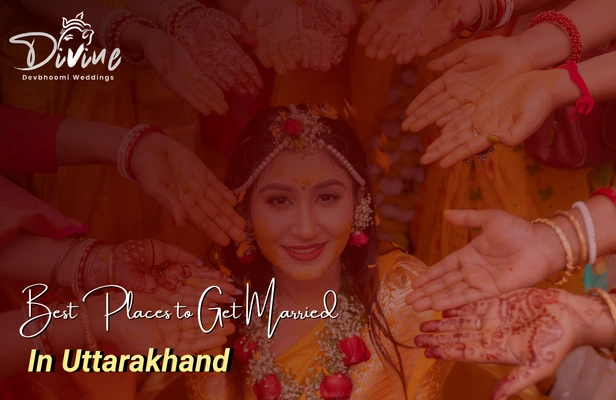
Yes, pre-wedding ceremonies are commonly arranged at nearby accommodation venues or open spaces close to the temple.
Is photography permitted inside the temple?
Photography is generally allowed with prior permission from temple authorities, though restrictions may apply during certain rituals.
What accommodation options are available near the temple?
Options range from budget guest houses and hotels in nearby towns to mid-range resorts and luxury eco-camps.
Can customized wedding packages be arranged?
Yes, local wedding planners such as Devbhoomi Weddings can tailor packages based on guest count, budget, and specific ritual requirements.
Why should I hire a destination wedding planner in Uttarakhand?
A local planner understands the region's logistics, weather patterns, and vendor network, helping avoid common planning challenges in remote hill locations.
Why is the Akhand Dhuni important in Hindu weddings?
The Akhand Dhuni is the eternal sacred fire believed to have burned since Shiva and Parvati's own wedding, symbolizing an everlasting marital bond for couples who take their vows around it.


































































From pre-wedding celebrations to grand wedding days, we provide end-to-end services for all functions.
Copyright © 2024 | All Rights reserved by Divine Dev Bhoomi | Designed & Developed by Edtech Innovate Pvt. Ltd.