

Tucked away in the Rudraprayag district of Uttarakhand, the Triyuginarayan Temple is one of India's most sacred yet lesser-explored pilgrimage sites. Revered as the eternal wedding venue of Lord Shiva and Goddess Parvati, this ancient shrine draws pilgrims, historians, and spiritual travelers from across the world. Nestled in the lap of the Himalayas, the Triyuginarayan Temple holds a unique place in Hindu mythology, standing as living proof of a divine union that is said to have taken place over three ages, or 'Yugas.' Uttarakhand, often called Devbhoomi or the 'Land of Gods,' is home to countless temples, but few carry the mystical charm of this one. What makes it truly extraordinary is its Akhand Dhuni, an eternal sacred fire believed to have been burning continuously since the wedding itself. In this guide, we explore the history, mythology, architecture, and travel details of the Triyuginarayan Temple, along with ten amazing facts that make it one of the most fascinating spiritual destinations in the Himalayas.
The Triyuginarayan Temple is an ancient Hindu shrine dedicated to Lord Vishnu, located near the town of Sonprayag on the traditional route to Kedarnath. The temple's name translates roughly to 'the one who witnessed three ages,' referring to the belief that its sacred fire has burned uninterrupted through multiple cosmic eras. It holds deep religious importance as the mythological site of Lord Shiva and Goddess Parvati's wedding, making it a significant destination not just for general pilgrimage but also for couples seeking blessings for marital harmony. While the temple does not hold any official international heritage designation, its age, mythology, and continuous ritual tradition give it an informal status as one of the region's most culturally significant shrines. Pilgrims are drawn here for the rare combination of scenic beauty, spiritual depth, and mythological importance packed into a single, relatively accessible location.
The exact origins of the Triyuginarayan Temple are difficult to pin down with precision, as with many ancient Himalayan shrines, but local tradition and scriptural references suggest it has stood for many centuries, with some accounts placing it among the older temples in the Garhwal Himalayan belt. The temple finds mention in regional legends and is considered by many devotees to predate several better-known temples in the area. Historical records point to its long-standing role as a pilgrimage stop for devotees heading toward Kedarnath, and its association with the Char Dham circuit has helped preserve its religious significance over generations. Its importance in Hinduism stems primarily from its mythological backstory rather than architectural grandeur, though the stone construction itself reflects traditional Himalayan temple-building techniques passed down through centuries. References to the site appear in regional oral traditions and pilgrimage accounts, cementing its place as a sacred waypoint on one of India's most revered pilgrimage routes.
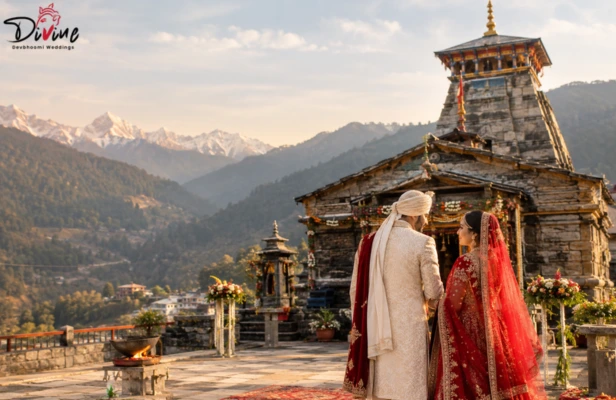
According to Hindu mythology, the Triyuginarayan Temple marks the exact spot where Lord Shiva and Goddess Parvati were united in marriage. The story holds that Lord Vishnu himself played the role of Parvati's brother during the ceremony, guiding the rituals and giving her away in marriage, which is why the temple is dedicated to him despite being famous for a Shiva-Parvati legend. Lord Brahma, the creator god, is believed to have officiated as the priest, performing the sacred rites at the Havan Kund, the ceremonial fire pit that still exists at the temple today. The presence of the gods themselves at this wedding elevates the site to a rare category of mythological importance, as few places in Hindu tradition claim to have hosted a divine marriage attended by multiple principal deities. This sacred union is said to symbolize the coming together of Shakti, or divine energy, with Shiva, representing consciousness, making the temple a powerful symbol of cosmic balance and harmony for devotees who visit seeking blessings for their own relationships and marriages.
The single most defining fact about this temple is its identity as the mythological wedding venue of Lord Shiva and Goddess Parvati, a belief so deeply rooted that the temple continues to attract newlyweds seeking blessings for their own marriages.
The Akhand Dhuni, or eternal fire, is said to have been burning continuously since the divine wedding took place, and devotees believe that even a pinch of its ash carries powerful blessings for marital harmony.
Unlike most Shiva-Parvati shrines, this temple is dedicated to Lord Vishnu because of his special role as the one who conducted the ceremonial duties of the bride's brother during the wedding.
Local tradition holds that the Triyuginarayan Temple predates several well-known Himalayan shrines, giving it a special place among the ancient temples of the region, even though its precise date of construction remains a subject of historical debate.
The temple complex is surrounded by four kunds, or sacred water tanks, each associated with a different deity connected to the wedding story, and pilgrims often visit all four as part of their ritual circuit.
Built using traditional Himalayan stone-construction techniques, the temple's architecture reflects the simplicity and durability typical of ancient hill shrines, standing in contrast to the more ornate temple styles found in the plains.
Visitors to the temple often circle the Havan Kund and collect a small amount of ash from the eternal fire, believing it to bless their households and marriages with lasting harmony.
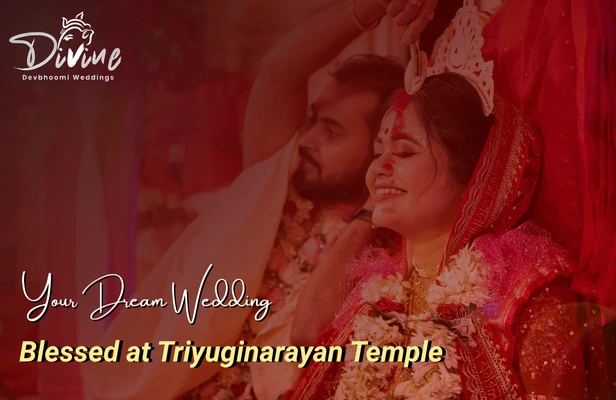
Because of its mythological association, many couples choose to solemnize their own weddings here, believing that vows taken in the presence of the eternal fire carry the blessings of Shiva and Parvati themselves.
Set amid pine forests and framed by snow-capped Himalayan peaks, the temple offers visitors a peaceful, scenic backdrop that adds to its spiritual atmosphere, making it a rewarding stop even for travelers less focused on religious rituals.
Despite its rich mythology, Triyuginarayan remains relatively less crowded compared to major pilgrimage centers like Kedarnath or Badrinath, making it a hidden gem for travelers seeking a quieter, more contemplative spiritual experience.
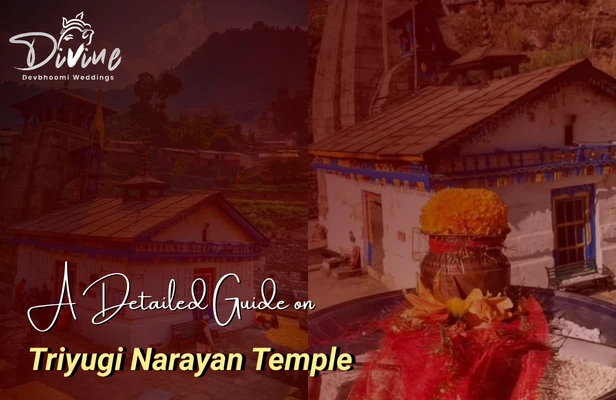
The Triyuginarayan Temple showcases the understated elegance typical of ancient Himalayan stone shrines. Its architectural elements include:
The Eternal Sacred Fire (Akhand Dhuni)
At the heart of the temple's spiritual identity lies the Akhand Dhuni, the eternal sacred fire believed to have been lit at the time of Shiva and Parvati's wedding and kept burning ever since. Its origin is tied directly to the wedding legend, with devotees believing the fire to be a living witness to the divine ceremony. The fire holds immense religious significance as a symbol of unbroken devotion and continuity of faith across generations. Devotees worship it as a source of blessings for married life, prosperity, and spiritual purification. Ritually, pilgrims often collect a small amount of ash from the fire, believing it carries protective and auspicious qualities for their homes and relationships. This unbroken tradition reinforces the temple's identity as a living link to a mythological past, rather than merely a historical monument.
Surrounding the temple are four sacred kunds, each tied to a deity associated with the divine wedding story. Pilgrims traditionally visit all four kunds as part of their pilgrimage ritual, believing that bathing in or offering prayers at these waters brings blessings tied to their respective deities.
|
Sacred Kund |
Associated Deity |
Significance |
|
Rudra Kund |
Lord Shiva |
Believed to be the spot where Shiva performed his pre-wedding rituals |
|
Vishnu Kund |
Lord Vishnu |
Associated with Vishnu's role as the divine witness to the wedding |
|
Brahma Kund |
Lord Brahma |
Linked to Brahma, who is said to have officiated the sacred ceremony |
|
Saraswati Kund |
Goddess Saraswati |
Named after the goddess of knowledge, said to have blessed the union |
Best Time to Visit Triyuginarayan Temple
Choosing the right season can significantly enhance a visit to the Triyuginarayan Temple, given its Himalayan location:
Overall, the months between April and June, and again from September to November, tend to offer the best combination of pleasant weather, stable road conditions, and manageable pilgrim crowds.
By Air: The nearest airport is Jolly Grant Airport in Dehradun, from where the temple is accessible by road via Rishikesh and Rudraprayag.
By Rail: Rishikesh is the nearest major railway station, well connected to major Indian cities, and serves as the starting point for the onward road journey.
By Road: The temple is well connected by road through the following routes:
Travel Tip: Hiring a local taxi from Sonprayag is often the easiest way to reach the temple, as public transport options in this stretch of the Himalayas can be limited, especially during the off-season.
Read More - Shravan Special: Triyuginarayan Temple Wedding Guide 2026 – Best Time, Rituals, Weather & Booking Tips
Note: Temple timings and rules can change, especially during festivals or due to weather conditions, so it is advisable to confirm current timings locally before planning your visit.
Kedarnath Temple: One of the twelve Jyotirlingas and a major Himalayan pilgrimage site, located a further journey from Sonprayag.
Sonprayag: A scenic confluence town and key transit point for pilgrims heading to Kedarnath.
Gaurikund: Known for its hot springs and as the traditional starting point of the Kedarnath trek.
Chopta: A picturesque meadow region often called the 'Mini Switzerland of India,' popular for trekking.
Tungnath Temple: The highest Shiva temple in the world, reachable via a scenic trek from Chopta.
Deoria Tal: A serene high-altitude lake known for its reflection of the Chaukhamba peaks.
Rudraprayag: A significant confluence town of the Alaknanda and Mandakini rivers.
Ukhimath: The winter seat of Lord Kedarnath and Lord Tungnath's deities, with its own temple traditions.
Interesting Lesser-Known Facts
Beyond the well-known wedding legend, the Triyuginarayan Temple carries a number of lesser-known stories and traditions passed down among local communities. Some devotees speak of hidden legends describing additional rituals performed by the gods before and after the wedding, though these vary between local retellings. Ancient rituals connected to the sacred fire are still practiced by resident priests, maintaining traditions that have been followed for generations. Local beliefs also hold that couples who visit the temple together receive blessings for a long and harmonious married life, a belief that continues to draw newlyweds from across India. The temple's relative obscurity compared to Kedarnath has also given rise to its reputation as a hidden mystery among mythology enthusiasts, who consider it an essential but often overlooked stop on the Himalayan pilgrimage circuit. Seasonal festivals, though smaller in scale than those at major temples, are observed here with genuine local participation, offering visitors an authentic glimpse into regional pilgrimage traditions.
Conclusion
The Triyuginarayan Temple stands as one of India's most fascinating spiritual destinations, weaving together mythology, history, and breathtaking Himalayan scenery in one relatively unassuming location. Its identity as the eternal wedding site of Lord Shiva and Goddess Parvati gives it a significance that few temples in the world can claim, while the ever-burning Akhand Dhuni serves as a powerful symbol of continuity and devotion across the ages. Whether you are a pilgrim seeking blessings, a history enthusiast curious about ancient Himalayan traditions, or simply a traveler drawn to peaceful mountain surroundings, a visit to the Triyuginarayan Temple offers a rare and memorable experience. Its relative quiet compared to nearby Kedarnath only adds to its charm, allowing visitors the space to reflect and connect with its rich spiritual heritage. For anyone planning a trip through Uttarakhand, this ancient temple deserves a place on the itinerary, promising a journey through mythology, history, and the timeless beauty of the Himalayas.
What is Triyuginarayan Temple famous for?
It is famous as the site where, according to Hindu mythology, Lord Shiva and Goddess Parvati were married in the presence of Lord Vishnu and Lord Brahma.
Where is Triyuginarayan Temple located?
The temple is located in the Rudraprayag district of Uttarakhand, close to the town of Sonprayag, on the route to Kedarnath.
Why is the sacred fire always burning?
Devotees believe the fire, known as Akhand Dhuni, has been burning continuously since the divine wedding, and it is kept alive as an unbroken tradition of faith.
Who got married at Triyuginarayan Temple?
Hindu scriptures and local legend say Lord Shiva married Goddess Parvati at this very spot.
How old is Triyuginarayan Temple?
The temple's exact age is debated among historians, but local tradition and ancient references place its origins many centuries ago, predating several well-known Himalayan shrines.
What are the temple timings?
The temple generally opens early morning and closes by evening, though exact hours can vary by season, so it is best to confirm locally before visiting.
Is there an entry fee?
Entry to the temple is generally free, though visitors may choose to make voluntary donations.
How far is Triyuginarayan Temple from Kedarnath?
It is roughly 25 to 30 kilometers from Kedarnath via Sonprayag and Gaurikund, depending on the route taken.
Which is the nearest railway station?
Rishikesh is the nearest major railway station, connected further by road through Rudraprayag and Sonprayag.
Which is the nearest airport?
Jolly Grant Airport in Dehradun is the nearest airport to Triyuginarayan Temple.
What is the best time to visit?
The months from April to June and September to November are generally considered the most pleasant for a visit.
Can senior citizens easily visit the temple?
The temple is relatively accessible compared to high-altitude shrines like Kedarnath, but visitors should still check road and weather conditions in advance.
Are guides available?
Local guides are usually available near Sonprayag and can help visitors understand the temple's history and mythology.
Is photography allowed inside the temple?
Photography is generally allowed in the outer premises, but visitors should check with temple authorities regarding restrictions near the sanctum.
What are the four sacred Kunds?
The four kunds are Rudra Kund, Vishnu Kund, Brahma Kund, and Saraswati Kund, each linked to a deity associated with the divine wedding.
How many steps are there to reach the temple?
The temple is accessible by a short walk from the main road, and unlike Kedarnath, it does not require a long trek.
Is Triyuginarayan Temple open throughout the year?
Yes, unlike some high-altitude shrines that close for winter, this temple generally remains accessible through most of the year, though visitors should confirm during peak winter months.
Can families visit with children?
Yes, the temple is relatively easy to access and is considered suitable for family visits, including with children and elderly members.
Are accommodation facilities available nearby?
Basic guesthouses and lodges are available in and around Sonprayag, with more options in Rudraprayag and Guptkashi.
What should visitors wear while visiting the temple?
Modest, comfortable clothing is recommended, along with warm layers, as the region can be cool, especially in the mornings and evenings.




































































































From pre-wedding celebrations to grand wedding days, we provide end-to-end services for all functions.
Copyright © 2024 | All Rights reserved by Divine Dev Bhoomi | Designed & Developed by Edtech Innovate Pvt. Ltd.