
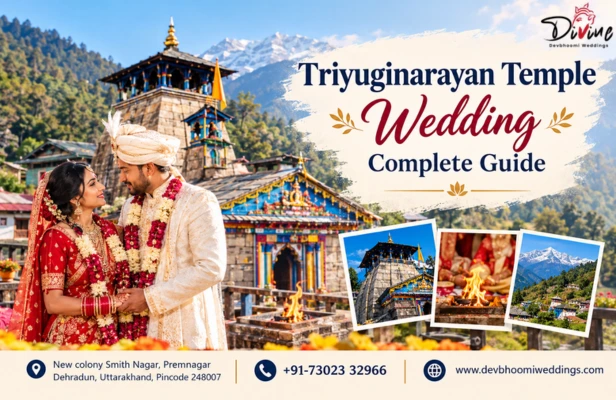
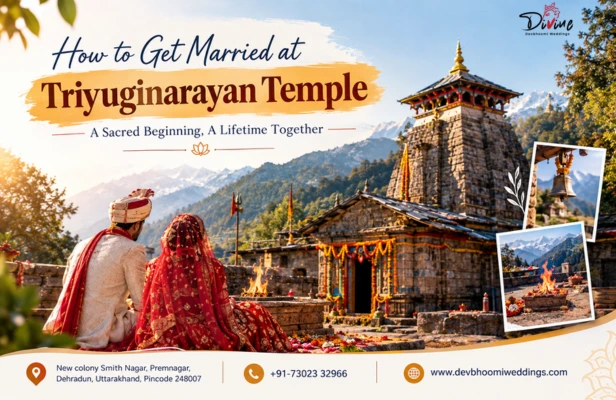
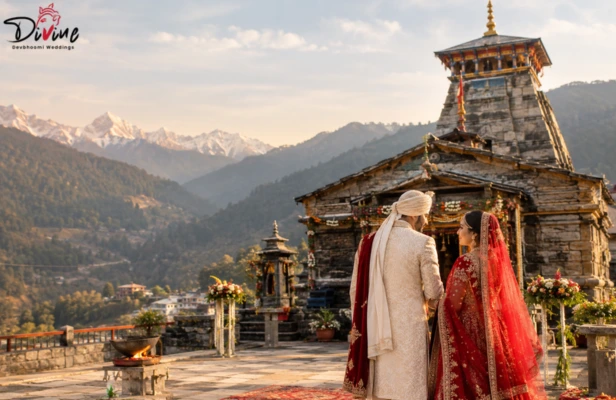
Imagine this. Snow-capped peaks all around you. Cool mountain air. The sound of dhol and damau echoing through the valley. And in front of you, a sacred fire that, as per belief, has been burning since the divine wedding of Lord Shiva and Goddess Parvati.
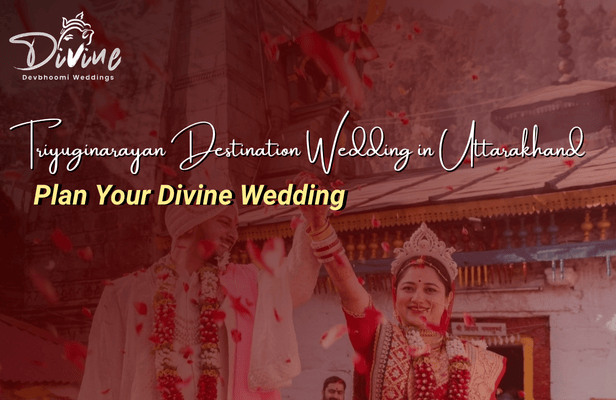
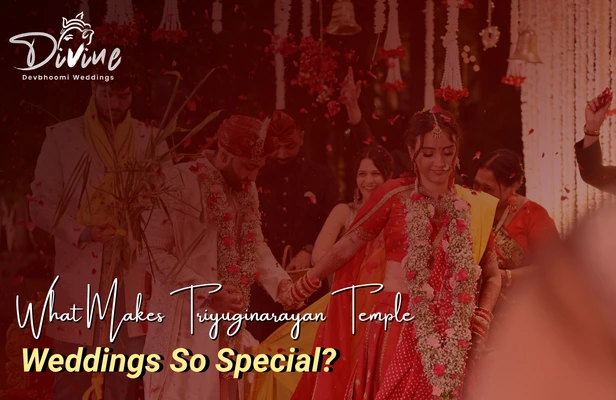
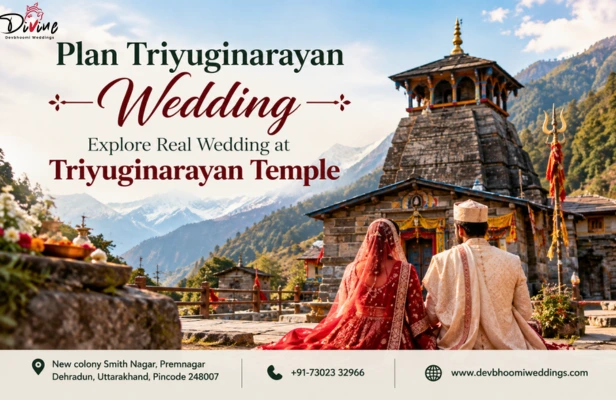
That is a Triyuginarayan temple wedding. It is calm, spiritual, and very different from a loud banquet hall wedding with 500 guests. In 2026, more couples than ever are choosing this small Himalayan temple in Uttarakhand to take their pheras.
But planning a wedding in the mountains is not like booking a hall in the city. You need to know about booking time, documents, legal registration, weather, roads, stay, food and cost. This guide explains all of it in simple English, step by step, so you can plan with confidence.
|
Quick Answer (Read This First) A Triyuginarayan temple wedding is a Hindu wedding held at the ancient Triyuginarayan Temple in Rudraprayag district, Uttarakhand. Couples take pheras around the Akhand Dhuni, the sacred fire believed to be the one at Shiva and Parvati's wedding. You should book 6 to 7 months early. Booking is usually done offline through the temple priest committee or a trusted local coordinator. The best months are May-June and September-November. Costs depend on guests and services, and there is no single fixed price. Always get a written quote, and register your marriage legally after the ceremony. |
|
Topic |
Details |
|
Temple name |
Triyuginarayan Temple (also written as Trijuginarayan or Triyugi Narayan) |
|
Location |
Triyuginarayan village, Rudraprayag district, Uttarakhand, India |
|
Dedicated to |
Lord Vishnu (as Narayan). Famous as the wedding place of Shiva and Parvati. |
|
Main attraction |
Akhand Dhuni (eternal sacred fire) and Brahma Shila (wedding stone) |
|
Height above sea level |
About 2,000 metres (around 6,500 feet) |
|
Best months |
May-June and September-November |
|
Avoid |
July-August (monsoon, landslide risk) and peak winter (December-February) |
|
Booking time |
6 to 7 months before the wedding date (earlier for May-June) |
|
Booking method |
Offline, via the temple's local priest committee or a trusted wedding coordinator. There is no official helpline number, so verify before paying. |
|
Weddings per month |
Reported to be more than 100 per month in peak season |
|
Legal registration |
Mandatory within 60 days of the wedding under Uttarakhand's UCC. Done online. |
|
Nearest big airport |
Jolly Grant Airport, Dehradun |
|
Nearest railway stations |
Rishikesh and Haridwar |
What is a Triyuginarayan temple wedding?
A Triyuginarayan temple wedding is a traditional Hindu marriage ceremony held at Triyuginarayan Temple in Uttarakhand, with the pheras taken around the sacred Akhand Dhuni. The wedding follows Vedic traditions and is conducted by temple priests.
Most weddings here are small and personal. Families and close friends travel to the mountains, spend a few days together, and celebrate in a peaceful setting. The main ceremony happens at the temple. Bigger functions like haldi, mehndi, sangeet and the reception usually take place at nearby hotels and resorts.
People choose it for three reasons: faith, simplicity, and a feeling of doing something meaningful. For many couples, it also saves money and stress compared to a large city wedding.
According to Hindu belief, Lord Shiva married Goddess Parvati at this very place. Parvati was the daughter of Himavan, the king of the mountains. The story says that Lord Vishnu took part in the wedding as her brother and performed the bride-giving ritual, while Lord Brahma acted as the priest.
In front of the temple burns a sacred fire called the Akhand Dhuni. It is believed to be the same fire that witnessed the divine wedding. The name "Triyuginarayan" is linked to the belief that this fire has been burning through three yugas (ages). Devotees offer wood to the fire, and the ash is kept as a blessing.
Close to the temple is a stone called the Brahma Shila. It is said to mark the exact spot where the marriage took place.
The temple area has four small sacred ponds: Rudra Kund (for bathing), Vishnu Kund (for washing), Brahma Kund (for drinking water), and Saraswati Kund, which is believed to be the source from which water flows into the others.
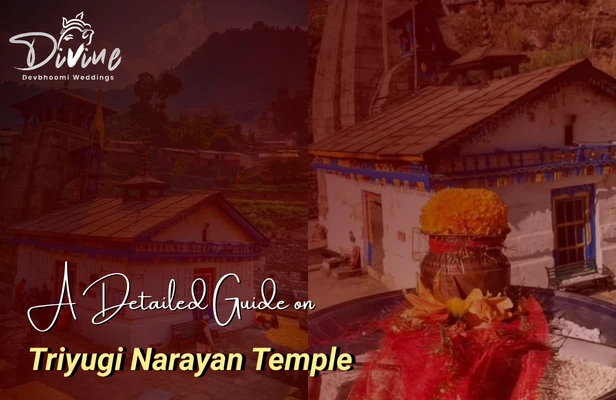
The temple is built in a style that looks similar to the famous Kedarnath Temple, with stone walls and a traditional Himalayan feel. It sits in a quiet village with open mountain views.
Temple weddings in India are growing fast, and Triyuginarayan is leading the trend in Uttarakhand. Local reports say the temple has seen over 500 weddings in a single early season, with more than 100 weddings a month in peak months. Here is why the trend is rising:
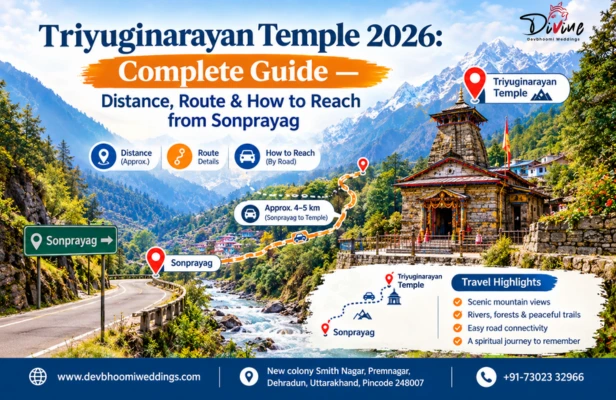
Triyuginarayan is about 230 to 250 km from Rishikesh by road. The drive usually takes 8 to 10 hours with breaks. Mountain roads are slow, so plan your travel in daylight.
|
Starting point |
How to travel |
Approximate time |
|
Delhi / NCR / Ghaziabad |
Train or car to Haridwar or Rishikesh, then hire a car or tempo traveller up to Rudraprayag, Guptkashi and the temple village. |
1 day (reach Rishikesh/Haridwar in 5-6 hours, stay overnight, then go to the temple next morning) |
|
Dehradun (Jolly Grant Airport) |
Taxi from the airport via Rishikesh, Devprayag, Srinagar, Rudraprayag and Guptkashi. |
9-11 hours |
|
Rishikesh / Haridwar |
Road journey along the Alaknanda river route. |
8-10 hours |
|
Rudraprayag town |
Drive towards Guptkashi, then continue to Triyuginarayan. |
Around 3-4 hours |
|
Travel Tip May and June overlap with the Char Dham yatra season. Roads and hotels around Rudraprayag and Guptkashi can be very busy. Start early in the morning, add extra buffer time, and book rooms well in advance. |
Distances and travel times are approximate and change with traffic, road work and weather. Check live road conditions before you leave.
The best months for a Triyuginarayan temple wedding are May-June and September-November. The weather is pleasant, views are clear, and travel is easier.
|
Month |
Weather and travel |
Our view |
|
March - April |
Cool, spring flowers, fewer crowds. Nights can still be cold. |
Good, but check wedding dates (muhurat) |
|
May - June |
Most popular season. Pleasant days, cool evenings, clear mountain views. Roads are busy due to yatra. |
Best, but book very early |
|
July - August |
Heavy monsoon. High risk of landslides, road blockages and travel delays. |
Avoid |
|
September - November |
Post-monsoon freshness, clear skies, comfortable weather. Nights get colder in November. |
Best |
|
December - February |
Very cold. Snow possible at higher places. Elders and children may struggle. |
Difficult, only for cold-lovers |
Hindu weddings follow auspicious dates (muhurat). Some periods, such as Chaturmas, are traditionally avoided for weddings. In some years there is also an extra month (Adhik Maas), which can reduce the number of good dates. Ask your family pandit or the temple priest to confirm shubh muhurat before you finalise travel and hotels.
Start booking 6 to 7 months before your wedding date, and even earlier for May-June. Booking is usually handled offline. Follow these steps.
|
Booking Warning Wedding rules, charges and availability can change. Verify the latest information directly before making any advance payment. Be careful of unknown agents who promise "guaranteed dates" without any proof. |
You will usually need identity proof, age proof, address proof and passport-size photos for both partners. Exact requirements can vary, so confirm with the priest committee or your planner.
|
Document |
Details |
|
Identity proof |
Aadhaar card (most commonly used) for bride and groom |
|
Age proof |
Birth certificate, school leaving certificate or 10th marksheet. Legal age is 21 for men and 18 for women. |
|
Address proof |
Aadhaar, passport, voter ID or utility bill |
|
Photographs |
Passport-size photos of each partner (carry 4 to 6 each) |
|
Witnesses |
Two or more witnesses with their ID proofs (keep them ready for registration) |
|
Previous marriage documents (if any) |
Divorce decree or death certificate of earlier spouse |
|
Wedding card (optional) |
Sometimes asked as a supporting document |
Carry both original documents and photocopies, and keep digital copies on your phone. Mountain network can be weak.
Yes. A Hindu wedding performed with proper rituals is valid under Indian law. But you should also register your marriage and get an official certificate. A certificate from a temple is generally not a replacement for government registration.
This certificate is important for passport name change, visa applications, spouse visa, insurance, bank accounts, property papers and many other needs.
|
Important for Outside-State Couples If you live outside Uttarakhand, rules about where and how you can register can differ. Many couples also register under the Hindu Marriage Act in their home city. Ask a local lawyer, the sub-registrar office or an experienced planner before you travel so you know exactly which route to follow. This blog is for general information and is not legal advice. |
There is no single fixed price for a Triyuginarayan temple wedding. The cost depends on the number of guests, travel distance, season, hotel choice and the services you pick. Below are realistic budget ranges to help you plan. These are our planning estimates, not official rates, so always compare written quotes.
|
Budget type |
Typical guests |
Estimated total |
What it usually covers |
|
Simple and spiritual |
15-30 |
Rs 1.5 - 4 lakh |
Priest and puja, basic flowers and decor, 1-2 nights stay, simple vegetarian meals, local transport, basic photography |
|
Comfortable family wedding |
40-80 |
Rs 4 - 10 lakh |
Good hotel stay for 2-3 nights, haldi and mehndi setup, makeup artist, candid photographer, decor, local music, tempo traveller |
|
Premium destination wedding |
80-150 |
Rs 10 - 25 lakh or more |
Resort stay, themed decor, sangeet and reception, videographer, drone or cinematic team, live food counters, guest hampers |
|
Item |
What affects the price |
|
Priest and rituals |
Type of puja, number of priests, extra rituals |
|
Temple-related arrangements |
Season, number of guests, any local contribution or arrangement fees. Confirm directly. |
|
Accommodation |
Largest cost for most weddings. Hotel category, number of rooms, number of nights. |
|
Food and catering |
Number of guests, menu type, distance for supplies |
|
Decoration and flowers |
Simple marigold decor vs themed setups |
|
Transport |
Delhi/Dehradun pick-up, tempo travellers, local cars, baraat arrangements |
|
Photography and video |
Candid vs traditional, number of team members, drone, travel cost for the team |
|
Makeup and styling |
Travelling artists charge extra for stay and travel |
|
Music |
Local dhol-damau group vs DJ or live band |
|
Marriage registration |
Small government fee plus help from a planner if hired |
Smart Ways to Save Money
The wedding follows Vedic traditions around the Akhand Dhuni. The exact order can vary based on your family customs and the priest, but a typical flow looks like this.
Many couples also offer samidha (sacred wood) to the Akhand Dhuni and keep a little ash as prasad. Ask your priest about what is allowed and how to do it properly.
Note: Rules about photography, videography, drones and crowd limits inside the temple area can change. Always ask the priest committee in advance.
Read More - Best Places to Get Married in Uttarakhand – Top Wedding Destinations, Venues, Cost & Complete Guide
|
Time |
Activity |
|
5:30 - 6:30 AM |
Wake up, bath, early tea. Bride's makeup begins. |
|
7:00 - 8:00 AM |
Haldi touch-up or family photos in soft morning light |
|
8:30 AM |
Groom's baraat starts with dhol-damau |
|
9:00 AM |
Arrival at temple, milni, jaimala |
|
9:30 - 11:30 AM |
Main wedding rituals, pheras around Akhand Dhuni |
|
11:30 AM - 12:30 PM |
Blessings, temple darshan, family and couple portraits |
|
1:00 - 2:30 PM |
Wedding lunch at hotel |
|
Afternoon |
Rest. Mountain journeys and rituals can be tiring. |
|
5:00 - 6:30 PM |
Golden hour couple shoot |
|
7:30 PM onwards |
Dinner, small celebration or music |
Rooms right next to the temple are limited, so most couples use nearby hotels, resorts and homestays for stay, food, haldi, mehndi, sangeet and reception. Search around these areas:
Most families prefer simple, fresh, vegetarian food because it suits the temple town. Do not plan alcohol near the temple area. Ask your hotel if they can cook traditional Garhwali dishes such as jhangora kheer, kafuli, chainsoo, aloo ke gutke and mandua roti, along with regular North Indian options. Keep a hot chai and snack counter ready for guests who have just finished a long drive.
Choose a team that has shot in the mountains before. Ask if they have backup equipment, as repair shops are far. Book 3 to 4 months in advance. Plan portraits at sunrise and golden hour, when the light is best.
Book a makeup artist who can travel and stay, and do a trial before you leave. Keep touch-up kits for cold weather and dry skin.
Simple decor looks best in a sacred setting. Marigold, lotus, mango leaves and seasonal local flowers are good choices. Avoid heavy plastic decor and thermocol. They harm the mountain environment.
Local dhol-damau players add a special feel to the baraat and are a great way to support local artists. Keep loud DJ music for the hotel function area, not the temple.
|
Day |
Plan |
|
Day 1 |
Reach the hotel by afternoon. Rest and settle in. Evening mehndi with light music and tea. Early dinner. Meet the priest to confirm the rituals and timings. |
|
Day 2 (Wedding day) |
Morning haldi touch-up, baraat, temple wedding rituals, blessings, lunch. Afternoon rest. Golden hour photo shoot. Dinner and a small celebration. |
|
Day 3 |
Relaxed breakfast, family farewell, temple darshan again if you wish. Start journey back or begin the honeymoon trip. Registration documents are submitted online once you return, within 60 days. |
|
When |
What to do |
|
6-7 months before |
Finalise date with pandit. Contact the priest committee or planner. Fix guest list and budget. Pay a small advance. |
|
5 months before |
Book hotels, transport and the main vendors. Start outfit shopping. |
|
4 months before |
Book photographer and makeup artist. Share wedding cards and travel details with guests. |
|
3 months before |
Confirm travel tickets. Order puja items list. Check insurance. |
|
2 months before |
Finalise menu and decor. Get all documents ready and scanned. |
|
1 month before |
Confirm all vendors in writing. Do makeup trials. Plan packing. |
|
1 week before |
Check weather and road updates. Pack bags. Charge devices. Prepare small cash. |
|
1 day before |
Reach the destination. Meet the priest. Rest well. |
|
After the wedding |
Submit marriage registration within 60 days. Collect the certificate. Update names on documents if needed. |
Since you are already in the Garhwal Himalayas, make the most of the trip with a short honeymoon or family tour.
For most outside-state couples, yes. Handling priest booking, local permissions, stay, transport, vendors, food and registration from a faraway city can be stressful. A planner who knows the area can:
|
Plan Your Triyuginarayan Wedding From temple priest coordination to hotel booking, decor, photography and documents, our team helps you plan a smooth, stress-free wedding in the mountains. |
Yes, love marriages are allowed under Hindu rituals.
Yes, you receive a temple certificate which can be used for legal registration.
Usually local priests conduct rituals, but exceptions may be possible.
Yes, photography and videography are permitted.
Yes, but typically at nearby hotels/resorts, not inside the temple.
According to Hindu belief, Lord Shiva and Goddess Parvati were married at Triyuginarayan Temple in Rudraprayag district, Uttarakhand. Lord Vishnu is said to have performed the bride-giving role, and Lord Brahma acted as the priest. The sacred Akhand Dhuni in front of the temple is believed to be the fire that witnessed the wedding.
There is no single fixed cost. A simple wedding with 15 to 30 guests may cost around Rs 1.5 to 4 lakh. A comfortable family wedding with 40 to 80 guests may cost around Rs 4 to 10 lakh. A premium destination wedding can go above Rs 10 lakh. These are planning estimates. Hotel stay, food, travel and vendors usually take the biggest share, so always ask for a written quote.
Contact the temple's local priest committee or a trusted local wedding coordinator. Confirm your date, priest, rituals and charges. Ask for a written quote and pay only a small advance. Then book stay, travel and vendors. Booking is mostly offline and there is no official helpline number, so double-check details before paying.
Book at least 6 to 7 months before your wedding date. For peak months like May and June, book even earlier. Photographers and makeup artists should be booked about 3 to 4 months ahead. Hotels near the temple fill up fast in the wedding season.
May-June and September-November are the best months because the weather is pleasant and travel is easier. Avoid July and August due to monsoon and landslide risk. December to February are very cold. Always confirm your shubh muhurat with a pandit.
You usually need Aadhaar or another ID proof, age proof (birth certificate or school certificate), address proof, and 4 to 6 passport-size photos of each partner. Keep two witnesses ready with their IDs. If either person was married before, carry the divorce decree or death certificate. Confirm the exact list with the priest committee or your planner.
A Hindu wedding performed with proper rituals is valid. But you should also register the marriage with the government and take a certificate, because a temple certificate alone may not be accepted for passport, visa or immigration. Under Uttarakhand's Uniform Civil Code, marriages must be registered within 60 days, and registration can be done online.
Rishikesh to Triyuginarayan is roughly 230 to 250 km, and the drive can take 8 to 10 hours. From Delhi, most couples travel to Haridwar or Rishikesh first (5 to 6 hours), rest for the night, and then continue the next morning. These are approximate figures, so check road conditions before leaving.
There is no single fixed public number, but the temple and village are small, so most weddings are intimate with 20 to 100 guests. A smaller guest list makes stay, food, transport and rituals much easier. Ask the priest committee about any limits for your date, and use nearby hotels for larger functions.
Yes. The main ritual takes place at the temple, while other functions are usually held at nearby hotels, resorts or homestays in Triyuginarayan, Sonprayag, Guptkashi, Ukhimath or Rudraprayag. Check that your hotel has open space, hot water, parking and power backup. Keep loud music and parties away from the temple area.
A Triyuginarayan temple wedding is not about showing off. It is about starting your married life with faith, family and peace, in the same land where Shiva and Parvati are believed to have taken their vows.
With the right plan, the right priest, a clear budget and enough buffer time, it can be one of the most beautiful and memorable weddings you will ever have. Book early, verify everything in writing, travel with comfort in mind, and do not forget to register your marriage.





























From pre-wedding celebrations to grand wedding days, we provide end-to-end services for all functions.
Copyright © 2024 | All Rights reserved by Divine Dev Bhoomi | Designed & Developed by Edtech Innovate Pvt. Ltd.