

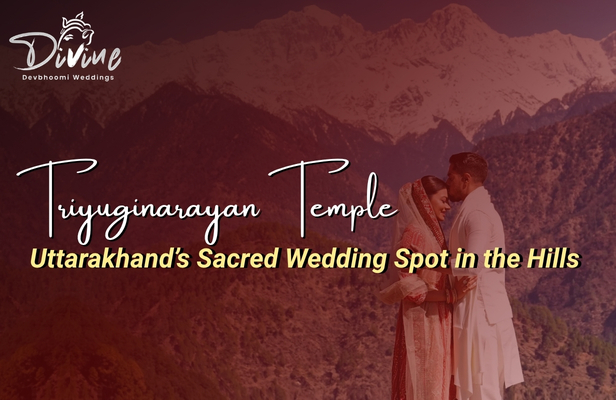
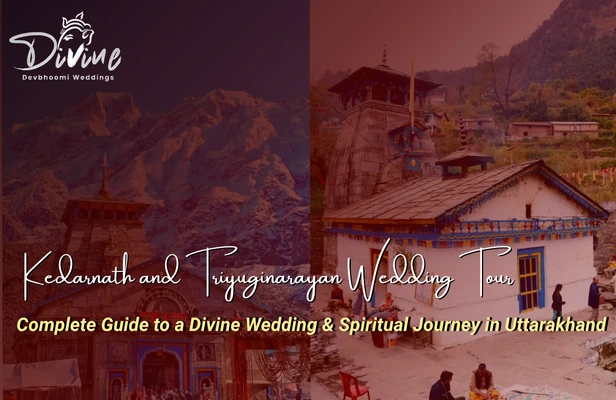
Why is Triyuginarayan famous for weddings? The answer lies thousands of years deep in Hindu mythology, in a quiet Himalayan village where an eternal flame has burned since the divine marriage of Lord Shiva and Goddess Parvati. Nestled in the Rudraprayag district of Uttarakhand, Triyuginarayan Temple is widely regarded as the exact spot where the universe's most celebrated wedding took place, making it one of the most sacred wedding destinations in India today. As modern couples increasingly move away from conventional banquet-hall weddings and seek meaningful, spiritual destination weddings, Triyuginarayan has emerged as a deeply symbolic choice. Set against the backdrop of Devbhoomi, the Land of Gods, Uttarakhand offers a rare combination of mythology, natural beauty, and ritual authenticity. This guide explores the mythological roots, unique wedding experience, planning process, costs, rituals, travel logistics, and practical tips every couple needs before choosing Triyuginarayan as their wedding venue.
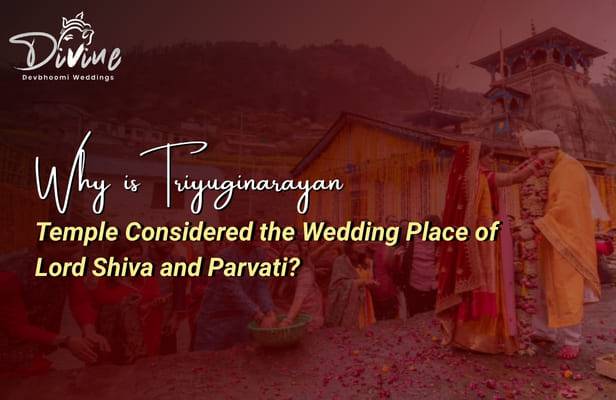
Triyuginarayan's fame as a wedding destination is rooted in both history and living tradition. Local legend and scriptural references describe this village as the location where Lord Shiva and Goddess Parvati were married across three yugas (ages) — hence the name Triyuginarayan, meaning "Lord Vishnu of the three eras." According to the story, Lord Vishnu himself acted as the divine witness to the wedding, while Lord Brahma, the creator, performed the sacred rituals as the officiating priest. This makes Triyuginarayan one of the very few places in India directly linked to the wedding ceremony of Shiva and Parvati, rather than merely a temple dedicated to them.
At the heart of the temple courtyard burns the Akhand Dhuni, an eternal fire believed to have been lit at the time of the original wedding and kept alive without interruption ever since. Pilgrims and couples carry sacred ash from this fire as a blessing for marital harmony. For devout Hindu families, marrying in the presence of this fire is considered auspicious beyond measure, and this unbroken continuity is a major reason couples travel from across India and abroad to marry here.
The story begins with Lord Shiva's long penance in the Himalayas following the loss of his first consort, Sati. Goddess Parvati, determined to win Shiva as her husband, undertook rigorous austerities in these very mountains, ultimately earning his acceptance. Their wedding was arranged with full Vedic ceremony: Brahma chanted the mantras, Vishnu stood witness, and the entire pantheon of gods is said to have gathered to bless the union.
The sacred fire lit for the wedding rituals — the Akhand Dhuni — has, according to tradition, never been extinguished. Devotees believe that offering wood to this fire and taking a dip in the nearby Rudra Kund, Vishnu Kund, and Brahma Kund before darshan brings spiritual purification. For newly married couples, performing even a symbolic ritual near this flame is considered a blessing that echoes the eternal bond of Shiva and Parvati themselves, reinforcing why Triyuginarayan Temple wedding traditions carry such deep religious weight.
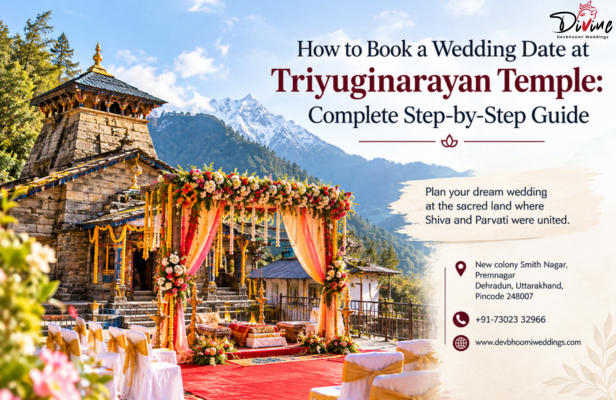
A wedding at Triyuginarayan is unlike any conventional celebration. It combines centuries-old spirituality with the raw beauty of the Himalayas, creating an experience that is intimate, immersive, and unforgettable. Couples frequently describe it as the most meaningful day of their lives specifically because of its scale and setting.
Planning a Triyuginarayan destination wedding requires more coordination than a city wedding, mainly due to its remote mountain location. Here is a step-by-step approach couples typically follow:
For couples who prefer a fully managed experience, curated wedding packages simplify this entire process. Devbhoomi Weddings offers ready-made packages designed specifically for Triyuginarayan and nearby Himalayan wedding destinations, covering permissions, décor, catering, and coordination end-to-end. Three popular options include:
Full details, inclusions, and customization options for each package can be reviewed directly on the Devbhoomi Weddings package page before booking.
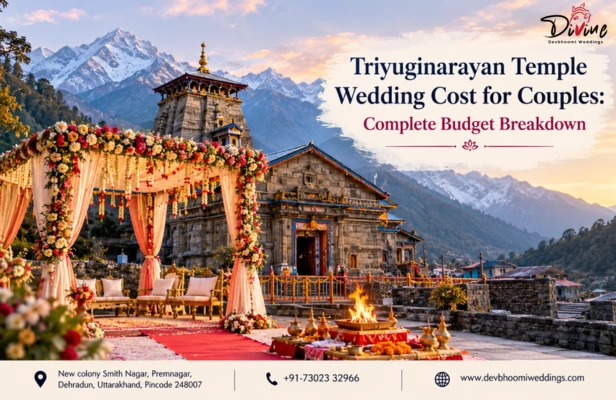
The overall cost of a Triyuginarayan wedding depends on several variables, including guest count, accommodation category, décor scale, catering style, transportation needs, and whether a professional wedding planner is hired. Below is a structured overview of estimated cost ranges to help with budgeting:
|
Wedding Element |
Estimated Range (INR) |
Notes |
|
Temple Permissions & Priest Fees |
₹15,000 – ₹40,000 |
Varies by ritual complexity |
|
Accommodation (per couple/night) |
₹2,500 – ₹12,000 |
Depends on category chosen |
|
Décor & Mandap Setup |
₹25,000 – ₹1,50,000 |
Based on scale and theme |
|
Catering (per guest) |
₹600 – ₹1,800 |
Local vs multi-cuisine menus |
|
Transportation |
₹20,000 – ₹1,00,000 |
Depends on guest count & vehicle type |
|
Photography & Videography |
₹40,000 – ₹1,50,000 |
Based on team size & duration |
|
Wedding Planner Services |
₹50,000 – ₹3,00,000+ |
Full-service vs partial coordination |
These figures are indicative estimates only; actual costs vary based on season, vendor selection, and the specific package chosen. Booking through an established wedding planning service, such as the packages listed above, often provides better cost predictability since permissions, logistics, and vendor coordination are bundled together.
Weddings at Triyuginarayan follow traditional Vedic rites, performed with the temple priests' guidance and blessed by the presence of the Akhand Dhuni. Key rituals include:
Each ritual carries deep spiritual symbolism, and performing them beside the same fire associated with Shiva and Parvati's wedding is considered an unparalleled blessing for the couple's future together.
Since Triyuginarayan itself is a small village, most wedding parties stay in nearby towns and travel to the temple for the ceremony. Options range from simple guest houses to comfortable resorts:
Booking accommodation early is essential, especially during peak wedding seasons, since room availability in these mountain towns is limited.
Spring offers pleasant weather, blooming rhododendrons, and excellent visibility for photography, along with moderate crowd levels, making it one of the most popular seasons for weddings.
Summer brings warmer days and generally good accessibility, though early monsoon showers can begin by late June, so couples should plan with flexible timelines.
Autumn is widely considered the best season, with clear skies, crisp mountain air, stunning photography opportunities, and comfortable travel conditions once the monsoon has fully receded.
The nearest airport is Jolly Grant Airport in Dehradun, roughly 210–220 km away, well connected to Delhi and other major cities.
The nearest major railway station is Rishikesh Railway Station, from where the journey continues by road through the Himalayan foothills.
Triyuginarayan is accessible by road from Delhi (approximately 430–450 km), Dehradun (approximately 210 km), Haridwar (approximately 220 km), and Rishikesh (approximately 200 km). The final stretch from Sonprayag involves a short uphill drive or trek, so hiring reliable mountain-experienced drivers is strongly recommended.
Practical travel tips: book vehicles in advance during wedding season, keep buffer days for weather delays, and brief guests about altitude and mountain road conditions ahead of arrival.
Triyuginarayan remains one of India's most sacred and meaningful wedding destinations, and understanding why Triyuginarayan is famous for weddings makes the experience even more powerful for couples who choose it. Its mythological connection to the marriage of Lord Shiva and Goddess Parvati, the unbroken Akhand Dhuni, and the serene Himalayan setting together create a wedding experience unlike any other in the country. While the location demands careful planning around travel, accommodation, and rituals, the reward is a deeply spiritual, intimate celebration surrounded by mountains and centuries of tradition. With thoughtful preparation and the support of experienced wedding professionals or curated packages, couples can turn this ancient, sacred venue into the backdrop for their own unforgettable beginning.
1. Why is Triyuginarayan famous for weddings?
Triyuginarayan is believed to be the exact site where Lord Shiva and Goddess Parvati were married, with Lord Vishnu as witness and Lord Brahma performing the rites, making it one of Hinduism's most sacred wedding destinations.
2. Where did Lord Shiva and Goddess Parvati get married?
According to legend and local tradition, their wedding took place at Triyuginarayan in present-day Rudraprayag district, Uttarakhand, beside the eternal Akhand Dhuni fire.
3. Can anyone get married at Triyuginarayan Temple?
Yes, couples from any background who wish to follow Hindu wedding traditions can arrange a ceremony here, typically with the required temple permissions and priest coordination.
4. How much does a Triyuginarayan Temple wedding cost?
Costs vary widely based on guest count, décor, and services, generally ranging from around ₹1,05,000 for essential packages to ₹4,68,000 or more for premium, fully curated celebrations.
5. How can I book a wedding at Triyuginarayan Temple?
Weddings can be booked directly through local temple authorities or through established wedding planners offering curated Himalayan wedding packages that handle permissions and logistics.
6. Which wedding rituals are performed at Triyuginarayan Temple?
Common rituals include Ganesh Puja, Kanyadaan, Vedic mantra chanting, pheras around the Akhand Dhuni, the Sindoor ceremony, and closing blessings from temple priests.
7. What is the significance of the Akhand Dhuni?
The Akhand Dhuni is the eternal fire believed to have been lit during Shiva and Parvati's original wedding and kept burning continuously since, symbolizing everlasting marital bonds.
8. Which is the best season for a Triyuginarayan wedding?
Autumn, from September to November, is generally considered ideal due to clear skies and comfortable travel, though spring is also popular for its pleasant weather.
9. How far is Triyuginarayan Temple from Rishikesh and Haridwar?
Triyuginarayan is approximately 200 km from Rishikesh and 220 km from Haridwar by road, with the final stretch involving mountain roads best covered with an experienced driver.




















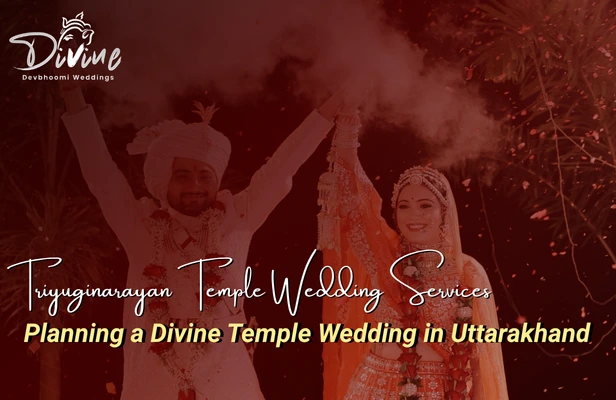































From pre-wedding celebrations to grand wedding days, we provide end-to-end services for all functions.
Copyright © 2024 | All Rights reserved by Divine Dev Bhoomi | Designed & Developed by Edtech Innovate Pvt. Ltd.