
Yes, a Triyuginarayan Temple Wedding can absolutely be planned during Shravan 2026, and for devout Shiva worshippers, the month carries deep spiritual meaning since this is the very temple where Lord Shiva and Goddess Parvati are believed to have married. However, Shravan coincides with the Himalayan monsoon, so couples should expect rain, occasional road disruptions, and limited last-minute availability. With advance booking, flexible dates, and experienced local coordination, a Shravan wedding at Triyuginarayan can be both deeply spiritual and beautifully memorable.
Introduction
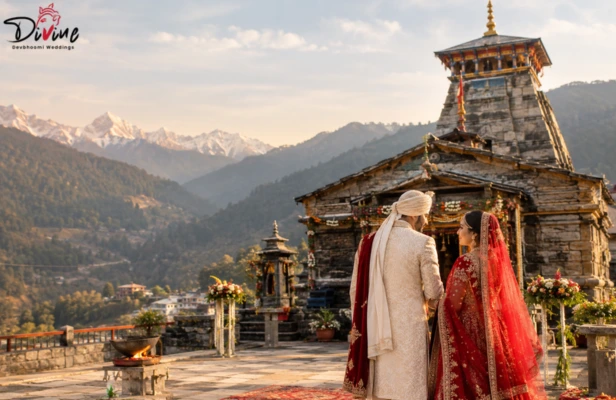
Nestled in the lap of the Garhwal Himalayas, the Triyuginarayan Temple Wedding experience is unlike any other wedding in India. This ancient shrine, located near Sonprayag in Rudraprayag district, is revered as the eternal wedding venue of Lord Shiva and Goddess Parvati — a divine union that, according to legend, is still burning bright in the form of the Akhand Dhuni, a flame said to have witnessed the original celestial marriage and never extinguished since.
For couples who want their wedding to be more than a ceremony — who want it to be a spiritual pilgrimage, a vow taken in the presence of the gods themselves — a Triyuginarayan Temple Wedding during Shravan (Sawan) holds unmatched significance. Shravan is the holiest month in the Hindu calendar for Shiva devotees, marked by fasting, temple visits, and heightened devotion across the country. Choosing to marry at this exact temple during this exact month is, for many couples, the ultimate expression of faith.
But Shravan is also monsoon season in the Himalayas. That means misty mountains and lush greenery on one hand, and unpredictable rainfall and mountain road conditions on the other. This guide is built to help couples, families, and destination wedding planners understand everything about a Sawan wedding 2026 at Triyuginarayan — from weather and rituals to booking timelines, accommodation, travel, and packing — so you can plan with confidence and devotion in equal measure.
Located close to Sonprayag, along the route toward Kedarnath, Triyuginarayan sits at the meeting point of three sacred streams — Rudra Kund, Vishnu Kund, and Saraswati Kund — where, according to tradition, Lord Vishnu himself acted as the officiant during Shiva and Parvati's wedding, and Lord Brahma sat on the Brahma Shila to perform the rituals. The temple's name itself, "Tri-Yugi-Narayan," refers to the belief that the wedding fire has burned across three yugas (ages) without ever going out. For couples raised on this legend, the idea of taking their own pheras beside that same flame is often described as one of the most emotional moments of their lives.
This guide is written specifically for the Shravan Special Wedding season of 2026 — not a generic, evergreen overview — so you'll find month-specific weather expectations, realistic booking timelines, and monsoon-tested travel advice throughout. Whether you're a Shiva devotee planning your dream wedding, an NRI couple coordinating from abroad, or a destination wedding planner researching this venue for a client, this article aims to answer every practical and spiritual question you might have before committing to a Wedding at Triyuginarayan Temple this Shravan.
Why Shravan Is Considered Sacred for Lord Shiva Devotees
Shravan Maas (also called Sawan) is the fifth month of the Hindu lunar calendar and is dedicated entirely to Lord Shiva. Millions of devotees across North India observe fasts, undertake pilgrimages, and offer prayers throughout this period.
Key reasons Shravan holds such spiritual weight:
For newly married couples, beginning their journey together during a month so closely tied to devotion and divine partnership is considered an added layer of blessing — a big reason so many couples specifically search for a Shravan Special Wedding at this temple.
How Shravan is typically observed by devotees:
Because Triyuginarayan is one of the few temples in India directly linked to a mythological wedding rather than general Shiva worship, the overlap between "Shravan the sacred month" and "Triyuginarayan the sacred wedding site" is what makes this particular combination — a Sawan wedding in Uttarakhand at this specific temple — so uniquely sought after by devout couples.
Why Choose a Triyuginarayan Temple Wedding During Shravan?
A Triyuginarayan Destination Wedding during Shravan offers an experience that blends devotion, intimacy, and natural beauty in a way few other wedding venues can match.
Quick highlights:
Is Shravan the Best Time for a Triyuginarayan Temple Wedding?
This is the single most important question couples ask, and the honest answer is: it depends on your priorities. Shravan is spiritually the most meaningful month to marry at this Shiva temple, but it is also logistically the most challenging due to monsoon conditions.
Pros vs Cons: Shravan Wedding at Triyuginarayan Temple
|
Aspect |
Pros |
Cons |
|
Spiritual significance |
Highest of the year for Shiva devotees; aligns with Shravan Mondays |
None — this is Shravan's biggest strength |
|
Scenery |
Lush green mountains, waterfalls, misty temple views |
Reduced visibility on very rainy days |
|
Crowd levels |
Fewer tourists, more intimate ceremony |
Fewer local vendors actively operating |
|
Weather |
Cooler temperatures, romantic monsoon ambience |
Rain, humidity, occasional landslides on mountain roads |
|
Travel |
Less traffic congestion than peak season |
Road closures possible after heavy rainfall |
|
Booking |
Less competition for dates at the temple itself |
Limited accommodation options open; some close seasonally |
|
Photography |
Dramatic, cinematic, moody visuals |
Requires backup indoor plans and rain-proof equipment |
|
Cost |
Potentially lower vendor rates in off-peak season |
Contingency costs (buffer days, backup travel) may apply |
Who Should Choose Shravan?
Who Should Consider Other Seasons?
Did You Know? Triyuginarayan is considered so sacred that even today, some couples from across India specifically time their engagement to Shravan just so they can plan their actual wedding here in a following, more weather-stable month — while still performing a smaller Shravan ritual visit.
Comparing Shravan to Other Wedding Seasons at Triyuginarayan
|
Season |
Months |
Weather |
Crowd Level |
Best For |
|
Shravan (Monsoon) |
Mid-July to Mid-August |
Cool, rainy, humid, green |
Moderate (devotee-heavy) |
Spiritual significance, monsoon aesthetics |
|
Post-Monsoon |
September–October |
Clear skies, crisp air |
High |
Reliable weather, clear mountain views |
|
Winter |
November–February |
Cold, occasional snow at higher points |
Low |
Quiet, snow-touched photography |
|
Summer/Pre-Monsoon |
April–June |
Warm, mostly dry |
Very High |
Easier travel, peak tourist season |
This comparison makes it clear that no season is universally "best" — it genuinely comes down to whether spiritual timing or weather predictability matters more to your family.
Shravan Weather at Triyuginarayan Temple (2026 Guide)
Triyuginarayan sits at an elevation of roughly 1,980 meters (about 6,500 feet) in the Garhwal Himalayas, near Sonprayag and Kedarnath. During Shravan (typically mid-July to mid-August), the region is in the heart of the Himalayan monsoon.
What to Expect
Weather Checklist for a Shravan Wedding
Complete Booking Guide During Shravan
Booking a Triyuginarayan Temple Booking during Shravan requires more advance planning than other seasons because vendor and accommodation availability is more limited. Here's a step-by-step process:
Documents and Formalities to Prepare in Advance
While the temple ceremony itself is a religious rite, couples who also want their marriage legally registered (particularly relevant for NRI couples or those needing documentation for visas, name changes, or joint accounts) should prepare the following ahead of travel:
It's strongly recommended to consult a local wedding coordinator or legal advisor a few months in advance to confirm exactly which documents apply to your specific situation, since requirements can vary based on nationality, home state, and whether registration will happen locally or after returning home.
Suggested Wedding Planning Timeline
|
Timeline Before Wedding |
Task |
|
4–6 months prior |
Shortlist dates, confirm temple availability, book accommodation |
|
3 months prior |
Finalize wedding planner, confirm core vendors (priest, photographer, decorator) |
|
6–8 weeks prior |
Confirm travel bookings, guest list logistics, and documentation |
|
2–3 weeks prior |
Reconfirm all vendors, check weather patterns, finalize packing lists |
|
1 week prior |
Track daily weather forecasts, confirm road conditions, brief guests on travel plan |
|
Day of ceremony |
Reach venue a day early if possible to avoid weather-related last-minute travel |
Wedding Rituals Performed During Shravan
A Triyuginarayan Wedding Rituals ceremony follows traditional Vedic customs, performed by temple priests around the sacred Akhand Dhuni. The core structure remains consistent year-round, though the spiritual weight feels heightened during Shravan.
Ritual Timeline (Typical Ceremony Flow)
|
Stage |
Approximate Duration |
|
Ganesh Puja & preliminary rituals |
20–30 minutes |
|
Kanyadaan |
15–20 minutes |
|
Havan |
30–40 minutes |
|
Pheras around Akhand Dhuni |
20–30 minutes |
|
Sindoor & Mangalsutra |
10–15 minutes |
|
Ashirwad & closing blessings |
15–20 minutes |
(Exact durations vary depending on family customs and priest guidance.)
Can Mehendi and Haldi Be Organized Alongside the Temple Ceremony?
Yes — many couples choose to organize Mehendi and Haldi ceremonies either at their accommodation or at a nearby open-air venue a day or two before the main temple wedding. Because Shravan is monsoon season, it's worth planning these pre-wedding functions with a covered or indoor backup space, since outdoor decor and seating are more vulnerable to sudden rain. Local planners familiar with the region can usually arrange a simple, elegant Mehendi/Haldi setup using local flowers, marigold decor, and Himalayan-style seating that complements the natural surroundings even during monsoon.
Some families also choose to keep these functions minimal and intimate during Shravan, reserving the bulk of celebration for the main temple ceremony itself, given the spiritual focus of the month.
Wedding Packages for Shravan Weddings
Most local planners and temple-affiliated coordinators offer tiered Triyuginarayan Wedding Package options. While exact inclusions vary by vendor, packages generally fall into these categories:
Seasonal note: During Shravan, some vendors adjust package pricing due to lower tourist demand, but logistics costs (like contingency transport) may offset the savings. Always ask specifically how monsoon contingencies are handled within each package tier before booking.
Accommodation Guide
Accommodation near Triyuginarayan is limited compared to larger hill stations, and availability tightens further during monsoon as some smaller properties reduce operations.
Monsoon Booking Tips
Food and Hospitality Near Triyuginarayan
Most accommodation options near the temple serve simple, home-style Garhwali and North Indian vegetarian food, which aligns naturally with the sattvic, devotional tone of a Shravan visit. Given the fasting traditions many devotees observe during this month, it's worth informing your accommodation or caterer in advance if guests will be observing Somwar Vrat or other Shravan-specific dietary restrictions, so appropriate fruit- and milk-based options are available on those days.
Travel Guide During Shravan
By Air
The nearest airport is Jolly Grant Airport in Dehradun, roughly 220–250 km from Triyuginarayan. From there, the journey continues by road via Rishikesh, Rudraprayag, and Sonprayag.
By Rail
The nearest major railway station is Rishikesh (or Haridwar for broader connectivity), from where the remaining journey to Triyuginarayan is completed by road.
By Road
Triyuginarayan is connected via the Rishikesh–Rudraprayag–Sonprayag route, with the final stretch from Sonprayag to the temple covering a shorter, steeper mountain road. This last stretch can be affected disproportionately by monsoon rainfall.
Monsoon Travel Precautions
The Final Approach: Sonprayag to Triyuginarayan
The last leg of the journey, from Sonprayag to Triyuginarayan village, is a short but steep mountain stretch. During Shravan, this section deserves particular attention:
Photography Tips for a Shravan Wedding
Monsoon photography at Triyuginarayan has a unique, cinematic quality that many couples find more romantic than dry-season shots — but it does require planning.
Essential Packing Checklist
For the Bride
For the Groom
For Family
For Guests
Monsoon-Specific Essentials (Everyone)
Expert Recommendations for a Smooth Shravan Wedding
Drawing on how experienced local planners typically approach monsoon weddings at this temple, a few practical recommendations stand out:
Common Mistakes to Avoid
Why Couples Choose Devbhoomi Weddings
Planning a Divine Wedding in Uttarakhand during monsoon requires genuine local expertise, not just enthusiasm. Experienced local coordinators bring value in several ways:
This kind of on-ground support becomes especially valuable during Shravan, when the margin for logistical error is smaller than in drier months. A well-coordinated Shravan wedding doesn't just rely on faith that the weather will cooperate — it rests on practical groundwork: verified vendor availability, real-time weather tracking, and a team on the ground who can adapt quickly if plans need to shift. Couples who invest in this kind of coordination consistently report a smoother, more peaceful experience, allowing them to stay present in the spiritual significance of the moment rather than worrying about logistics.
Conclusion
A Triyuginarayan Temple Wedding during Shravan 2026 offers something genuinely rare: the chance to marry at the very site where, according to legend, Lord Shiva and Goddess Parvati themselves were wed, during the one month of the year most sacred to Shiva devotees. The misty Himalayan scenery, the intimacy of a smaller ceremony, and the spiritual depth of taking your pheras around the ancient Akhand Dhuni make it an experience many couples describe as life-defining.
At the same time, Shravan is monsoon season in the mountains, and that reality shouldn't be underestimated. Rainfall, road conditions, and limited accommodation availability all call for careful, weather-aware planning. Couples who book early, build buffer time into their travel, prepare contingency plans, and lean on experienced local coordination tend to have the smoothest — and most meaningful — experience.
If spirituality and devotion matter more to you than guaranteed clear skies, a Shravan wedding at Triyuginarayan can be one of the most powerful ways to begin a marriage. With the right planning, the monsoon becomes part of the story rather than an obstacle to it.
Quick Answers
"Hey, is Triyuginarayan good for a monsoon wedding?" Yes — it's spiritually significant during Shravan, but plan for rain and build travel buffer time.
"What's the temple famous for?" It's believed to be the exact site where Lord Shiva and Goddess Parvati got married, marked by the eternal Akhand Dhuni flame.
"How do I get to Triyuginarayan Temple?" Fly into Dehradun or take a train to Rishikesh/Haridwar, then travel by road via Rudraprayag and Sonprayag.
"Is it far from Kedarnath?" Triyuginarayan lies along the same general route toward Kedarnath, near Sonprayag, making it a common stop for Char Dham travelers as well.
Frequently Asked Questions
1. Can weddings be performed during Shravan at Triyuginarayan Temple?
Yes, weddings are performed at Triyuginarayan Temple throughout Shravan. In fact, many Shiva devotees consider this the most spiritually meaningful month to marry here, since it aligns with the month traditionally associated with Shiva-Parvati's own union, though monsoon weather does require careful, weather-aware planning around travel and ceremony logistics.
2. Is Shravan considered auspicious for marriage?
Shravan is dedicated to Lord Shiva and is considered spiritually significant, especially for devout families and Shiva worshippers. Whether a specific date within Shravan is considered auspicious in the traditional astrological sense can vary by family, region, and individual horoscope, so it's worth confirming specific dates with a priest or family astrologer before finalizing your ceremony date.
3. What is the weather like at Triyuginarayan Temple during Shravan?
Expect temperatures between roughly 15°C and 25°C, frequent rainfall, higher humidity, and the possibility of temporary road disruptions due to the Himalayan monsoon. Mornings tend to be clearer, while afternoons often bring cloud cover or showers, so many families plan the core ceremony for earlier in the day where possible.
4. How early should I book a Triyuginarayan Temple wedding during Shravan?
It's advisable to begin booking temple dates, accommodation, and vendors at least 4–6 months in advance, since Shravan sees high devotee footfall despite being off-peak for general tourism. Popular Shravan Mondays in particular can see higher demand from other devotee families as well.
5. What rituals are performed during a Triyuginarayan wedding?
Core rituals include Ganesh Puja, Kanyadaan, Havan, pheras around the sacred Akhand Dhuni, Sindoor, Mangalsutra, and closing Ashirwad blessings from priests and elders. The ceremony follows traditional Vedic wedding structure, with the Akhand Dhuni pheras being the most unique and spiritually significant part specific to this temple.
6. Can NRIs get married at Triyuginarayan Temple?
Yes, NRI couples can marry at Triyuginarayan Temple. It's recommended to coordinate with a local wedding planner well in advance to manage documentation, travel logistics, time-zone coordination for remote family members, and any legal formalities required for a valid marriage registration in India or abroad.
7. Are monsoon weddings at Triyuginarayan Temple safe?
Monsoon weddings are generally safe with proper planning — this includes monitoring weather forecasts, building travel buffer time, choosing monsoon-experienced local transport, briefing guests on hill-terrain travel, and having contingency arrangements in place for the ceremony itself in case of heavy rain on the day.
Planning your Triyuginarayan Temple Wedding during Shravan 2026Careful, weather-aware planning paired with experienced local coordination can help you focus on what matters most — the spiritual significance of your union.
































































































From pre-wedding celebrations to grand wedding days, we provide end-to-end services for all functions.
Copyright © 2024 | All Rights reserved by Divine Dev Bhoomi | Designed & Developed by Edtech Innovate Pvt. Ltd.