
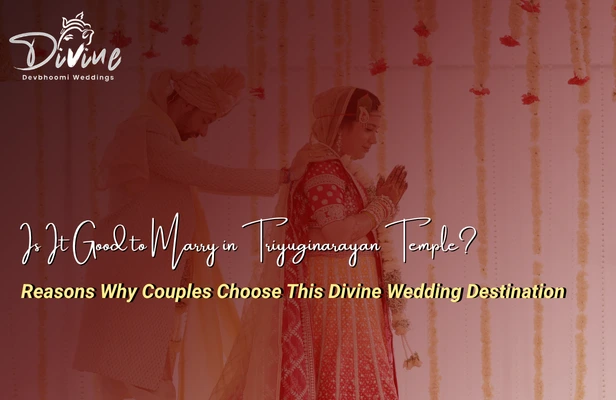
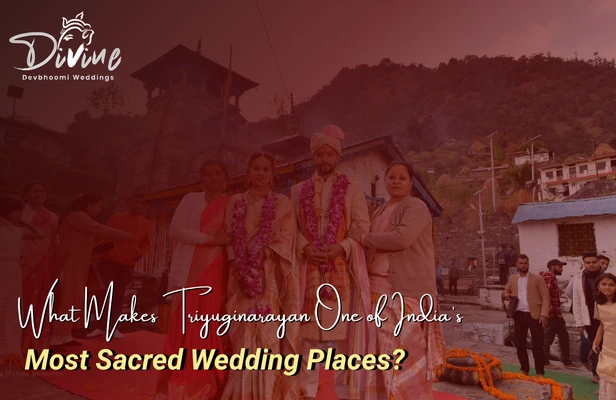
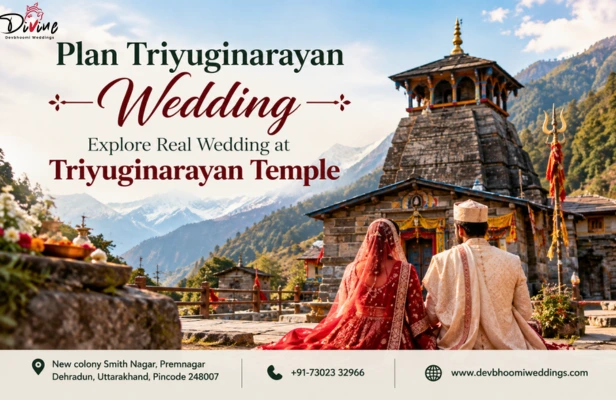
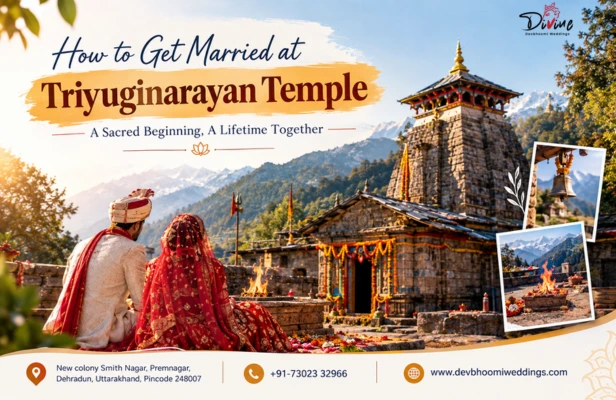
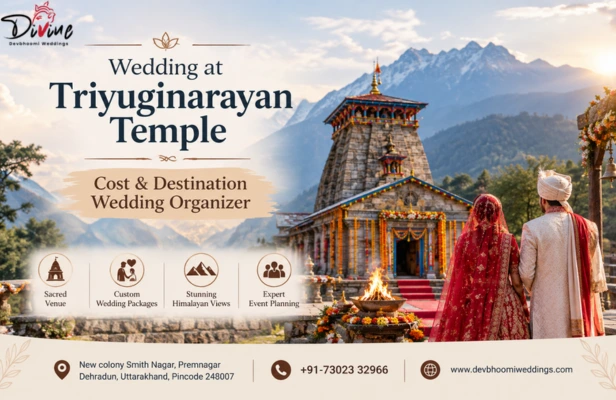
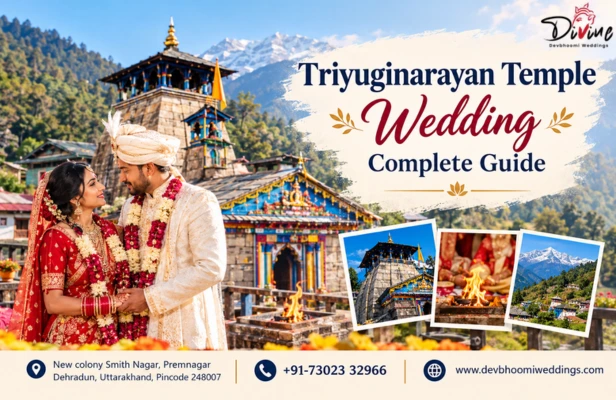
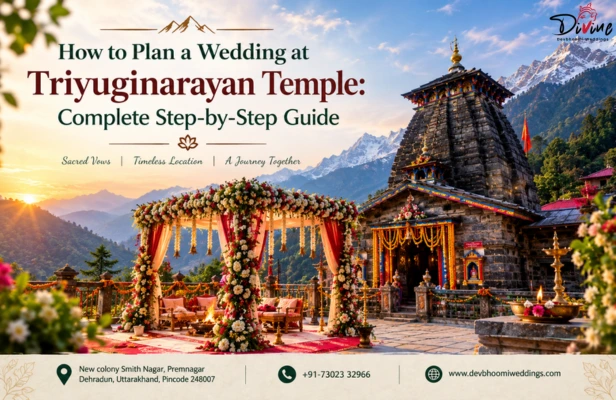
Yes, it is good to marry in Triyuginarayan Temple — for couples who want their wedding to feel sacred rather than staged. Nestled in the Garhwal Himalayas of Rudraprayag district, Uttarakhand, this ancient shrine is believed to be the exact spot where Lord Shiva and Goddess Parvati were married, with Lord Vishnu presiding as the divine witness. The temple's Akhand Dhuni, an eternal flame said to have been burning since that celestial wedding, still lights the pheras of couples who marry here today.
As more couples move away from noisy banquet halls toward meaningful, intimate ceremonies, spiritual destination weddings have become a defining trend. Uttarakhand, revered across India as Devbhoomi, the Land of the Gods, offers exactly that atmosphere — snow-dusted peaks, pine-scented air, and centuries of unbroken tradition. This guide answers, in complete detail, whether a Triyuginarayan Temple wedding is right for you, and how to plan one from start to finish.
Yes — Triyuginarayan Temple is considered one of the most auspicious wedding destinations in India. It is the mythological site of Lord Shiva and Goddess Parvati's wedding, blessed by the eternal Akhand Dhuni flame. Couples who marry here follow authentic Vedic rituals in a serene Himalayan setting, making the ceremony deeply spiritual, intimate, and memorable rather than purely ceremonial.
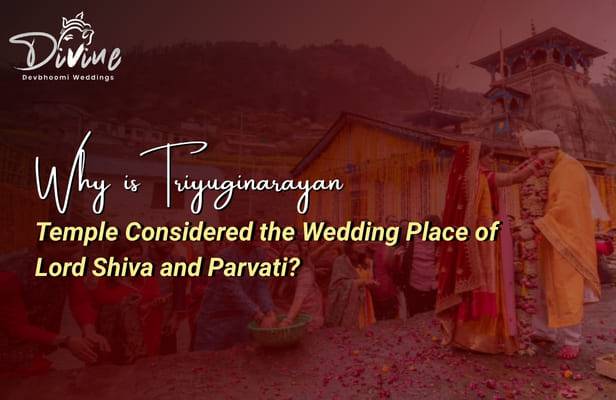
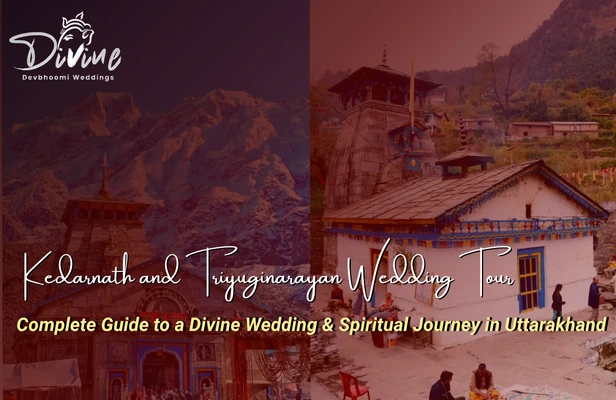
According to Hindu mythology, the wedding of Lord Shiva and Goddess Parvati took place at this very site during the Satya Yuga, with Lord Vishnu performing the role of the bride's brother and Lord Brahma officiating the sacred rites. The temple's name itself, Triyuginarayan, refers to the three yugas (ages) that the sacred flame is said to have witnessed.
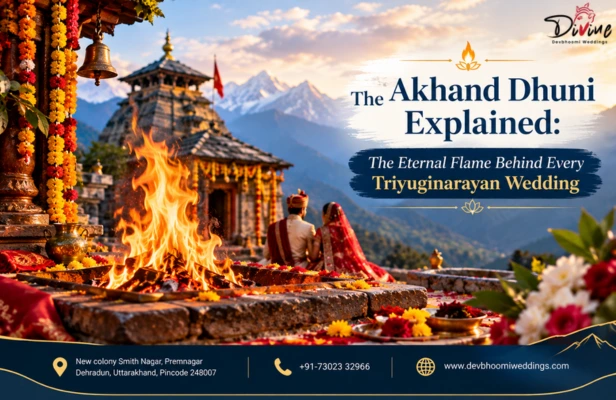
The Akhand Dhuni, an eternal fire believed to have burned continuously since that divine wedding, remains the spiritual centrepiece of the temple. Devotees offer wood, or samidha, into this flame and carry away its ashes as a blessing for a long and harmonious married life. A stone slab in front of the temple, known as the Brahma Shila, is regarded as the precise spot of the celestial marriage, while a stream called Saraswati Ganga flows through the temple courtyard, adding to its sanctity.
For devout Hindu families, marrying in front of a flame that has witnessed the original divine wedding carries a significance that no conventional banquet hall can replicate. This is exactly why Triyuginarayan continues to be regarded as one of the holiest wedding destinations in the country.
Every ritual is performed in the presence of the Akhand Dhuni, giving the ceremony a sense of sanctity that couples describe as genuinely moving rather than merely traditional.
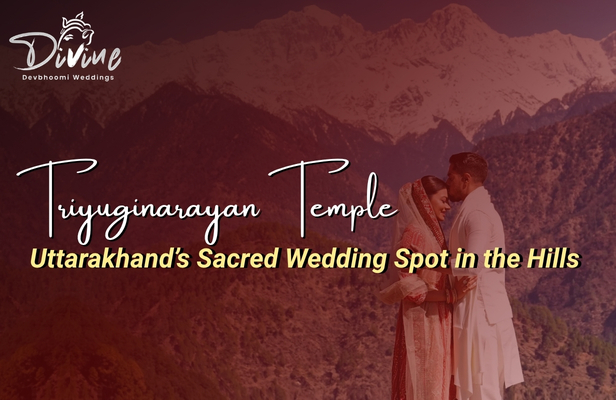
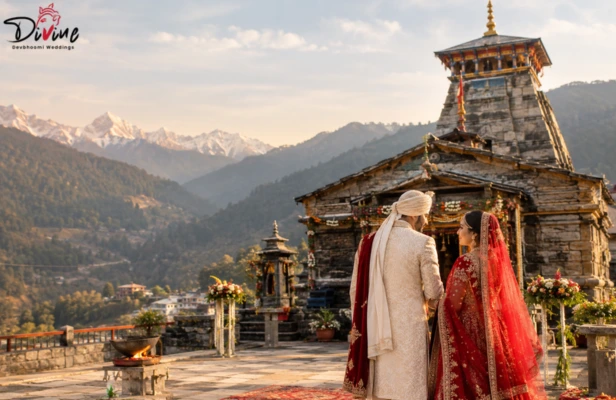
Set at an altitude of roughly 1,980 metres, the temple is surrounded by pine forests and Himalayan peaks, creating a naturally breathtaking backdrop for the ceremony and photographs.
The wedding follows authentic Vedic customs conducted by experienced temple priests, keeping the ceremony rooted in genuine cultural heritage rather than a modern reinterpretation.
The temple courtyard is compact, which naturally keeps the guest list close-knit and the atmosphere calm, personal, and free from the noise of large-scale events.
Couples and families often describe a Triyuginarayan wedding as a pilgrimage as much as a celebration — an experience that stays with them long after the ceremony ends.
A Triyuginarayan Temple wedding is not for every couple, but it is an excellent fit for many. It particularly suits:
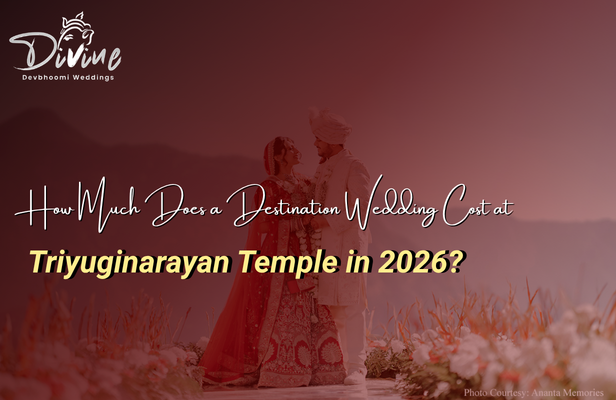
The overall cost of a Triyuginarayan Temple wedding varies widely depending on guest count, accommodation category, décor style, catering choices, and travel logistics. Rather than quoting fixed figures, it helps to understand the factors that influence your budget, summarised below.
|
Cost Factor |
What It Depends On |
Estimated Range |
|
Temple Rituals & Priest Fees |
Number of rituals, registration, donation |
Low to Moderate |
|
Accommodation |
Guest count, hotel vs homestay vs resort |
Moderate to High |
|
Decoration & Mandap |
Floral style, local vs imported flowers |
Moderate |
|
Catering |
Guest count, menu type, local vs multi-cuisine |
Moderate to High |
|
Photography & Videography |
Duration, drone coverage, cinematic edits |
Moderate to High |
|
Transportation |
Distance travelled, vehicle type, helicopter transfers |
Moderate to High |
As a general rule, an intimate Triyuginarayan wedding with a small guest list and simple décor works out considerably more affordable than a large city wedding, while a fuller celebration with luxury stays and elaborate décor sits at the higher end of the range. Working with a local planner helps you get accurate, updated estimates for your specific requirements.
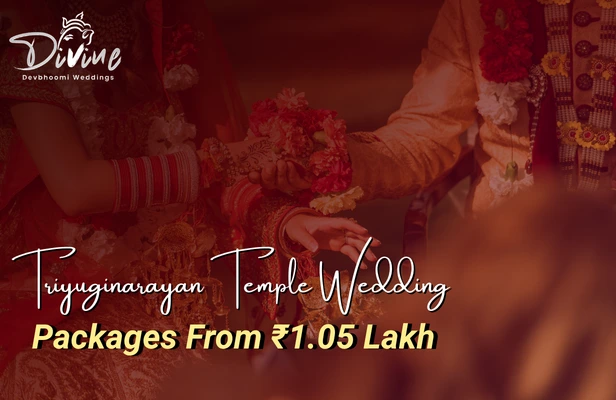
Weddings here follow the same spiritual structure as traditional Hindu ceremonies, performed in front of the sacred Akhand Dhuni:
Each ritual carries deep symbolic meaning, and performing them beside a flame believed to have witnessed Shiva and Parvati's own union adds a layer of significance that couples often describe as profoundly moving.
While the temple itself is in a small hill hamlet, nearby towns such as Sonprayag and Guptkashi offer a range of stay options for guests:
Most properties in the region are well accustomed to hosting wedding guests, offering warm hospitality, home-style meals, and easy accessibility to the temple for ceremony days.
Pleasant weather, blooming hillsides, and clear mountain views make spring one of the most popular seasons for weddings here.
Early summer offers stable weather before the monsoon sets in, though it's wise to plan around the monsoon onset later in the season.
Crisp air, crystal-clear Himalayan views, and lighter crowds make autumn a favourite for couples prioritising both comfort and photography.
Winter weddings are possible but require careful planning around snowfall and road accessibility, so most couples and planners recommend the spring or autumn windows for the smoothest experience.
The nearest airport is Jolly Grant Airport in Dehradun, from where the temple is reached by road via Rishikesh and Rudraprayag.
Rishikesh and Haridwar are the nearest major railway stations, well connected to Delhi and other major cities, with the temple accessible by road from either station.
Triyuginarayan is well connected by road from Haridwar, Rishikesh, Dehradun, and Delhi via Rudraprayag, Guptkashi, and Sonprayag, from where a short local drive leads up to the temple.
Planning a wedding in a hill temple town comes with logistics that are very different from a city event, which is why most couples work with a dedicated local partner. Devbhoomi Weddings specialises in exactly this kind of destination wedding, handling every detail so couples and families can focus on the ceremony itself.
With Devbhoomi Weddings managing the ground reality — permissions, priests, stays, and vendors — couples can experience their Triyuginarayan wedding as it should be: unhurried, spiritual, and personal.
So, is it good to marry in Triyuginarayan Temple? For couples seeking a wedding that is spiritual, meaningful, and rooted in genuine tradition, the answer is a clear yes. Few venues in India offer this exact blend of divine blessings, Himalayan natural beauty, and authentic Hindu rituals performed beside a flame believed to have witnessed the original wedding of Lord Shiva and Goddess Parvati.
The experience does demand thoughtful planning — from temple permissions to guest travel and accommodation — which is where experienced planners such as Devbhoomi Weddings make a real difference, turning logistics into a smooth, stress-free journey. For couples who want their wedding day to feel like more than an event — to feel like a blessing carried forward from Satya Yuga itself — Triyuginarayan Temple remains one of the most sacred and emotionally resonant wedding destinations in India.
Is it good to marry in Triyuginarayan Temple?
Yes. It is regarded as one of India's most sacred wedding destinations, believed to be the exact site of Lord Shiva and Goddess Parvati's wedding, and blessed by the eternal Akhand Dhuni flame.
Why is Triyuginarayan Temple famous for weddings?
It is famous because Hindu mythology holds it as the venue of Shiva and Parvati's celestial wedding, witnessed by an eternal flame that continues to burn to this day.
Can anyone get married at Triyuginarayan Temple?
Yes, couples following Hindu wedding traditions can marry here, subject to age requirements and registration with the local temple priest committee.
What makes Triyuginarayan Temple a sacred wedding destination?
Its mythological significance as Shiva and Parvati's wedding site, the eternal Akhand Dhuni flame, and its serene Himalayan setting together make it a uniquely sacred venue.
What wedding rituals are performed at Triyuginarayan Temple?
Rituals include Ganesh Puja, Kanyadaan, Vedic mantras, pheras around the Akhand Dhuni, and final Ashirwad blessings.
How much does a Triyuginarayan Temple wedding cost?
Costs vary based on guest count, accommodation type, décor, catering, and travel, so it's best to get a customised estimate from a local wedding planner.
Is Triyuginarayan Temple suitable for destination weddings?
Yes, its intimate courtyard, scenic Himalayan setting, and spiritual atmosphere make it ideal for small to mid-sized destination weddings.
What is the best season to get married at Triyuginarayan Temple?
Spring (March to May) and autumn (September to November) generally offer the most pleasant weather and best visibility of the surrounding peaks.
Can NRI couples marry at Triyuginarayan Temple?
Yes, NRI couples frequently choose Triyuginarayan for an authentic Hindu wedding, often working with local planners to manage documentation and logistics remotely.
Are accommodation facilities available near the temple?
Yes, nearby towns like Sonprayag and Guptkashi offer resorts, hotels, homestays, and guest houses suited to different budgets.
How early should I book my wedding at Triyuginarayan Temple?
It's advisable to book six to eight months in advance, especially for peak spring and autumn wedding dates.
Can Devbhoomi Weddings organize the complete wedding?
Yes, Devbhoomi Weddings offers end-to-end planning, covering temple permissions, priests, accommodation, décor, catering coordination, and photography.
Is photography allowed during the wedding ceremony?
Yes, photography is generally permitted, though it's best to confirm specific guidelines with the temple committee and your wedding planner in advance.
Are customized Triyuginarayan wedding packages available?
Yes, planners like Devbhoomi Weddings offer customised packages based on guest count, budget, and the level of décor and hospitality you want.
How many guests can attend a wedding at Triyuginarayan Temple?
The temple courtyard comfortably accommodates around 10 to 15 guests near the Akhand Dhuni, while additional tented arrangements nearby can host larger groups of up to about 50 guests.



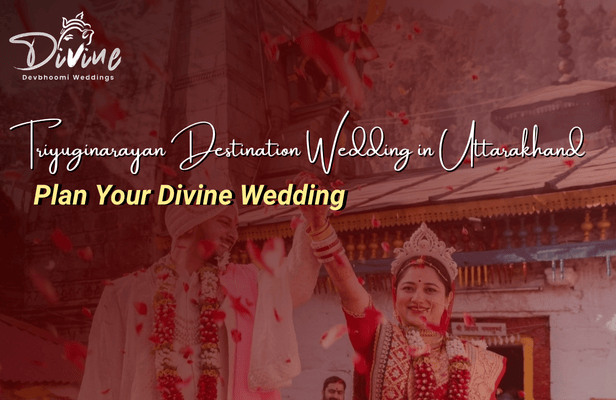



























From pre-wedding celebrations to grand wedding days, we provide end-to-end services for all functions.
Copyright © 2024 | All Rights reserved by Divine Dev Bhoomi | Designed & Developed by Edtech Innovate Pvt. Ltd.