
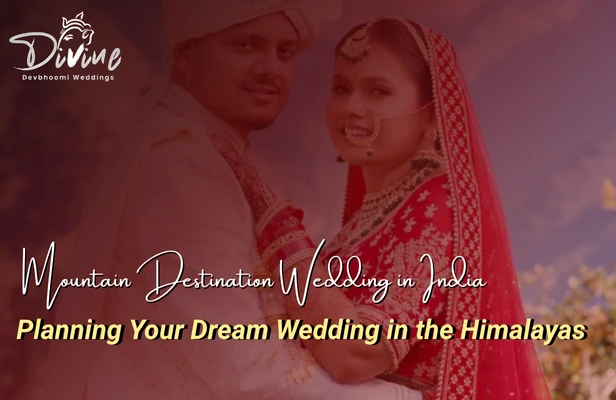
A mountain destination wedding in India brings together everything modern couples dream of: dramatic snow-capped peaks, misty valleys, crisp mountain air, and a sense of calm that no banquet hall can replicate. Across the Himalayas and the hill stations of the south, more couples are choosing to say their vows against a backdrop of pine forests, sacred rivers, and glowing sunsets instead of conventional city venues. This shift is not just about aesthetics — it reflects a desire for smaller, more meaningful celebrations where every guest feels close to the couple and to the moment itself.
India's geography makes this dream remarkably achievable. From the colonial charm of Mussoorie to the sacred stillness of Triyuginarayan, from the alpine meadows of Gulmarg to the tea-scented hills of Ooty, the country offers an extraordinary range of mountain wedding destinations, each with its own character, climate, and story. Whether you envision an intimate temple ceremony, a lavish multi-day celebration at a luxury resort, or a rustic bohemian affair under fairy lights, a mountain destination wedding in India can be shaped to match your vision.
This guide walks through everything you need to plan one — from choosing the right location and season to understanding costs, accommodation, travel logistics, décor, and the small details that make the difference between a good wedding and an unforgettable one.
Mountains offer a kind of beauty that photographs can never fully capture and memories rarely forget. Choosing a mountain destination wedding in India means trading predictable banquet halls for landscapes that do the decorating for you — layered valleys, cloud-wrapped peaks, and golden light that changes by the hour.
India's hill stations each bring their own personality to a wedding. Below is a closer look at the most sought-after mountain destination wedding places in India.
Known as the Queen of the Hills, Mussoorie combines colonial-era architecture with sweeping views of the Doon Valley. Its resorts and heritage properties are well suited to mid-sized weddings, and its proximity to Dehradun makes it one of the most accessible mountain wedding destinations for guests travelling from Delhi and NCR.
Built around the shimmering Naini Lake, this destination is ideal for couples who want water and mountains in the same frame. Lakeside lawns and boutique hotels offer a romantic, slightly retro charm that photographs beautifully, especially during golden hour.
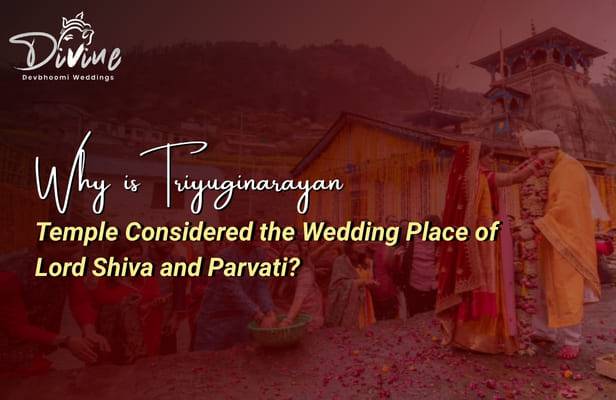
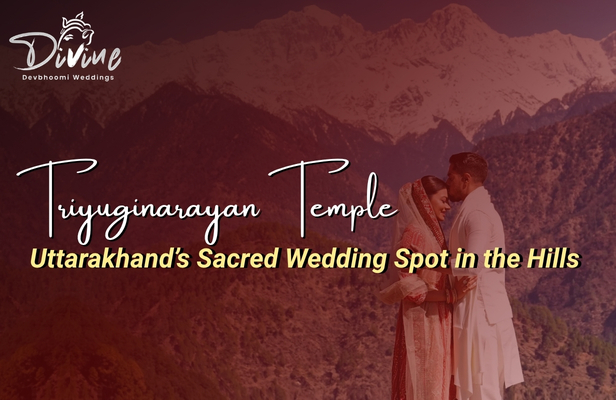
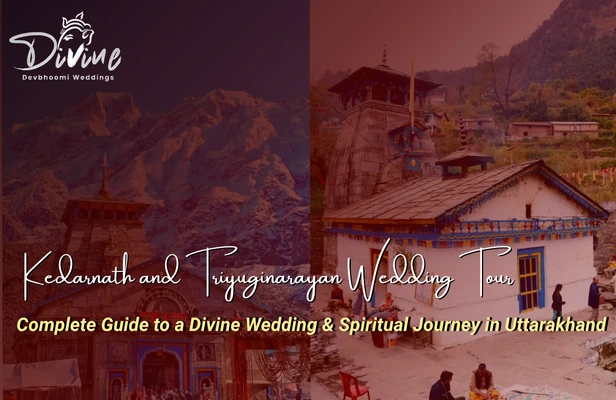
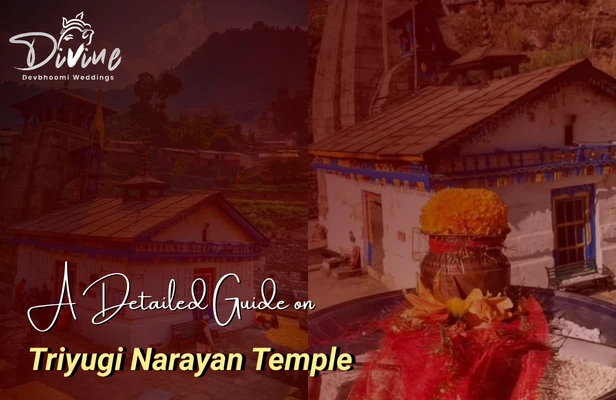
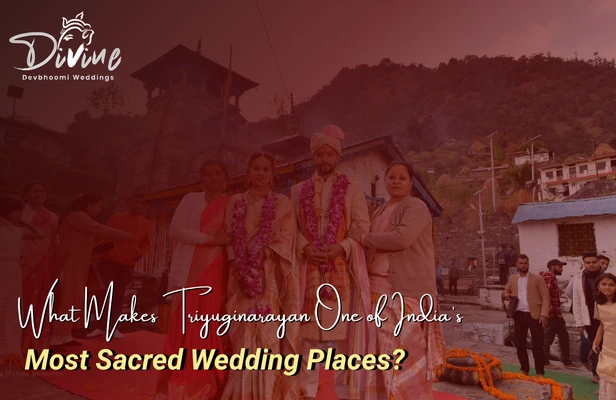
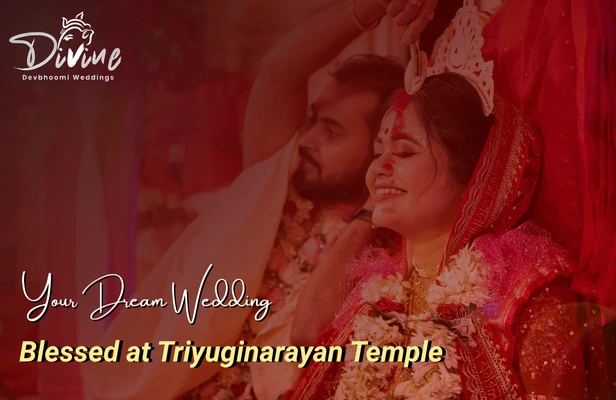
Triyuginarayan holds a special place among mountain wedding destinations in India because of its deep mythological significance. Nestled in Uttarakhand near Kedarnath, this small Himalayan village is home to the Triyuginarayan Temple, believed to be the site where Lord Shiva and Goddess Parvati were married in the presence of Lord Vishnu and Brahma. A sacred flame at the temple, known as the Akhand Dhuni, is said to have been burning continuously since that divine wedding, and couples can take their own wedding vows around this eternal fire.
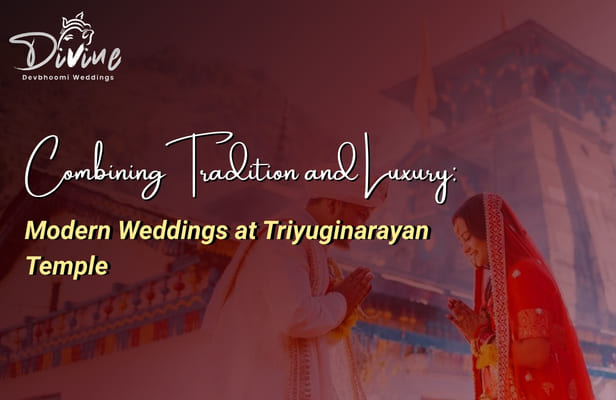
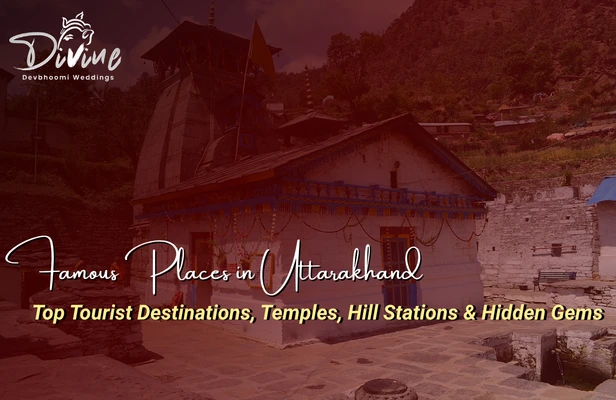
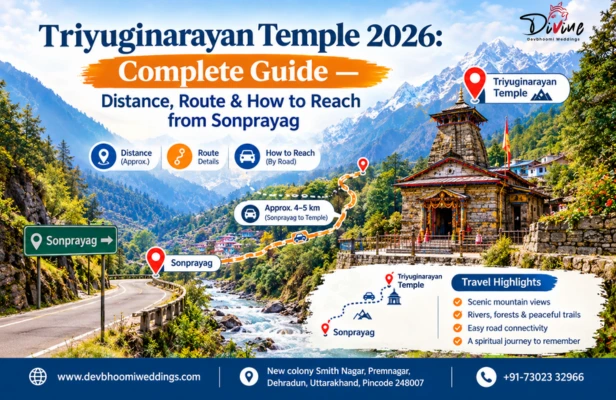
For couples who want their wedding to carry spiritual weight alongside scenic beauty, Triyuginarayan Temple wedding ceremonies offer something few other venues in India can: an authentic, centuries-old ritual setting rather than a recreated or staged one. The temple itself is modest in scale, built in the traditional Katyuri style with stone and wood, and surrounded by dense pine forest and views of snow-dusted peaks. Because the site is remote and reached via a short trek after the road journey from Sonprayag, weddings here are inherently intimate — usually limited to close family rather than large guest lists.
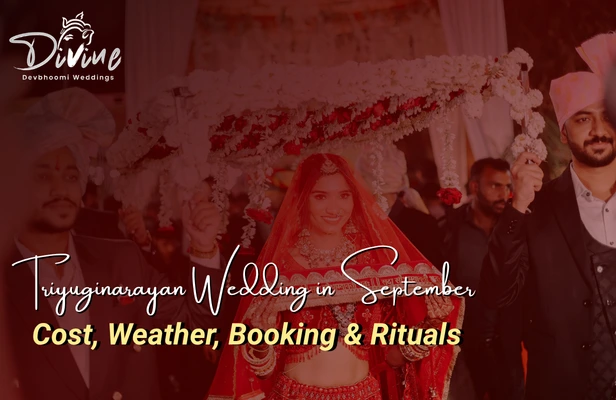
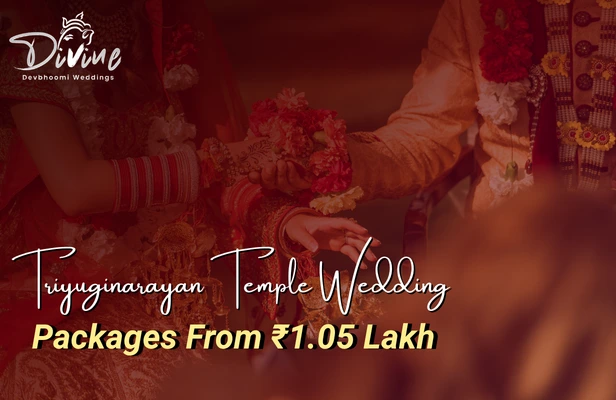
A wedding at Triyuginarayan typically follows traditional Hindu rituals, performed by temple priests around the sacred fire, echoing the same rites believed to have united Shiva and Parvati. Many couples pair the temple ceremony with a small reception at a nearby resort in Guptkashi or Sonprayag, where guests can enjoy mountain views without the logistical challenge of hosting a large event at high altitude. Because of its elevation and weather patterns, the ideal window for a Triyuginarayan wedding is between April and June, or September to November, avoiding the monsoon months when the mountain roads can be unpredictable.
Couples planning a Triyuginarayan Temple wedding should keep a few practicalities in mind: permissions and priest bookings should be arranged well in advance through a local wedding planner familiar with the temple's protocols, guest travel needs to be planned around the trek and altitude, and backup arrangements for weather are essential given the region's mountain climate. Done right, though, few mountain destination weddings in India carry the same emotional and spiritual resonance as one held at this sacred site.
As a former summer capital of British India, Shimla is rich with heritage properties, colonial mansions, and mall-road charm. It suits couples who want grandeur and history layered into their mountain wedding, with good connectivity via Shimla Airport and the scenic toy train.
Manali appeals to couples who want their wedding to double as an adventure getaway for guests. Surrounded by the Pir Panjal ranges, it offers riverside resorts, apple orchards, and a lively, youthful energy suited to weddings with pre-wedding adventure activities.
Set against the Dhauladhar range and infused with Tibetan culture, Dharamshala offers a serene, contemplative setting for couples who want their wedding to feel calm and culturally rich rather than extravagant.
For couples dreaming of a snow-wedding, Gulmarg in Kashmir is unmatched. Its meadows and ski slopes create a fairy-tale, almost European atmosphere, best suited to intimate to mid-sized luxury weddings in the winter months.
In the Nilgiris of South India, Ooty offers a cooler alternative to typical South Indian wedding venues, with tea gardens, colonial bungalows, and lake views. It's well connected by rail and road, making it accessible for mid to large weddings.
Here's a quick comparison of these mountain destination wedding places in India:
|
Destination |
Best For |
Accessibility |
Ideal Guest Size |
|
Mussoorie |
Colonial charm, valley views |
Nearest airport Dehradun, well-connected by road |
Small to mid-sized |
|
Nainital |
Lakeside weddings |
Pantnagar Airport, road from Delhi |
Small to mid-sized |
|
Triyuginarayan |
Sacred, traditional ceremonies |
Jolly Grant Airport, then road and short trek |
Intimate |
|
Shimla |
Heritage properties |
Shimla Airport, toy train, road |
Mid to large |
|
Manali |
Adventure-themed weddings |
Kullu-Manali (Bhuntar) Airport |
Mid-sized |
|
Dharamshala |
Serene, culturally rich settings |
Gaggal Airport, road from Chandigarh |
Small to mid-sized |
|
Gulmarg |
Snow-themed luxury weddings |
Srinagar Airport, road to Gulmarg |
Intimate to mid-sized |
|
Ooty |
South Indian hill charm |
Coimbatore Airport, toy train, road |
Mid to large |
Snow-capped mountains, glacial valleys, alpine lakes, and dense pine and deodar forests provide a naturally cinematic setting that eliminates the need for heavy artificial décor.
Most hill stations offer a comfortable climate for much of the year, a welcome contrast to the heat and humidity of plains weddings, along with distinct seasonal charm — spring blossoms, monsoon greenery, autumn clarity, or winter snow.
Mountain venues naturally encourage smaller, more private celebrations. Couples can personalize ceremonies with local rituals, regional cuisine, and settings that feel deeply personal rather than transactional.
A mountain wedding often becomes a mini vacation for guests, who can explore local tourism, try adventure activities like trekking or paragliding, and experience regional culture — turning a single-day event into a multi-day memory.
Costs for a mountain destination wedding in India vary widely based on destination, guest count, season, and the level of luxury involved. Rather than fixed numbers, it helps to understand which elements typically drive the budget:
|
Wedding Element |
Budget Range (Indicative) |
What Influences the Cost |
|
Venue Rental |
Low to High, depending on property type |
Resort category, location, season |
|
Accommodation |
Varies by room category and guest count |
Number of nights, hotel star rating |
|
Decoration |
Moderate to premium |
Theme complexity, floral imports, mandap design |
|
Catering |
Per-plate cost scales with menu |
Cuisine variety, guest count, live counters |
|
Photography & Videography |
Package-based |
Number of days, drone coverage, cinematic films |
|
Transportation |
Depends on guest count and distance |
Airport transfers, local sightseeing, fleet size |
|
Entertainment |
Optional, scalable |
Live bands, DJs, folk performances |
|
Wedding Planner Charges |
Percentage of total budget or fixed fee |
Scope of services, on-ground coordination |
Working with an experienced wedding planner can help you get a realistic, destination-specific quote rather than relying on generic estimates.
Mountain wedding venues generally fall into a few categories, each suited to different budgets and experiences:
Blooming rhododendrons and moderate temperatures make spring a favourite for outdoor ceremonies across most hill stations.
Cool relief from the plains' heat makes this peak wedding season in most Himalayan destinations, with excellent accessibility.
Clear skies and crisp air make autumn ideal for photography, with fewer crowds than peak summer.
Best suited to snow-themed weddings in places like Gulmarg or Manali, though travel and logistics require more careful planning.
Prioritizing guest comfort — proximity to the venue, availability of heating, and easy transport — goes a long way in ensuring a smooth celebration.
Most Himalayan destinations are served by nearby airports — Dehradun's Jolly Grant Airport for Mussoorie and Triyuginarayan-bound guests, Pantnagar for Nainital, Shimla Airport, Kullu-Manali's Bhuntar Airport, Gaggal Airport for Dharamshala, and Srinagar Airport for Gulmarg. Ooty is best reached via Coimbatore Airport.
Shimla and Ooty both offer scenic toy-train routes, while destinations like Dehradun and Haridwar serve as major railheads for onward road travel to Uttarakhand's hill stations, including Triyuginarayan.
Most mountain destinations are connected by well-maintained roads from major cities, though the final stretch to remote sites such as Triyuginarayan may involve narrower hill roads and a short trek.
For guests, it helps to share a clear travel itinerary in advance, recommend appropriate clothing for altitude and temperature, and build in buffer time for mountain road travel, which is often slower than plains routes.
In mountain settings, décor works best when it enhances rather than overwhelms the natural backdrop — a lesson particularly evident at sacred sites like Triyuginarayan, where the temple and forest setting need little embellishment beyond traditional flowers and lamps.
Planning a wedding in the mountains comes with logistical complexity that differs significantly from city weddings — permissions, terrain, weather variability, and vendor availability all require local expertise. Devbhoomi Weddings brings on-ground knowledge of Himalayan destinations, including sacred and remote sites such as Triyuginarayan, to help couples navigate these challenges smoothly.
A mountain destination wedding in India offers something few other settings can: a rare blend of romance, natural grandeur, and quiet intimacy. Whether it's a sacred, ritual-rich ceremony at the Triyuginarayan Temple, a colonial-era celebration in Shimla, or a snow-draped affair in Gulmarg, India's hill stations give couples the freedom to design a wedding that feels personal rather than performative.
The key to making it work lies in early planning — choosing the right destination for your guest list and vision, understanding seasonal patterns, and building in contingencies for mountain weather. Partnering with experienced wedding planners who understand local terrain and customs removes much of the stress, letting couples focus on the moment itself.
Done thoughtfully, a mountain destination wedding in India doesn't just create beautiful photographs — it creates a lifelong memory set against some of the most breathtaking landscapes the country has to offer.
What is the best mountain destination wedding location in India?
There isn't a single best option — it depends on your priorities. Triyuginarayan suits couples wanting a sacred, traditional ceremony; Shimla and Mussoorie suit heritage-style weddings; Gulmarg suits snow weddings; and Ooty suits South Indian couples wanting a cooler climate.
How much does a mountain destination wedding in India cost?
Costs vary significantly based on destination, guest count, season, and venue type. Rather than a fixed figure, it's best to get a destination-specific quote from a wedding planner based on your guest list and preferences.
Which season is best for a mountain wedding?
Summer and autumn are generally the most popular for accessibility and pleasant weather, while winter suits snow-themed weddings and spring offers blooming landscapes.
What are the best mountain wedding venues in India?
Options range from luxury resorts and heritage properties to forest retreats, private villas, and sacred temple sites like Triyuginarayan, depending on the style of wedding you want.
Can we plan a luxury mountain destination wedding?
Yes. Destinations like Gulmarg, Shimla, and Manali offer luxury resorts and heritage properties well suited to high-end, multi-day celebrations.
Which mountain destinations are ideal for intimate weddings?
Triyuginarayan, Dharamshala, and boutique properties in Mussoorie or Nainital are well suited to smaller, close-knit celebrations.
How far in advance should I book a mountain wedding venue?
Ideally six months to a year in advance, especially for peak season dates, to secure both the venue and accommodation for guests.
Are customized mountain wedding packages available?
Yes, most experienced wedding planners, including Devbhoomi Weddings, offer packages tailored to guest count, budget, and destination preferences.
Can pre-wedding functions be organized at mountain resorts?
Yes, many mountain resorts have the space and infrastructure to host mehndi, sangeet, and other pre-wedding functions alongside the main ceremony.
Is photography easier in mountain destinations?
Mountain landscapes offer naturally dramatic lighting and backdrops, which often makes for more striking photography compared to conventional indoor venues.
How can guests travel to mountain wedding venues?
Most destinations are reachable by a combination of flights to the nearest airport followed by road travel, with some routes also served by scenic rail lines.
Why should I hire a professional mountain wedding planner?
Mountain weddings involve terrain, weather, and logistical challenges that differ from city weddings. A planner with local expertise helps avoid costly mistakes and ensures a smoother experience for both the couple and guests.



















































From pre-wedding celebrations to grand wedding days, we provide end-to-end services for all functions.
Copyright © 2024 | All Rights reserved by Divine Dev Bhoomi | Designed & Developed by Edtech Innovate Pvt. Ltd.