

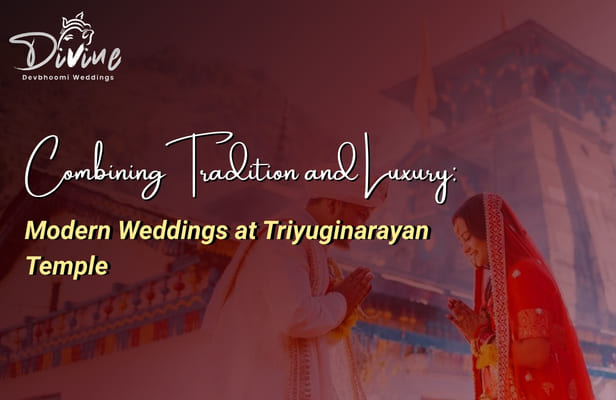
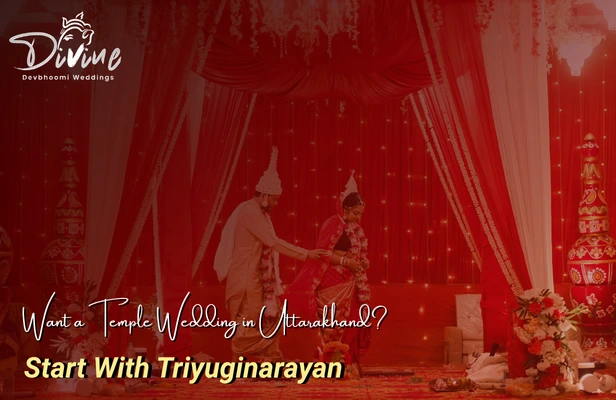
A Triyuginarayan Temple Wedding is fast becoming one of the most sought-after ways for Indian couples to get married. Tucked away in the Garhwal Himalayas of Uttarakhand, this ancient temple is believed to be the very spot where Lord Shiva and Goddess Parvati were married, with a sacred fire that is said to have burned continuously for thousands of years. For couples who want their vows to carry real spiritual weight, and who are tired of the noise, expense, and exhaustion of a conventional big fat Indian wedding, a Triyuginarayan Temple Wedding offers something rare: intimacy, mountain scenery, and a direct connection to one of Hindu mythology's most enduring love stories.
This guide walks through everything a couple needs to know before booking a Triyuginarayan Temple Wedding — from the temple's history and rituals to costs, travel, accommodation, and planning tips for a smooth, memorable celebration in the mountains.
Traditional Indian weddings often mean hundreds of guests, weeks of planning, and a budget that can run into crores of rupees. A Triyuginarayan Temple Wedding flips that model on its head. Couples choose a small guest list, a single sacred venue, and a ceremony that lasts hours instead of days.
This shift is part of a broader trend toward destination and spiritual weddings, where couples prioritize meaning and experience over scale. A Triyuginarayan wedding lets families spend on experience and hospitality rather than sheer volume, while the mountain backdrop and temple rituals give the day a sense of occasion that a banquet hall simply cannot replicate.
What sets a wedding at Triyuginarayan Temple apart is the belief that couples marrying here are, in a symbolic sense, following in the footsteps of Shiva and Parvati themselves. The temple courtyard houses the Akhand Dhuni, an eternal fire pit that pilgrims and priests say has been burning since the divine wedding took place. Couples can take a few sacred ashes from this fire as a blessing for their married life.
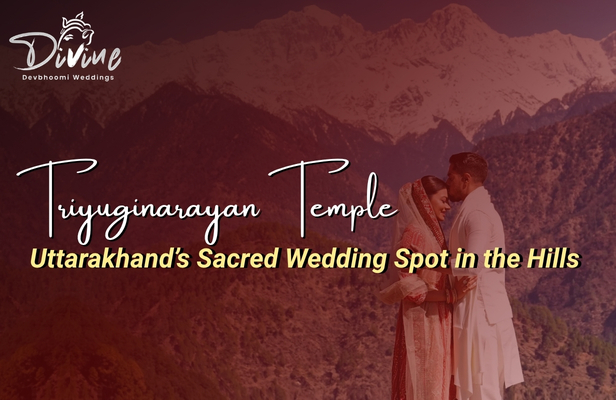
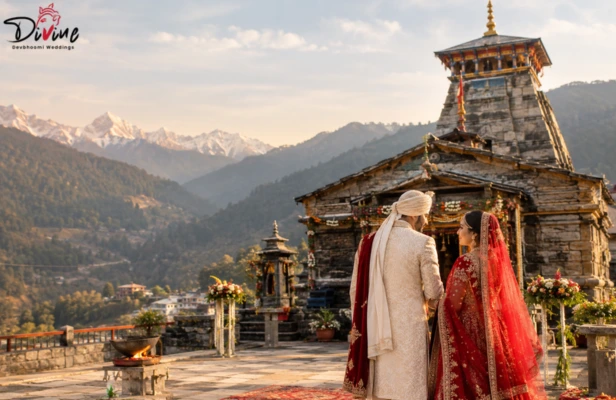
Add to this the setting — pine forests, snow-capped peaks, and the sound of the Mandakini river valley nearby — and a Triyuginarayan Temple wedding becomes as much a spiritual retreat as it is a ceremony. It is this rare combination of mythology, ritual authenticity, and natural beauty that keeps drawing couples to this small Himalayan village.
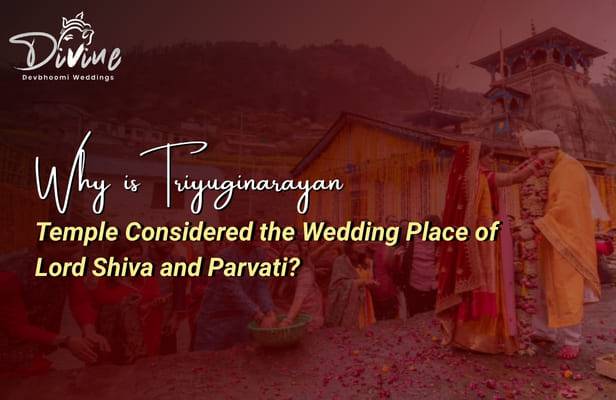
According to Hindu scripture, Triyuginarayan is the exact site where Lord Shiva and Goddess Parvati Wedding took place, with Lord Vishnu himself performing the role of the bride's brother and Brahma acting as the priest. The name Triyuginarayan translates roughly to 'three ages', referring to the belief that the wedding fire has burned through three yugas, or cosmic ages, without ever going out.
For devout Hindus, this makes the temple one of the most important Hindu Temple Wedding destinations in the country. Marrying here is seen as a way of inviting the same divine blessings that were present at the original celestial wedding, and many couples specifically choose the date of their ceremony to align with auspicious days tied to this legend.
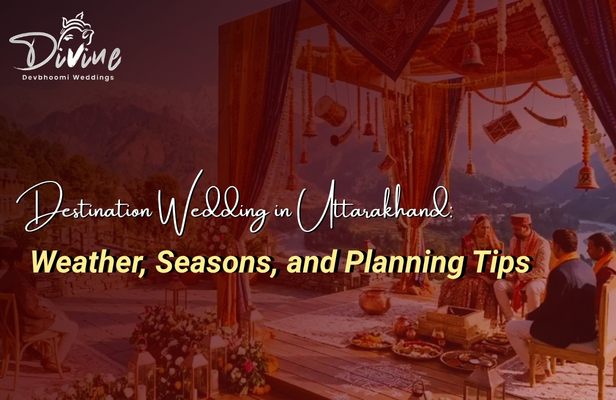
Uttarakhand has earned its reputation as Devbhoomi, the 'Land of the Gods', and it offers couples a level of natural beauty that few other Indian states can match. A destination wedding in Uttarakhand means snow-dusted peaks, dense deodar and pine forests, gushing rivers, and crisp mountain air as the backdrop for wedding photographs that will never look dated.
Beyond the scenery, choosing Uttarakhand for a spiritual wedding venue also means access to some of Hinduism's most sacred sites — Kedarnath, Badrinath, and Gangotri are all within reach of the region. For couples who want a mountain wedding venue in Uttarakhand that combines devotion, adventure, and a genuinely private setting, Triyuginarayan sits near the top of the list, and it remains one of the best destination wedding venues in Uttarakhand for couples seeking something outside the usual resort-wedding template.
Knowing how to plan a Triyuginarayan Temple wedding starts with understanding that this is a small, remote temple town — logistics need to be worked out well in advance. The first step is confirming an auspicious date with the temple priests, since ceremonies are typically scheduled around traditional muhurats.
From there, planning a wedding at Triyuginarayan Temple usually involves four moving pieces: temple booking and priest coordination, guest travel arrangements, accommodation in or near Sonprayag and Guptkashi, and a decision on how many rituals from the full Hindu wedding sequence to perform on-site versus at home beforehand. Many couples choose to handle the core sacred rites — kanyadaan, the saptapadi, and the sindoor ceremony — at the temple, while keeping any large-scale receptions for a separate day back in their home city.
Because the village has limited local infrastructure, most couples find it easier to work with a wedding planner who specializes in Himalayan destination weddings and can coordinate permissions, transport, priests, and décor on their behalf.
The Triyuginarayan Temple Wedding cost varies widely depending on guest count, travel arrangements, and how elaborate the rituals and décor are, but couples should plan for a few core categories. Temple fees and priest offerings (dakshina) are relatively modest compared to city weddings. The larger costs typically come from guest transport to the Himalayan foothills, accommodation for multiple nights, and any photography or videography teams brought along for the trip.
A minimalist Triyuginarayan Temple wedding cost, with a small circle of immediate family, can be a fraction of what an average city wedding costs, since venue rental and catering for hundreds of guests are eliminated entirely. Couples planning a larger celebration with décor, a professional wedding planner, and multi-day accommodation for guests should budget more generously, but even at the higher end, a Triyuginarayan wedding tends to remain significantly more affordable than a comparable big-city function.
Read More - What is the Best Budget Venue for a Destination Wedding in India?
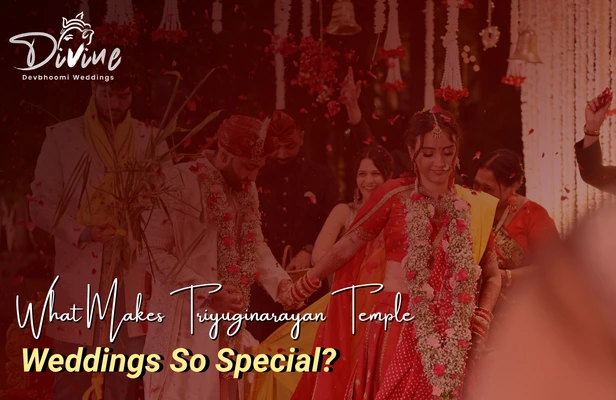
A wedding here follows the structure of a traditional Hindu wedding ceremony, adapted to the temple's own customs. Couples typically begin with a puja to seek blessings from the presiding deities, followed by kanyadaan, where the bride is formally given away.
The most symbolic moment is the saptapadi, or the seven sacred steps taken by the couple around the Akhand Dhuni, echoing the very fire believed to have witnessed Shiva and Parvati's own vows. Many couples also request a small portion of ash from the fire as a keepsake blessing. Because the temple is compact, ceremonies are usually intimate, with priests guiding families closely through each stage of the Triyuginarayan Temple marriage rites.
Timing matters a great deal for a Triyuginarayan wedding, since the region experiences heavy snowfall in peak winter and monsoon landslides between July and September. The most favorable windows are typically April to June and September to November, when the weather is mild, mountain roads are clearer, and the surrounding valley is at its most photogenic.
Couples should also consult a priest or panchang for an auspicious wedding date, since many families prefer to align their ceremony with a traditional muhurat in addition to choosing a season with good weather and accessible roads.
Triyuginarayan is located a short distance from Sonprayag, which itself is well connected to Rishikesh and Haridwar by road, roughly a 9 to 10 hour drive depending on traffic and weather. The nearest railway station is Rishikesh, and the nearest airport is Jolly Grant Airport in Dehradun, both of which are reasonable starting points for guests flying or taking the train from other parts of India.
From Sonprayag, the final stretch to the temple is a short drive of a few kilometers, followed by a short walk for the last approach. Couples planning a wedding here should factor extra travel time for elderly guests and build a buffer day into the itinerary in case of weather delays on the mountain roads.
Triyuginarayan itself is a small village, so most couples base their guests in nearby towns like Sonprayag or Guptkashi, both of which offer a range of hotels, guesthouses, and homestays suited to different budgets. Booking rooms well in advance is essential, especially during the peak wedding season between April and June.
For a larger guest list, it's worth working with a local coordinator or wedding planner who can block rooms across multiple properties, arrange local transport between the stay and the temple, and manage meal planning for guests who may be unfamiliar with the region.
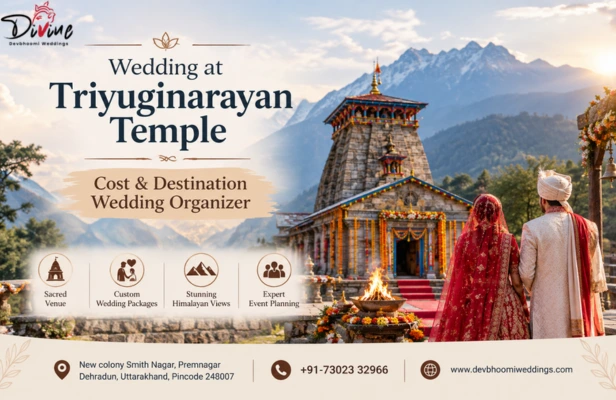
Planning a wedding in a remote Himalayan village comes with logistics that most couples have never had to manage — priest coordination, mountain transport, weather-dependent scheduling, and vendor access in a small town. A dedicated Uttarakhand wedding planning team can handle these details end-to-end, from securing the temple date and coordinating with priests to arranging guest stays, local transport, décor, and photography.
Working with local experts who understand the temple's customs and the region's seasonal patterns takes the stress out of a Triyuginarayan Temple wedding and lets the couple and their families focus on the ceremony itself rather than the logistics behind it.
A conventional big fat Indian wedding is built around scale: large guest lists, multi-day functions, and heavy décor and catering budgets. A Triyuginarayan Temple wedding is built around intimacy: a handful of loved ones, a single sacred ceremony, and a setting that requires very little embellishment because the mountains do the work.
The trade-offs are real — a Himalayan wedding means smaller guest counts and more travel planning — but for couples who want their wedding day to feel personal, spiritually grounded, and genuinely memorable rather than performative, a Triyuginarayan Temple wedding offers an experience that a banquet hall function simply cannot match.
A few practical tips make a real difference when planning a Triyuginarayan Temple wedding. Book the temple date and priest well in advance, since availability during auspicious periods fills up quickly. Keep the guest list intentionally small, both for logistics and to preserve the intimacy that makes this venue special.
Pack for mountain weather regardless of season, since temperatures can shift quickly at altitude. Confirm accommodation in Sonprayag or Guptkashi early, arrange local transport for elderly guests, and build at least one buffer day into the schedule to absorb any weather-related delays on the mountain roads.
How can I book a wedding at Triyuginarayan Temple?
Booking a wedding at Triyuginarayan Temple involves contacting the temple priests directly or working through a local wedding planner to confirm an auspicious date, arrange the required rituals, and coordinate accommodation and transport for guests.
How much does a Triyuginarayan Temple wedding cost?
The Triyuginarayan Temple wedding cost depends largely on guest count and travel arrangements. A small, intimate ceremony can cost a fraction of a typical city wedding, while a larger celebration with a planner, décor, and multi-day stays will cost more, though usually still less than a comparable urban function.
Is Triyuginarayan Temple good for a destination wedding?
Yes. Triyuginarayan is considered one of the best destination wedding venues in Uttarakhand for couples who want a small, spiritually significant ceremony set against a Himalayan backdrop rather than a large conventional wedding.
What is the best time of year for a Triyuginarayan Temple wedding?
April to June and September to November are generally the best windows, offering milder weather and clearer mountain roads than the winter snow or monsoon season.
How do I reach Triyuginarayan Temple?
The nearest airport is Jolly Grant Airport in Dehradun and the nearest railway station is Rishikesh. From there, it's a road journey to Sonprayag, followed by a short drive and walk to the temple itself.















































From pre-wedding celebrations to grand wedding days, we provide end-to-end services for all functions.
Copyright © 2024 | All Rights reserved by Divine Dev Bhoomi | Designed & Developed by Edtech Innovate Pvt. Ltd.