
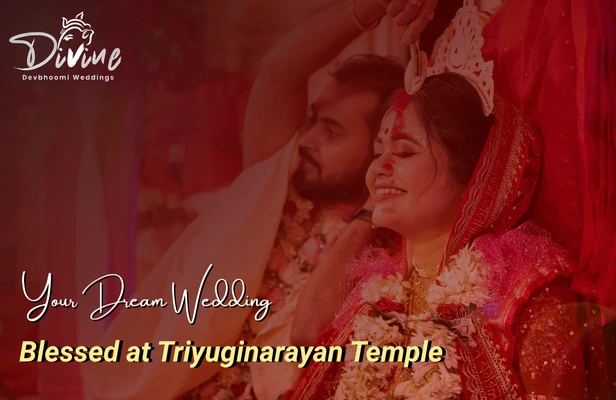
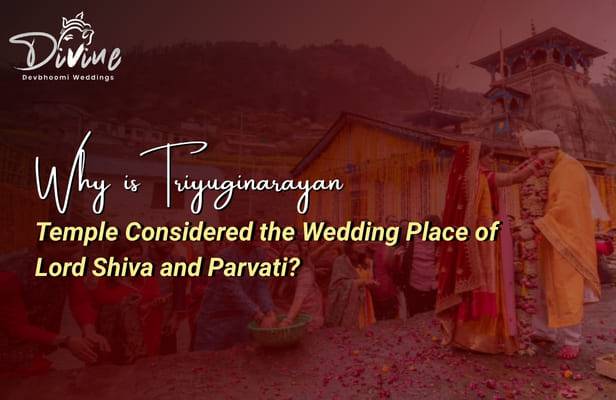
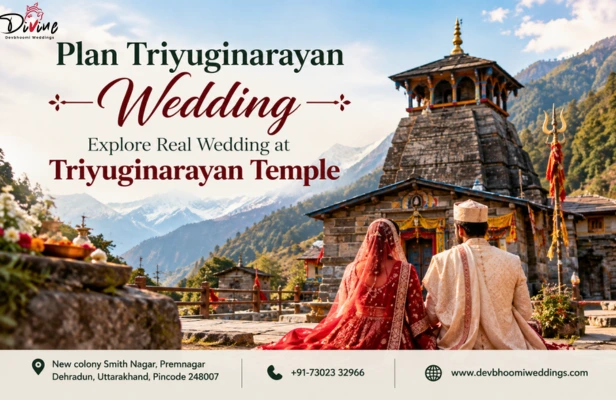
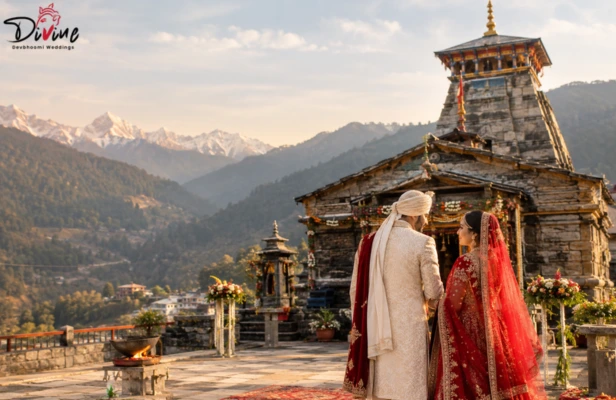
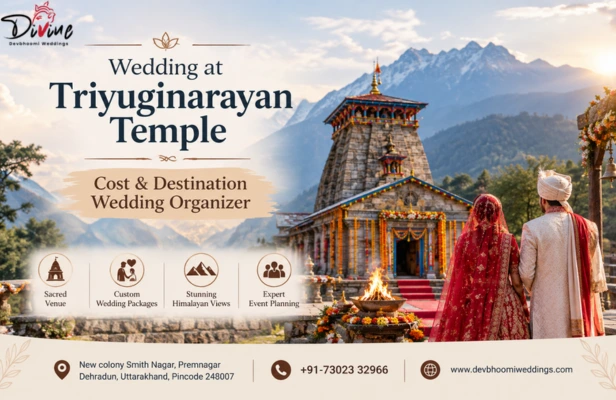
Picture this: you walk beneath a ring of Himalayan peaks, past centuries-old stone walls, into a temple courtyard where a fire has been kept burning for generations. Your family stands close, wrapped in shawls against the mountain air, watching as a priest begins the Vedic rituals that will carry your relationship into marriage. This is what a Triyuginarayan Temple Wedding can feel like — not a performance staged for a crowd, but a quiet, sacred beginning.
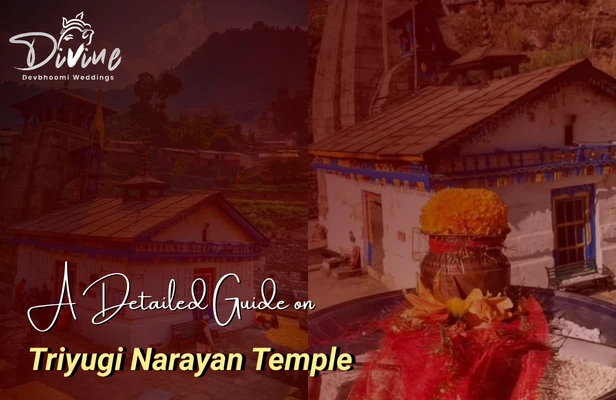
Triyuginarayan sits in the Rudraprayag district of Uttarakhand, and Hindu tradition holds that this is where Lord Shiva and Goddess Parvati were married, with the sacred fire from that ceremony believed to still burn today. Uttarakhand is often called Devbhoomi, the “Land of the Gods,” and it is easy to understand why couples looking for something more personal than a banquet hall keep finding their way here — to a Temple Wedding in Uttarakhand shaped by faith rather than formality.
Somewhere between the guest lists, the seating charts and the Instagram-ready décor, many couples start asking a quieter question: what do we actually want our wedding to feel like? The answer, for a growing number of them, has less to do with scale and more to do with meaning.
There is a visible shift happening — from the big wedding to the meaningful wedding, from the luxury ballroom to the spiritual setting, from the long guest list to the intimate gathering, from decoration-heavy events to experiences that are actually lived rather than just photographed. Couples today often want a wedding that reflects who they are: their beliefs, their culture, their families' stories, not just a template pulled from a wedding magazine.
This is exactly where a Destination Wedding in Uttarakhand built around Triyuginarayan starts to make sense. It doesn't ask you to choose between a beautiful setting and a meaningful one — it offers both, rooted in tradition rather than trend.
According to Hindu belief, Triyuginarayan is the Lord Shiva and Goddess Parvati wedding place — the site where their divine marriage is said to have taken place, with Lord Brahma performing the rites. This is a matter of religious tradition and devotion rather than an independently verified historical record, but it is precisely this belief that gives the temple its emotional and spiritual pull for couples today.
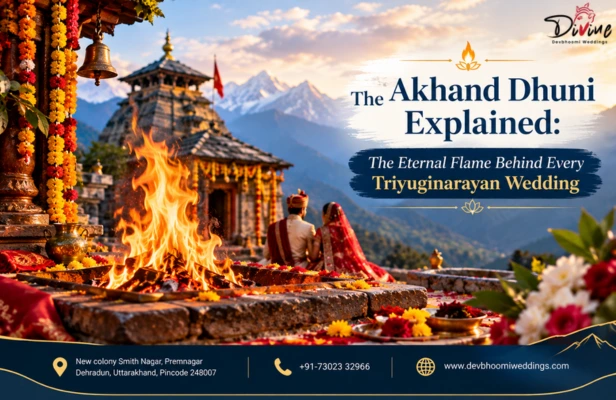
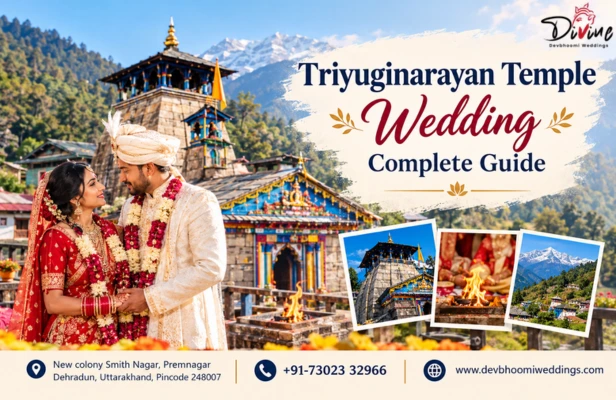
At the heart of the temple complex is the Akhand Dhuni, a fire that devotees believe has burned continuously since that original ceremony. Couples who marry here often take their pheras around this same fire, connecting their own vows to a tradition that, in belief, stretches back through the ages. It's a detail that turns a wedding ritual into something that feels much larger than the day itself.
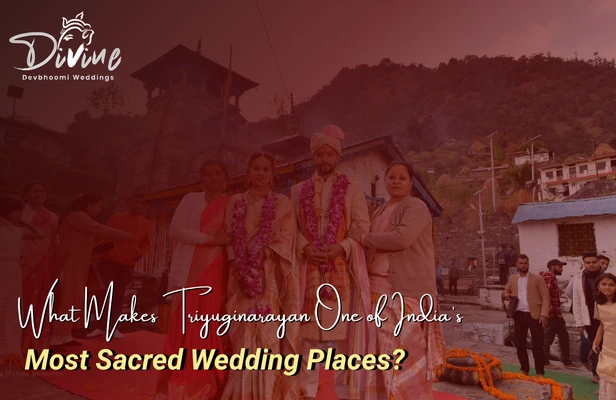
Beyond the mythology, what stays with most visitors is the atmosphere: an ancient stone temple, a genuinely peaceful setting away from city noise, rituals conducted with real devotion, and a sense that you are a small part of something ongoing rather than the center of a one-day show. This is a Sacred wedding destination in India precisely because the setting asks for reverence, not just attendance.
A wedding here tends to unfold slowly, in a way that a conventional hotel wedding rarely allows. Families usually arrive a day or two early, giving everyone time to settle into the mountain air before the main event. There is a preliminary puja, quiet conversations over chai, and a noticeable absence of the rushed, vendor-driven energy that defines many city weddings.
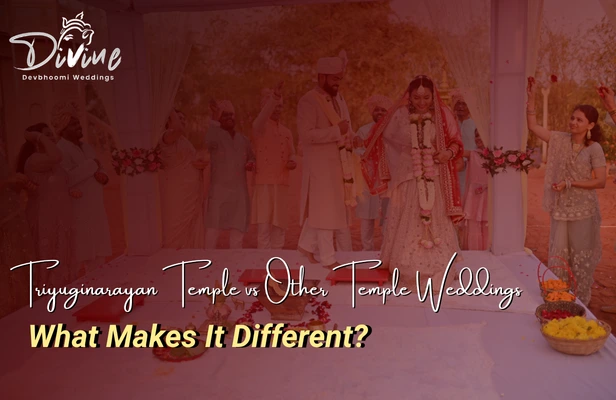
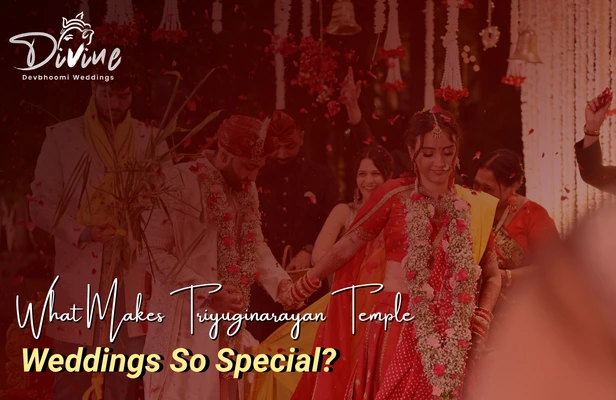
On the day itself, the rituals take center stage: the couple and their immediate family gather around the sacred fire, the priest leads the ceremony step by step, and the pheras are taken with the Himalayas as a backdrop rather than a rented backdrop. Blessings from elders feel unhurried. Photography happens organically, around the ritual, not staged ahead of it. Then comes the celebration — smaller, warmer, and usually built around a shared meal rather than a stage show.
What makes this a genuinely Spiritual wedding venue is not any single moment but the overall pace: intimacy, devotion, family closeness and Himalayan surroundings, all held together by ritual rather than choreography. For couples drawn to an Intimate destination wedding, this rhythm is often exactly what they were hoping for.
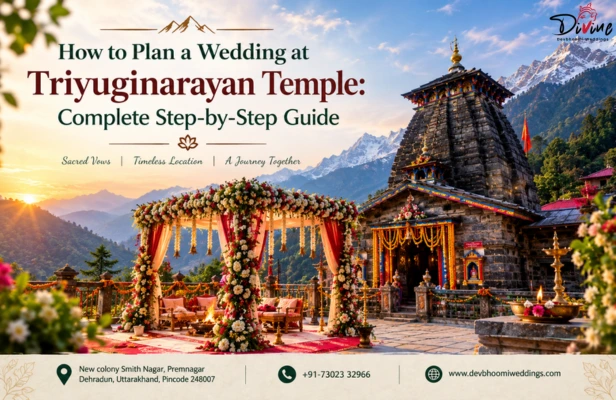
Planning a Triyuginarayan Temple Wedding works best as a step-by-step journey from vision to execution, rather than a single checklist tackled all at once.
Start by defining your guest count, overall wedding style, the number of functions you want (just the wedding, or Mehendi and Sangeet too), your budget range, and whether you're leaning traditional or contemporary in your décor choices.
Confirm date availability, any permission requirements, ceremony timings, priest arrangements and applicable temple rules well in advance. Photography restrictions can vary, so this is worth confirming directly with temple authorities or your on-ground planning team rather than assuming.
Work out accommodation, transportation, meals, a warm welcome arrangement for arriving guests, and any local sightseeing you'd like to build into their stay.
Plan floral décor, a traditional mandap, marigold arrangements, seating for the couple and family, and photography locations — all kept appropriate to temple rules and the setting's natural character rather than working against it.
Finally, prepare a ritual timeline, a vendor schedule, a plan for guest movement, a photography schedule, transportation logistics and a contingency plan for weather or last-minute changes. Together, these five steps answer the question couples most often ask: how to plan a wedding at Triyuginarayan Temple without feeling overwhelmed by mountain logistics.
There isn't one fixed number that applies to every couple, and any source promising an exact figure without knowing your plans should be treated with caution. Instead, it helps to understand what actually drives the final budget.
|
Expense |
What Changes the Cost |
|
Ceremony |
Rituals performed, priest arrangements and level of coordination required |
|
Accommodation |
Property type, number of rooms and number of nights booked |
|
Food |
Menu style, cuisine choices and total guest count |
|
Décor |
Floral style, complexity of the mandap and quantity of arrangements |
|
Transport |
Number and type of vehicles, and distance covered |
|
Photography |
Coverage hours, team size and whether drone or cinematic coverage is included |
|
Pre-Wedding Events |
Whether Mehendi, Haldi or Sangeet are added, and their scale |
|
Planning |
Level of on-ground coordination and vendor management required |
So, how much does a Triyuginarayan wedding cost? The honest answer is: it depends on your choices across each of these areas. Rather than comparing headline prices between planners or venues, compare complete package inclusions — what's covered, what isn't, and what could become an additional cost later.
Wedding rituals at Triyuginarayan Temple generally follow the broader structure of a traditional Hindu wedding ceremony, though the exact sequence can vary based on family tradition, the presiding priest's guidance, and the temple's own arrangements on the day.
A Ganesh Puja typically opens proceedings, invoking blessings before anything else begins. Vedic prayers are chanted to set a devotional tone for the ceremony. Kanyadaan, where the bride is given away, remains one of the most emotional moments for most families. The couple then take their pheras — the circling of the sacred fire — with each round tied to a specific vow. Elders offer their blessings at multiple points through the ceremony, and priest-led rituals guide the couple through each stage so that nothing feels rushed or improvised.
Understanding the meaning behind each ritual, not just its name, is part of what makes the ceremony feel genuinely significant rather than simply traditional for tradition's sake.
A wedding in the mountains is rarely just a single day for your guests — it's an occasion to build a fuller trip around. On the stay side, options can range from hotels and resorts to guest houses, homestays and group accommodation, depending on how many people are travelling and what kind of experience you want for them.
For travel, most guests will move through a combination of airport transfers, railway transfers, road journeys, local taxis and tempo travellers, especially given the hill terrain leading up to Triyuginarayan. And beyond the ceremony itself, guests often appreciate the chance to fit in temple visits, local sightseeing, mountain views, cultural experiences and family excursions — turning the wedding into a shared travel memory rather than a single afternoon.
Green landscapes and generally comfortable conditions make spring appealing for couples who want outdoor moments without extreme weather.
Summer in the hills can offer a welcome escape from the heat of the plains, with potentially comfortable daytime conditions, though local weather should always be checked closer to the date.
Autumn often brings clearer skies, which tends to be attractive for scenic photography and generally pleasant daytime conditions.
Winter can bring a beautiful, hushed atmosphere to the temple and surrounding hills, but it also requires careful planning around cold weather, road conditions and guest travel arrangements.
Whichever season you lean towards, it's worth verifying current weather patterns and road conditions with your accommodation provider or wedding planner closer to your date, since mountain weather can shift with little notice.
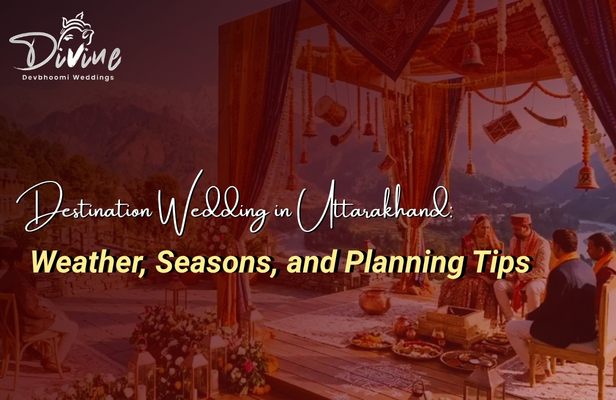
Pre-wedding functions like Mehendi, Haldi and Sangeet are often better suited to nearby accommodation or event spaces rather than the temple premises itself, since the temple's primary purpose is the sacred ceremony. Subject to availability and local rules, couples can consider an intimate Mehendi brunch, a relaxed Haldi ceremony, a family Sangeet evening, a welcome dinner for arriving guests, a traditional Pooja, or a post-wedding gathering to close out the celebrations.
Keeping these functions at your accommodation or a dedicated event space also gives you more flexibility with music, seating and timing than the temple environment would reasonably allow.
Read More - Explore the History and Spiritual Significance of the Triyuginarayan Temple
Before you commit to a date, it helps to go in with realistic expectations rather than only the romantic version of the story.
Destination weddings in mountain regions demand more than good décor and warm hospitality — they demand familiarity with local terrain, temple protocol and the practical realities of coordinating an event far from a major city.
A local planning team can help with temple coordination, wedding arrangements, accommodation, transportation, décor, catering, guest management, photography coordination, vendor management, wedding-day execution and weather contingencies — the kind of on-ground knowledge that's hard to replicate from a distance. Devbhoomi Weddings is one such option for couples looking for wedding planning services in Uttarakhand, offering the local coordination that a mountain wedding tends to need.
A Triyuginarayan Temple Wedding tends to suit couples who genuinely value spirituality, tradition, family, intimacy, nature, cultural authenticity and meaningful experience over scale and spectacle. It won't be the right fit for everyone — and that's fine. But for the couples it does suit, the fit tends to run deep.
If your dream wedding is about starting your marriage with faith and blessings rather than simply creating a spectacle, Triyuginarayan deserves a place on your shortlist.
Why is Triyuginarayan Temple famous for marriage?
Triyuginarayan is famous for marriage because Hindu tradition holds it as the site where Lord Shiva and Goddess Parvati were married. The temple's Akhand Dhuni, a fire believed to have burned continuously since that ceremony, adds to its sacred reputation, making it a meaningful choice for couples seeking a spiritually rooted wedding.
How do I plan a wedding at Triyuginarayan Temple?
Start by deciding your wedding vision, then confirm temple requirements like availability, permissions and priest arrangements. From there, build the guest experience, design the celebration and coordinate wedding-day logistics. Working with a local wedding planner familiar with the temple and terrain makes each of these steps considerably easier.
How much does a Triyuginarayan wedding cost?
There is no single fixed cost, since it depends on factors like guest count, accommodation choices, catering, décor, transport and photography coverage. Rather than comparing headline prices, couples should review complete package inclusions from planners to understand what's actually covered.
What rituals are performed at Triyuginarayan Temple?
A typical ceremony includes a Ganesh Puja, Vedic prayers, Kanyadaan, pheras around the sacred fire, and priest-led rituals with family blessings throughout. The exact sequence can vary depending on family tradition and the presiding priest's guidance.
Is Triyuginarayan suitable for an intimate destination wedding?
Yes, Triyuginarayan is well suited to intimate destination weddings. The temple's scale, mountain setting and ritual-focused atmosphere naturally favor smaller, close-knit gatherings over large guest lists, making it a strong fit for couples who prioritize meaning over size.
Can NRI or international couples have a wedding at Triyuginarayan?
Yes, NRI and international couples can plan a wedding here, though it requires additional coordination around travel, documentation and guest logistics. Working with a local wedding planner is especially useful for couples managing arrangements from abroad.
Can Mehendi, Haldi and Sangeet be organized near Triyuginarayan?
Yes, pre-wedding functions like Mehendi, Haldi and Sangeet can typically be organized at nearby accommodation or event spaces, subject to availability and local rules. These functions are usually better suited to such venues than the temple premises itself.
Where can wedding guests stay near Triyuginarayan?
Guests can typically choose from hotels, resorts, guest houses, homestays or group accommodation in the surrounding area, depending on group size and comfort preferences. It's best to confirm current availability and options directly with accommodation providers.
What is the best season for a Triyuginarayan wedding?
Spring and autumn are generally favored for their comfortable weather and clearer views, while summer offers a cooler mountain escape and winter brings a quieter, scenic atmosphere. Each season has trade-offs, so it's worth checking current conditions before finalizing a date.
How can guests reach Triyuginarayan Temple?
Guests typically travel by a combination of air, rail and road, since the temple is located in the hills of Rudraprayag district. The final stretch usually involves road travel and some walking, so it's best to confirm the latest route and transport details with your planner or accommodation provider.
If you are ready to turn a sacred wedding dream into a beautifully planned celebration, connect with Devbhoomi Weddings for local wedding planning, venue coordination and guest management support in Uttarakhand.

























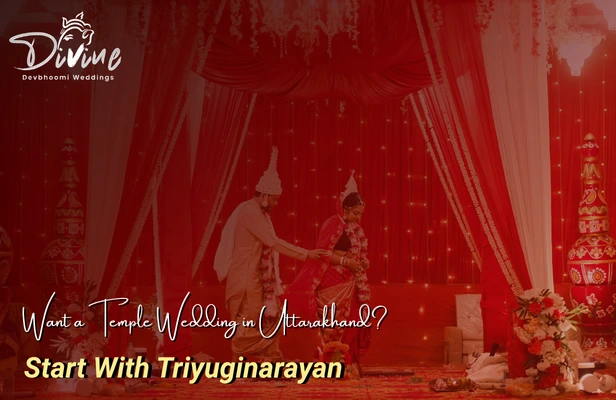















From pre-wedding celebrations to grand wedding days, we provide end-to-end services for all functions.
Copyright © 2024 | All Rights reserved by Divine Dev Bhoomi | Designed & Developed by Edtech Innovate Pvt. Ltd.