
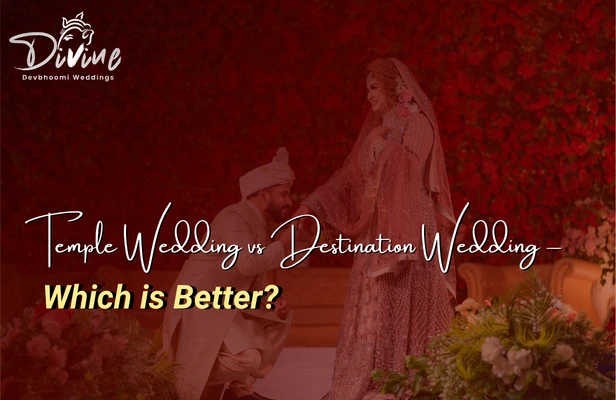
Choosing between a Temple Wedding vs Destination Wedding is one of the biggest decisions modern couples face when planning their big day. Both options offer something unique — one rooted in centuries of sacred Hindu tradition, the other built around scenic beauty, luxury, and personalization. As weddings evolve from simple family functions into full-fledged celebrations of love, more couples are weighing the emotional depth of a Temple Wedding against the visual grandeur of a Destination Wedding.
This growing comparison isn't surprising. Today's couples want a wedding that reflects who they are — spiritual, modern, traditional, or a blend of all three. Some are drawn to the divine energy of ancient temples nestled in the Himalayas, while others dream of exchanging vows against a backdrop of misty mountains, golden beaches, or royal palaces. Budget, family expectations, guest convenience, religious values, and personal taste all play a role in this decision.
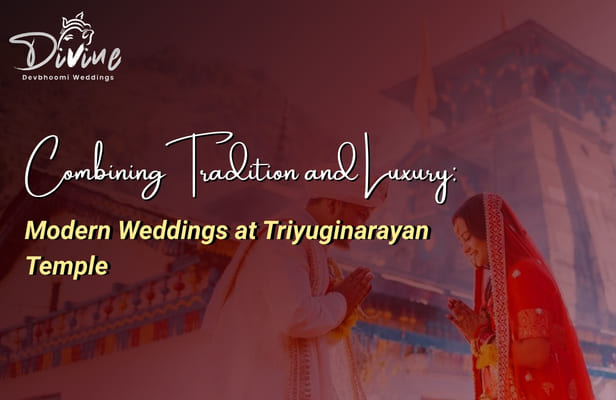
There's no universal right answer when it comes to Temple Wedding vs Destination Wedding — the "better" choice depends entirely on your priorities. A couple seeking sacred rituals, simplicity, and affordability may lean toward a temple wedding, while a couple wanting a multi-day luxury celebration with scenic photography may prefer a destination wedding. Interestingly, many couples today are discovering a third option — a temple destination wedding, where sacred rituals meet breathtaking natural beauty, such as at the revered Triyuginarayan Temple in Uttarakhand, often considered the ultimate blend of both worlds.
This complete guide breaks down every aspect of Temple Wedding vs Destination Wedding — from cost and rituals to guest experience, photography, and planning logistics — so you can make an informed, confident decision for your special day.
A Temple Wedding is a traditional Hindu marriage ceremony conducted within the premises of a temple, following Vedic rituals under the guidance of priests. It is one of the oldest and most spiritually significant forms of marriage in Hindu culture, symbolizing the union of two souls in the presence of the divine.
In Hindu tradition, marriage is considered one of the sixteen sacred sanskaras (rites of passage) of life. A temple wedding elevates this significance further by placing the ceremony directly under the blessings of a deity. Couples believe that marrying in a temple invites divine grace, ensures a stronger marital bond, and brings prosperity and harmony to their life together.
Temple weddings are deeply rooted in scripture and devotion. Many Hindus believe that certain temples — particularly those associated with Lord Shiva and Goddess Parvati — hold special significance for marriage ceremonies, as they are believed to be the very sites where celestial or mythological weddings took place.
A typical temple wedding includes:
These rituals are performed with strict adherence to Vedic customs, guided by experienced pandits who ensure every step follows scriptural accuracy.
Some of the most sought-after temple wedding locations in India include:
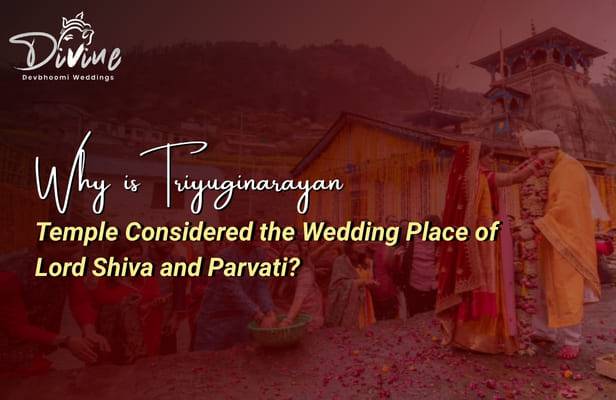
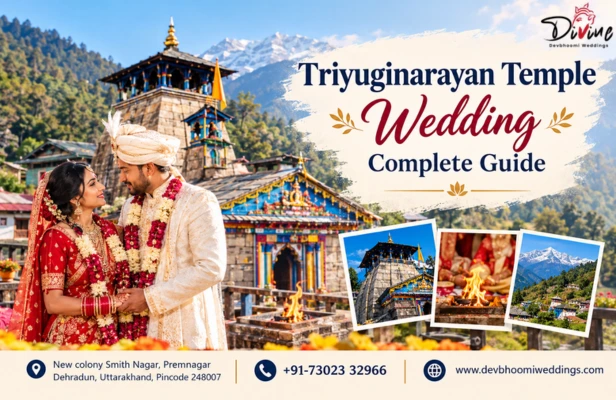
Among all these, Triyuginarayan Temple stands out as the most spiritually significant choice, since Hindu mythology holds that this is the actual site where Shiva and Parvati were married, with an eternal flame still burning as witness to their union.
A temple wedding is ideal for couples who value tradition, spirituality, and simplicity — those who want their marriage to begin with divine blessings rather than elaborate showmanship.
A Destination Wedding is a marriage ceremony held at a location away from the couple's hometown — typically a scenic, luxurious, or culturally rich setting chosen specifically for its beauty and experience value.
Destination weddings have surged in popularity over the last decade, driven by social media, the desire for unique experiences, and the rise of multi-day wedding celebrations that double as a getaway for the couple and their guests.
Resort Weddings – Held at luxury resorts offering complete hospitality, catering, and event management under one roof.
Palace Weddings – Royal venues in Rajasthan and other heritage cities that offer grandeur and old-world charm.
Mountain Weddings – Locations like Mussoorie, Nainital, and Jim Corbett offering serene, picturesque backdrops.
Beach Weddings – Coastal destinations like Goa and Kerala, known for their relaxed, romantic atmosphere.
Temple Destination Weddings – A rising trend where couples combine sacred rituals with a scenic getaway, such as a wedding at Triyuginarayan Temple paired with a stay in nearby Himalayan resorts.
Couples today want more than just a ceremony — they want an experience. Destination weddings allow for multi-day celebrations, personalized themes, professional photography, and quality time with guests in a relaxed, resort-style setting, away from the chaos of a typical hometown wedding.
| Feature | Temple Wedding | Destination Wedding |
|---|---|---|
| Venue | Sacred temple premises | Resorts, palaces, beaches, mountains |
| Cost | Generally lower | Generally higher |
| Guest Count | Small to medium | Small to large, fully customizable |
| Rituals | Traditional Vedic rituals, strictly followed | Flexible, can blend traditions with modern elements |
| Decoration | Limited, temple rules apply | Fully customizable themes and décor |
| Customization | Minimal | Extensive |
| Accommodation | Usually arranged separately nearby | Often included in wedding packages |
| Entertainment | Minimal, focus on rituals | Live music, DJs, performances possible |
| Photography | Divine, architectural, spiritual backdrops | Scenic, cinematic, varied backdrops |
| Privacy | Semi-private, shared temple space | Highly private, exclusive venue |
| Planning | Simpler, fewer moving parts | Detailed, multi-vendor coordination |
| Budget | Lower overall investment | Higher overall investment |
| Hospitality | Basic to moderate | Premium, resort-style hospitality |
| Overall Experience | Spiritual, intimate, sacred | Luxurious, memorable, experience-driven |
Quick Answer: A Temple Wedding is best for couples prioritizing tradition, spirituality, and affordability, while a Destination Wedding suits those seeking luxury, customization, and a multi-day celebration experience.
Budget is often the deciding factor in the Temple Wedding vs Destination Wedding debate. Here's a breakdown of where the money typically goes.
Temple weddings usually involve minimal venue costs or a modest donation/booking fee, while destination wedding venues — resorts, palaces, or private properties — command significantly higher rental charges depending on location and season.
Temple decoration is simple, often limited to floral arrangements approved by temple authorities. Destination weddings allow elaborate themed décor, including mandaps, lighting design, and custom installations, which adds considerably to the budget.
Temple weddings often involve smaller, simpler meal arrangements for close family. Destination weddings typically include multi-cuisine catering, welcome dinners, and multiple event-day menus.
Temple wedding guests usually arrange their own nearby stays. Destination wedding packages frequently bundle accommodation for the couple and guests into the overall cost.
Both options require professional photography, but destination weddings often involve pre-wedding shoots, drone coverage, and cinematic films, increasing the investment.
Temple weddings rarely include entertainment beyond rituals. Destination weddings often budget separately for music, dance performances, and evening events.
Temple weddings may require minimal local transport. Destination weddings often need guest transfers, especially for weddings in remote or scenic locations.
Simple temple weddings can sometimes be managed without a dedicated planner, while destination weddings almost always require professional coordination due to their complexity.
Permits, temple donations, priest fees, and local logistics apply to temple weddings, while destination weddings may involve vendor travel costs, insurance, and contingency budgets.
| Cost Category | Temple Wedding (Estimated Range) | Destination Wedding (Estimated Range) |
|---|---|---|
| Venue | Low | Moderate to High |
| Decoration | Low | Moderate to High |
| Catering | Low to Moderate | Moderate to High |
| Accommodation | Low (self-arranged) | Moderate to High (often included) |
| Photography | Moderate | Moderate to High |
| Entertainment | Minimal | Moderate to High |
| Overall Budget | Budget-Friendly | Premium Investment |
For couples with a modest budget, a temple wedding is almost always more affordable, as it eliminates large-scale décor, extensive catering, and multi-day event costs.
At a medium budget, both options are feasible — a mid-range destination wedding at a smaller resort can be comparable to a moderately decorated temple wedding with additional celebrations.
At the luxury end, destination weddings offer far more scope for grandeur, though a temple wedding paired with a luxury resort stay nearby (a temple destination wedding) can also deliver a premium experience without excessive spending on décor.
Watch out for temple donation requirements, priest fees, and local permit costs in temple weddings; and vendor travel charges, resort service taxes, and guest hospitality add-ons in destination weddings.
Destination weddings typically offer superior hospitality, with resort staff managing guest needs throughout the stay. Temple weddings offer a warmer, more personal family-style hospitality.
Destination wedding packages often include guest accommodation, while temple wedding guests usually arrange nearby stays independently.
Temple weddings, especially those closer to major cities, may be easier for guests to reach. Remote destination weddings may require more travel planning but often reward guests with a memorable getaway.
Destination weddings offer significantly more entertainment options, including music, performances, and themed evenings.
Both options can offer excellent food, though destination weddings usually provide more variety across multiple event days.
Destination weddings often double as a mini vacation, giving guests time to explore the surrounding area — a major plus for out-of-town attendees.
Temple weddings, being simpler and shorter, are often more comfortable for elderly guests, while destination weddings need careful planning for accessibility and rest.
Destination weddings, especially resort-based ones, often have more amenities for children, while temple weddings may require additional planning for young guests.
Both temple weddings and destination weddings can include traditional Hindu rituals, but the way they are performed differs.
In essence, a temple wedding guarantees ritual authenticity within a sacred space, while a destination wedding offers flexibility to recreate those same rituals in a more personalized setting.
Photography plays a huge role in how couples relive their wedding day, and both options offer distinct visual appeal.
For couples who want both spiritual depth and stunning natural scenery in their photographs, a temple destination wedding at a location like Triyuginarayan offers the best of both worlds.
Among these, Triyuginarayan Temple remains the top recommendation for couples who want their marriage to be rooted in genuine spiritual significance while still enjoying the scenic beauty that destination weddings are known for — making it, in many ways, the best of both categories.
Read More - Resorts Near Triyuginarayan Temple for Wedding
A temple wedding is best suited for:
A destination wedding is ideal for:
Choosing between a Temple Wedding vs Destination Wedding doesn't have to be overwhelming. Devbhoomi Weddings specializes in helping couples navigate this decision with expert guidance across every stage of planning.
Whether a couple envisions a sacred ceremony at Triyuginarayan Temple or a grand celebration at a Himalayan resort, experienced planning support ensures the process remains smooth and stress-free.
The debate of Temple Wedding vs Destination Wedding ultimately comes down to what matters most to you as a couple. A temple wedding offers spiritual depth, authentic rituals, and an affordable, intimate celebration rooted in centuries of tradition. A destination wedding, on the other hand, delivers luxury, customization, and an unforgettable multi-day experience set against stunning backdrops.
There is no single "better" option — the right choice depends on your budget, family traditions, guest expectations, and personal vision for your big day. For couples who want the sacred essence of a temple wedding combined with breathtaking natural beauty, a temple destination wedding at a site like Triyuginarayan Temple offers a truly unmatched experience — blessed rituals set against the majestic Himalayas.
Whichever path you choose in the Temple Wedding vs Destination Wedding decision, thoughtful planning and professional guidance make all the difference in creating a celebration that reflects your values and creates memories that last a lifetime.
What is the difference between a Temple Wedding and a Destination Wedding?
A Temple Wedding is a traditional religious ceremony held within a temple following strict Vedic rituals, while a Destination Wedding takes place at a scenic or luxury location away from home, offering more flexibility and customization.
Which is more affordable: a Temple Wedding or a Destination Wedding?
A Temple Wedding is generally more affordable due to lower venue, décor, and hospitality costs compared to the multi-day, multi-vendor requirements of a Destination Wedding.
Can a Temple Wedding also be a Destination Wedding?
Yes, a temple destination wedding combines sacred rituals with a scenic getaway, such as marrying at Triyuginarayan Temple while staying at a nearby Himalayan resort.
Which option is better for Hindu couples?
Both options can honor Hindu traditions, but a Temple Wedding offers a more authentic, ritual-rich experience, especially at mythologically significant sites like Triyuginarayan.
Are destination weddings legally valid in India?
Yes, destination weddings in India are legally valid as long as the marriage is registered according to applicable Indian marriage laws.
What rituals are performed in a Temple Wedding?
Common rituals include Ganesh Puja, Kanyadaan, Varmala, Pheras, Saptapadi, and the Sindoor ceremony, all guided by a priest.
Can destination weddings include traditional Hindu rituals?
Yes, destination weddings can incorporate the same traditional Hindu rituals as a temple wedding, often with a custom-built mandap.
Which wedding style is best for a small guest list?
Temple weddings are naturally suited for smaller, more intimate guest lists, though destination weddings can also be scaled down for intimate celebrations.
Which wedding style offers better photography opportunities?
Destination weddings generally offer more diverse photography backdrops, while temple weddings offer unique spiritual and architectural photography, especially at scenic sites like Triyuginarayan.
How much does a Temple Wedding cost compared to a Destination Wedding?
Temple weddings are typically more budget-friendly, while destination weddings involve higher costs due to venue, accommodation, and multi-day event expenses.
Are destination weddings suitable for elderly guests?
With proper planning around accessibility, transport, and accommodation, destination weddings can be made comfortable for elderly guests, though temple weddings are generally simpler for them.
Can NRI couples choose a Temple Wedding in India?
Yes, many NRI couples choose temple weddings in India, particularly at revered sites like Triyuginarayan Temple, to connect with their cultural roots.
What are the biggest challenges of planning a Destination Wedding?
Key challenges include coordinating guest travel, managing multiple vendors, seasonal venue availability, and overall logistics management.
Is accommodation included in destination wedding packages?
Many destination wedding packages include accommodation for the couple and guests, though this varies by venue and planner.
Why should couples hire professional wedding planners?
Professional planners simplify logistics, negotiate better vendor rates, ensure ritual accuracy, and help couples avoid costly planning mistakes — whether for a Temple Wedding or a Destination Wedding.




















































From pre-wedding celebrations to grand wedding days, we provide end-to-end services for all functions.
Copyright © 2024 | All Rights reserved by Divine Dev Bhoomi | Designed & Developed by Edtech Innovate Pvt. Ltd.