
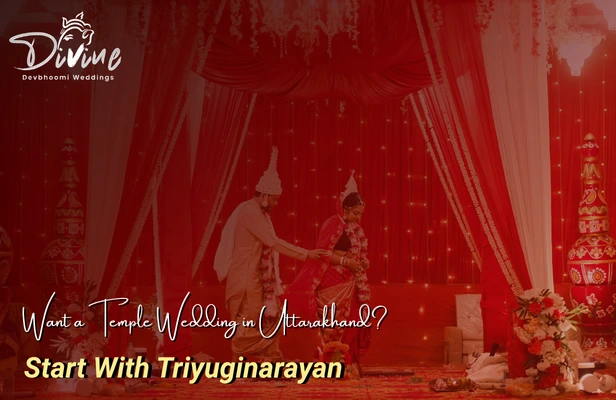
A Triyuginarayan Temple Wedding is more than a ceremony — it is a return to the place where marriage itself is said to have begun. Nestled in the Garhwal Himalayas, Uttarakhand is known as Devbhoomi, the Land of Gods, home to few sites with as much spiritual weight as this ancient temple. Hindu belief holds that Lord Shiva and Goddess Parvati were married here, with the Himalayas as witness and a fire said to have burned ever since. For couples drawn to a sacred wedding destination in India, the temple's stone courtyard and mountain backdrop offer something a banquet hall never can. As couples increasingly favor smaller, meaningful celebrations, a spiritual wedding venue like Triyuginarayan has grown popular. This guide covers why the temple matters and how to plan a wedding here.
Triyuginarayan's fame rests on a single belief: this is the Lord Shiva and Goddess Parvati wedding place. "Tri-yugi" means "three eras," and tradition holds the divine wedding spanned the Satya, Treta, and Dwapar yugas — hence the name. Vishnu is said to have acted as Parvati's brother and performed the kanyadaan, the ritual giving away of the bride.
At the heart of the complex burns the Akhand Dhuni, a fire believed to have stayed alight since that original wedding. Couples marrying here take their pheras — ceremonial rounds — around this same eternal flame. That unbroken continuity is what gives the temple its sanctity, connecting a modern wedding to something ancient. It is one reason Triyuginarayan is considered a sacred wedding destination in India rather than simply a scenic one.
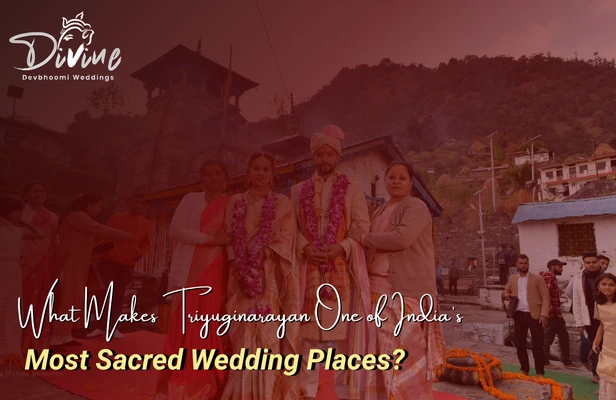
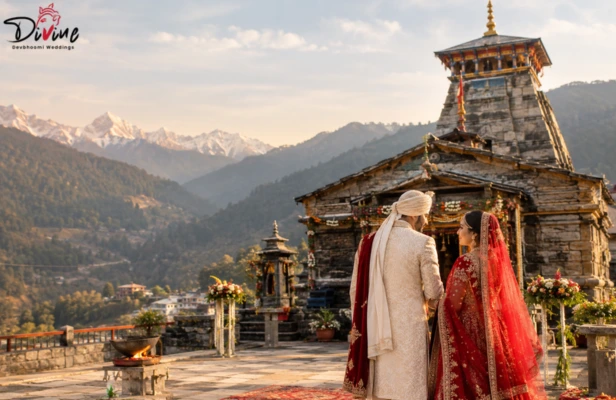
A wedding at this stone temple, ringed by pine forest and Himalayan peaks, feels contemplative rather than performative — priests chanting Vedic mantras, the crackle of the sacred fire, mountain air replacing air conditioning and string lights.
The temple's North Indian-style architecture, weathered stone, and simple carvings add timelessness. Because ceremonies follow a traditional Hindu wedding ceremony format led by resident priests, families get ritual rather than spectacle. Limited courtyard space also naturally keeps guest counts small, making this a genuinely intimate destination wedding.
Uttarakhand's rise as a wedding destination reflects a broader shift toward a temple wedding in Uttarakhand as an alternative to conventional venues.
Snow-lined peaks, pine forests, and river valleys give a Himalayan wedding venue a natural backdrop and striking photography without artificial décor.
As Devbhoomi, Uttarakhand hosts major pilgrimage sites — Kedarnath, Badrinath, Gangotri, and Yamunotri. Marrying here links a family's biggest milestone to a landscape already tied to faith.
A destination wedding in Uttarakhand often means Vedic rituals performed as scripture prescribes, traditional attire, and blessings from temple priests.
Many guests combine the trip with pilgrimage visits and local sightseeing, turning a single-day event into a small Himalayan getaway.
Couples researching how to book a Triyuginarayan Temple wedding should expect a process blending temple coordination with standard destination-wedding logistics.
1. Select the Wedding Date — Factor in the Hindu religious calendar, seasonal weather, temple availability, and guest travel conditions.
2. Confirm Temple Permissions — Contact temple administration for ceremony timings, priest availability, and current rules on group size or photography. Rules can change, so always verify the latest requirements directly with temple authorities rather than older information.
3. Finalize the Guest List — Since Triyuginarayan favors an intimate destination wedding, guest count shapes accommodation needs, transportation, catering, décor, hospitality, and overall budget.
4. Arrange Accommodation — Options near the temple and nearby towns range from guest houses and homestays to resorts and hotels.
5. Arrange Transportation — Plan airport and railway transfers to a base town, followed by private vehicles for the mountain leg, with generous travel-time buffers for hill roads.
6. Plan Décor — Given the temple's sanctity, décor stays minimal and respectful — floral and marigold arrangements, traditional motifs, and a mandap only where permitted.
7. Arrange Catering — Vegetarian menus are standard, blending North Indian dishes with regional Uttarakhand cuisine across breakfast, meals, and refreshments.
8. Arrange Photography — Book a team experienced with low indoor light, temple settings, and Himalayan landscapes, confirming what can be shot inside versus outside the temple.
A common question is how much does a Triyuginarayan Temple wedding cost. Honestly, Triyuginarayan Wedding Cost varies with guest count, accommodation, catering style, décor scale, transportation, and whether you hire a planner. There's no single fixed figure — treat any quote as an estimate tied to specific inclusions.
|
Wedding Component |
Cost Depends On |
|
Temple/Ceremony |
Permissions, rituals, priest arrangements |
|
Accommodation |
Property type, rooms and nights |
|
Transportation |
Guest count and vehicle type |
|
Decoration |
Floral décor, mandap and setup |
|
Catering |
Menu, guest count and meals |
|
Photography |
Team size and coverage |
|
Hospitality |
Welcome, refreshments and guest services |
|
Pre-Wedding Events |
Mehendi, Haldi and Sangeet |
|
Wedding Planning |
Scope of planner services |
Rather than fixed prices, which age quickly, request a current, itemized quote from temple authorities and any planner based on your exact guest count and requirements.
The wedding rituals at Triyuginarayan Temple follow classical Hindu tradition, led by resident priests who have performed these ceremonies for generations:
Performing these rites inside a temple already tied to a divine marriage adds meaning many couples describe as deeply moving.
Read More - Triyuginarayan Temple Wedding Packages From ₹1.05 Lakh
Because Triyuginarayan is a small hill village, options include:
Weigh guest comfort against accessibility, especially for elderly relatives who may find hill roads and altitude tiring. Room availability, proximity, transportation, number of nights, and the overall wedding schedule should all guide your choice.
The best time for a Triyuginarayan Temple wedding depends on how much comfort and photography quality matter to your family.
Spring brings pleasant temperatures, greener surroundings, and favorable outdoor photography conditions.
Summer, especially cooler weeks, offers comfortable mountain climate and smoother travel than the plains' heat.
Autumn is often favored for clearer mountain views and excellent photography as the monsoon clears.
Winter brings cold temperatures and possible snow or difficult road conditions, requiring more careful travel planning.
Himalayan weather and road conditions can shift quickly, so track forecasts closely and build flexibility into the schedule.
Coordinating a wedding at a remote Himalayan temple involves far more moving parts than a city wedding — priest scheduling, temple permissions, mountain logistics, and guest hospitality all need to align on a fixed date. This is where an experienced wedding planner in Uttarakhand becomes valuable.
Devbhoomi Weddings, a team familiar with Triyuginarayan and the wider region, works across venue and temple coordination, priest arrangements, accommodation, transportation, décor, catering, photography, guest hospitality, vendor management, event timelines, on-ground coordination, and contingency planning. For families managing a wedding from another city or abroad, a local team handling these details can be the difference between a smooth ceremony and a stressful one.
A wedding package can typically be structured to include:
Before booking, review exactly what's included and excluded, whether taxes are covered, how many accommodation nights and transfers are built in, and what guest-count limits apply.
Since temples can restrict photography during certain rituals, confirm what's permitted — inside the sanctum and around the fire — well before the ceremony.
A Triyuginarayan Temple Wedding brings together spirituality, tradition, Himalayan beauty, and cultural authenticity in a way few venues can match — all rooted in the belief that this is where Lord Shiva and Goddess Parvati were married. It rewards couples who value meaning and intimacy over scale. But a wedding at a remote hill temple also demands real planning: temple coordination, mountain transportation, guest accommodation, and a realistic sense of what the terrain and weather allow. Getting these details right early is what separates a magical day from a stressful one, which is why many families work with an experienced local wedding planner rather than managing it long-distance. If you're picturing your own sacred, intimate Himalayan wedding, Devbhoomi Weddings can help you plan every part of your Triyuginarayan Temple Wedding, from the first temple booking to the final send-off.
1. How do I book a Triyuginarayan Temple wedding?
Select a date that suits the religious calendar and your guests' travel needs, then contact temple authorities to confirm availability, priest arrangements, and current rules. A local wedding planner can simplify this considerably, since they already understand temple coordination and mountain logistics.
2. How much does a Triyuginarayan Temple wedding cost?
Cost depends on guest count, accommodation, catering style, décor, transportation, and whether you hire a planner. There's no single fixed price — request a current, itemized quote based on your specific requirements rather than relying on general estimates online.
3. What rituals are performed at Triyuginarayan Temple?
Ceremonies typically include Ganesh Puja, Kanyadaan, Vedic mantras, pheras around the temple's Akhand Dhuni, and priest-led mangal rituals, concluding with blessings — traditional Hindu wedding ceremony customs performed where Shiva and Parvati are believed to have married.
4. What is the best time for a Triyuginarayan Temple wedding?
Spring and autumn generally offer the most pleasant weather and best photography conditions. Summer works well in cooler weeks, while winter requires more careful planning due to cold and potentially difficult road conditions.
5. How can guests reach Triyuginarayan Temple?
Guests typically fly or take a train to Dehradun, Rishikesh, or Haridwar, then continue by road through Rudraprayag and Sonprayag. Given the hill roads, build in extra travel time and verify current conditions before the trip.
6. Can NRI or international couples have a temple wedding at Triyuginarayan?
Yes, NRI and international couples regularly choose Triyuginarayan for its spiritual significance and intimate scale. Advance planning around travel, documentation, and temple coordination is especially important, and a local wedding planner can help manage logistics remotely.
7. Can Mehendi, Haldi and Sangeet be organized near Triyuginarayan?
Yes, pre-wedding functions are commonly arranged at nearby accommodation or venues in towns like Guptkashi or Sonprayag, since the temple itself is reserved primarily for the wedding ceremony and rituals.
8. Where can wedding guests stay near Triyuginarayan?
Guests can stay in guest houses and homestays closer to the temple, or in hotels and resorts in nearby Guptkashi, Sonprayag, and Rudraprayag, depending on group size and comfort needs.
9. Is photography allowed during the temple wedding ceremony?
Photography is generally permitted, but restrictions may apply during certain rituals or inside the sanctum. Confirm current rules directly with temple authorities in advance so your photography team can plan coverage accordingly.
10. Can customized wedding packages be arranged for different budgets?
Yes, packages can typically be customized around guest count, accommodation level, catering style, and scope of services. Clarify inclusions, exclusions, and any additional costs before finalizing a package with your chosen



















































































From pre-wedding celebrations to grand wedding days, we provide end-to-end services for all functions.
Copyright © 2024 | All Rights reserved by Divine Dev Bhoomi | Designed & Developed by Edtech Innovate Pvt. Ltd.