

Yes. Triyuginarayan Temple in Rudraprayag, Uttarakhand, allows Hindu weddings. To plan one, you need to: (1) pick your date, (2) contact the temple committee or a local priest for booking, (3) arrange documents and registration, (4) book stay and travel, and (5) finalise rituals and guests. Most couples plan 3 to 6 months ahead.
This 2026 guide explains every step in simple English, so you can plan your Himalayan wedding with confidence.
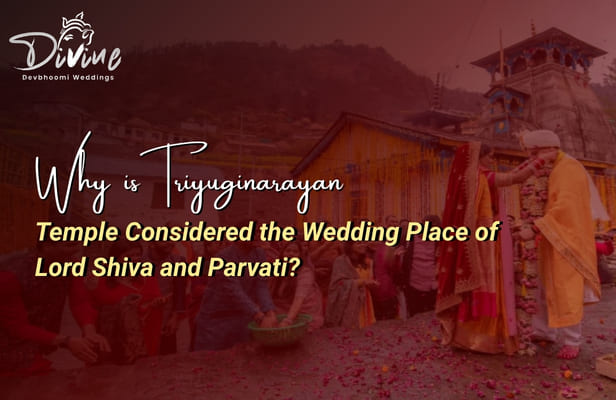
Triyuginarayan is a small Himalayan village in the Rudraprayag district of Uttarakhand, at about 1,980 metres above sea level. Many people believe this is the exact place where Lord Shiva and Goddess Parvati got married. That is why it is called a Shiv Parvati vivah sthal.
The temple is dedicated to Lord Vishnu, who is believed to have attended the wedding as Parvati's brother. Three things make it unique:
If you want a wedding with deep spiritual meaning, mountain views and a peaceful setting, this is one of the best temple wedding places in India.
Understanding the story makes your wedding more meaningful. It also gives your guests a reason to feel connected to the place.
The legend in simple words. According to Hindu belief, Goddess Parvati, daughter of Himavat (the Himalaya king), prayed for many years to marry Lord Shiva. Her devotion was tested at Gaurikund, near Kedarnath. Shiva finally agreed, and the wedding was held at Himavat's kingdom, which devotees identify as Triyuginarayan.
Who played which role. Many people believe:
What the name means. "Tri" means three, "yugi" means age, and "Narayan" is Lord Vishnu. The name points to the belief that the sacred fire has been burning for three yugas.
The four kunds in detail.
|
Holy Kund |
What devotees believe |
|
Brahma Kund |
Used for achaman (sipping holy water) before rituals, linked to Lord Brahma |
|
Vishnu Kund |
Used for ritual bathing, linked to Lord Vishnu |
|
Rudra Kund |
Used for ritual bathing, linked to Lord Shiva |
|
Saraswati Kund |
Believed to be the source that feeds the other kunds |
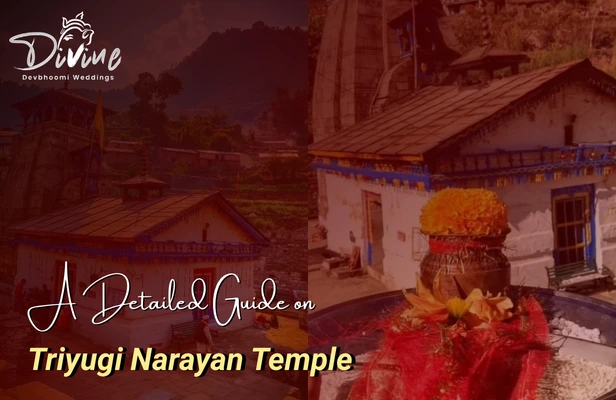
The temple itself. The stone temple follows the Kedarnath style of architecture and is dedicated to Lord Vishnu with idols of Lakshmi and Saraswati. Because of this, you will often hear people call the village the "Shiv-Parvati vivah sthal" while the main deity is Vishnu.
Why this matters for your wedding. Many families believe a marriage solemnised here gets the blessings of the divine couple. Couples also say the place feels calm and simple, which is hard to find in busy city venues.
Note: Traditions and stories can differ slightly between families and priests. Respect local belief and ask your pandit for the version they follow.
Read More - How to Get Married at Triyuginarayan Temple
Before booking, think honestly about these points:
If you love peace, tradition and nature, you will enjoy it.
Triyuginarayan lies on the Kedarnath route, so weather and yatra season matter a lot.
|
Season |
Months |
Suitability |
|
Spring |
March to May |
Good. Pleasant weather, blooming valleys |
|
Summer |
May to June |
Very good, but crowds and prices rise |
|
Monsoon |
July to September |
Not advised. Landslide and road risk |
|
Autumn |
October to November |
Excellent. Clear skies, calm weather |
|
Winter |
December to February |
Cold and snow. Only for experienced travellers |
Tips for choosing a date:
This is the most important step. Weddings at the temple are done through the temple's priests and local administration. Rules can change, so always confirm the latest process before paying anything.
How to start:
Pro tip: Be careful of fake agents. Verify details with the temple office and pay only against a receipt.
Keep these ready:
Important: A temple ceremony alone is a religious ritual. For legal proof, you should also get your marriage registered. Uttarakhand has made marriage registration compulsory under its new rules, so check the current process with the local registrar or on the official state portal. NRIs and foreign guests should ask about extra paperwork.
A temple wedding here is usually much cheaper than a city wedding, but travel and stay add up. Costs depend on guest count, season and services, so treat these as planning categories, not fixed prices:
Get at least three quotes for stay and transport before you finalise.
Travel time: Plan about 9 to 11 hours from Rishikesh. Start early in the morning and avoid night driving.
Tip: Book vehicles for all guests in advance, since public transport is limited in peak season.
Stay options are simple but welcoming:
Book early, especially for May, June and October. Check hot water, power backup, mobile network and parking before booking. Network can be weak, so tell family to download maps offline.
Rituals follow Vedic tradition and are done around the sacred fire. A typical order:
Your pandit will guide the exact process, which may differ by family custom.
|
Day |
Plan |
|
Day 1 |
Travel from Rishikesh or Haridwar towards Guptkashi or Sonprayag. Check in, rest, light dinner. |
|
Day 2 |
Early morning prayers, haldi or mehendi in the morning. Main wedding rituals as per muhurat. Community meal and blessings. |
|
Day 3 |
Visit Triyuginarayan temple kunds, take prasad, start return journey or go for a honeymoon trip. |
Tip: Mountain roads are slow. If many guests are elderly, add one more rest day.
Prices change by season, so ask for written quotes. Use this table to avoid missing any cost.
|
Cost Item |
Who to Contact |
What to Confirm |
|
Temple ritual and priest |
Temple office, local pandit |
Fee, puja items list, timing |
|
Marriage registration |
Local registrar |
Documents, fees, slot |
|
Stay |
Homestays, guest houses, hotels |
Rooms, meals, parking, power backup |
|
Transport |
Local cab union, travel agent |
Per-day rate, fuel, toll, driver stay |
|
Food |
Local caterer |
Menu, number of guests, cooking arrangement |
|
Decoration |
Local florist |
Flowers, mandap, lighting |
|
Photo and video |
Photographer |
Travel cost, drone permission, edit time |
|
Emergency buffer |
You |
Keep 10 to 15 percent extra |
Always check yatra registration and weather before planning Kedarnath.
Explore More - Where Should Your Wedding Guests Stay? Homestays vs Resorts Near Triyuginarayan
|
Destination |
Best For |
Main Challenge |
|
Triyuginarayan |
Spiritual, traditional, small weddings |
Remote, limited stay |
|
Haridwar |
Easy access, large families |
Crowded, less private |
|
Rishikesh |
Riverside and yoga-style weddings |
Busy in peak season |
|
Jim Corbett |
Resort-style nature weddings |
Less spiritual meaning |
|
Mussoorie and Dehradun |
Hotel luxury weddings |
Higher cost, city feel |
Choose Triyuginarayan if the divine story and a peaceful Himalayan setting matter more to you than luxury and convenience.
Where is Triyuginarayan temple located? It is in Rudraprayag district, Uttarakhand, near Sonprayag on the Kedarnath route.
Why is Triyuginarayan temple famous? It is believed to be the wedding place of Lord Shiva and Parvati, with a sacred fire burning there.
Can I marry at Triyuginarayan temple? Yes, Hindu couples can marry here by following the temple and local rules.
What is the best month for a Triyuginarayan wedding? April to June and October to November are usually the best months.
How far is Triyuginarayan from Kedarnath? The temple is on the Kedarnath route near Sonprayag. Check current road and yatra details before travel.
How long does it take to reach from Rishikesh? Around 9 to 11 hours by road, depending on traffic and weather.
1. Can anyone get married at Triyuginarayan Temple? Yes, Hindu couples can marry here by following the temple's rules and completing the required paperwork. Always confirm current eligibility with the temple office or priest.
2. Why is Triyuginarayan Temple famous for weddings? It is believed to be the place where Lord Shiva and Goddess Parvati were married, with the eternal fire as witness. Couples marrying here seek the same divine blessings.
3. How do I book a wedding at Triyuginarayan Temple? Contact the temple committee or a local pandit, share your preferred dates, confirm availability and fees, and get written confirmation. Start 3 to 6 months ahead.
4. What is the cost of a wedding at Triyuginarayan Temple? Temple fees are usually modest, but the total depends on guests, stay, travel, food and photography. Take quotes for each item to build a realistic budget.
5. What is the best time for a Triyuginarayan temple wedding in 2026? April to June and October to November are the best months for pleasant weather and open roads. Avoid the monsoon season from July to September.
6. Is the Akhand Dhuni really burning for three yugas? Devotees believe the sacred fire has been burning since the wedding of Shiva and Parvati. It is a matter of faith and is a major reason couples choose this temple.
7. What documents are needed for the wedding? ID proofs, age proof, photographs, address proof, witness IDs and any special documents such as a divorce decree. Also arrange marriage registration for legal validity.
8. How many guests can I invite? There is no ideal fixed number, but small groups are easier because the village is remote and stay is limited. Ask the temple office for any guest limit.
9. How do I reach Triyuginarayan Temple? Fly to Dehradun, or take a train to Rishikesh or Haridwar, then travel by road via Rudraprayag, Guptkashi and Sonprayag. The drive takes around 9 to 11 hours from Rishikesh.
10. Can I do a pre-wedding shoot or videography there? Photography is common, but rules may vary. Ask the temple office before bringing cameras or drones, and always respect the sanctity of the place.
A wedding at Triyuginarayan Temple is more than a ceremony. It is a spiritual journey where you take your vows around a sacred fire in the same land believed to have witnessed the wedding of Shiva and Parvati. With early planning, the right date, trusted local help and proper documents, your Himalayan wedding can be peaceful, meaningful and unforgettable.
Start today: pick your date, speak with the temple office or a local pandit, and begin your journey toward a divine beginning in 2026.
Need help planning your Uttarakhand wedding? Contact us for travel, stay and wedding support.
































































From pre-wedding celebrations to grand wedding days, we provide end-to-end services for all functions.
Copyright © 2024 | All Rights reserved by Divine Dev Bhoomi | Designed & Developed by Edtech Innovate Pvt. Ltd.