
|
Quick Answer (Read This First) A Triyuginarayan Temple wedding is a Hindu wedding held around the Akhand Dhuni, the sacred fire believed to be burning since Lord Shiva and Goddess Parvati were married here. In 2026, the temple ritual part (pandit, samagri, puja and donations) is commonly quoted at about ₹30,000. A simple wedding for two with stay and food usually starts near ₹50,000. A family wedding with 20–50 guests usually costs ₹1.5 lakh to ₹4 lakh. You need Aadhaar or passport, age proof (bride 18+, groom 21+), photographs and two witnesses. Book 3–6 months early, and register your marriage legally at the Sub-Registrar office after the wedding. |
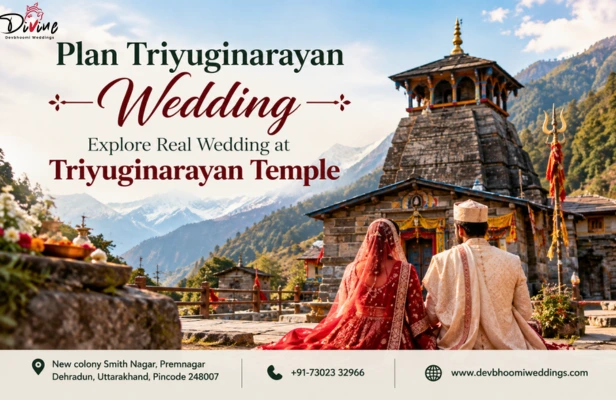
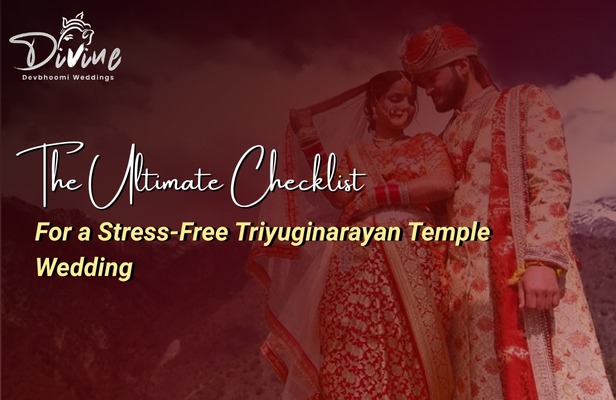
Every couple wants a wedding that feels special. Some choose a big hotel. Some choose a palace. More and more couples now choose something different: a wedding at the exact place where, as per Hindu belief, Lord Shiva married Goddess Parvati. That place is Triyuginarayan Temple in the Rudraprayag district of Uttarakhand.
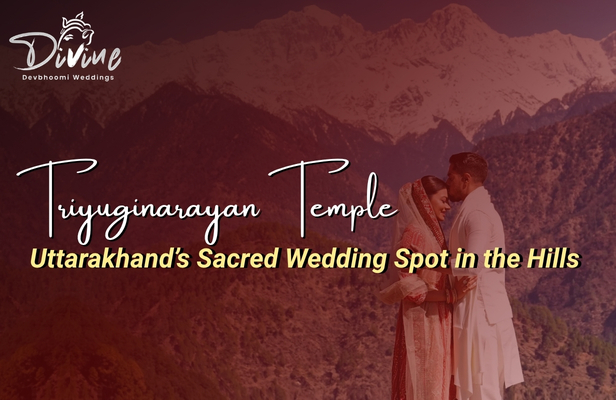
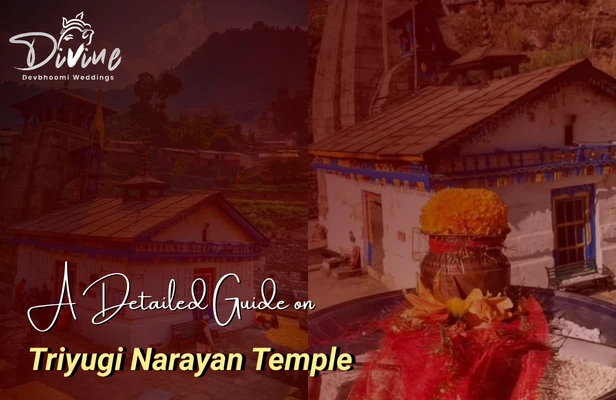
The temple stands in a small Himalayan village at about 1,980 metres (around 6,500 feet) above sea level. It is surrounded by green hills, pine and rhododendron forests, and on clear days you can see snow peaks. There are no loud banquet halls here. There is no DJ traffic. There is only a stone temple, mountain air and a fire that people say has never gone out.
Here is why couples say they choose this place:
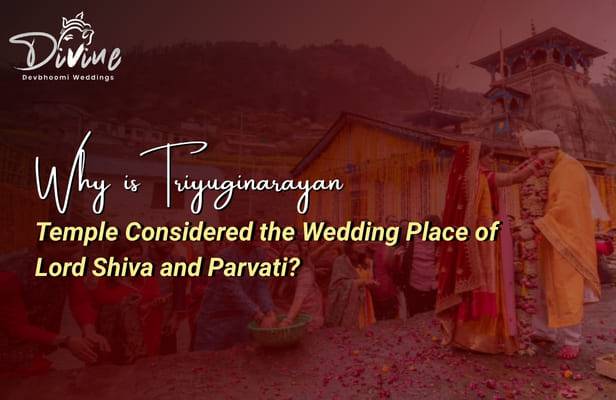
The name Triyuginarayan comes from two ideas: “Triyugi” (three yugas or ages) and “Narayan” (Lord Vishnu). According to popular belief, the sacred fire lit at the time of Shiva and Parvati’s wedding has been burning for three yugas. That is why it is called the Akhand Dhuni (the unbroken fire).
The story people tell goes like this. Goddess Parvati, daughter of King Himavan, did deep penance to win Lord Shiva as her husband. Her penance is linked to nearby Gaurikund. Shiva finally agreed to marry her. The wedding was held here in the Himalayas. Lord Vishnu is said to have taken part as Parvati’s brother and performed the traditional duties, and Lord Brahma is said to have acted as the priest for the ceremony.
Near the temple, you will also find sacred kunds (water ponds) with names like Brahma Kund, Rudra Kund, Vishnu Kund and Saraswati Kund. Many families take a holy dip or sprinkle this water as part of their pre-wedding rituals. Devotees also offer wood (samidha) into the eternal flame, and this is one reason a “wood donation” is part of the temple wedding charges.
Because of this history, a wedding here is not seen as a “venue booking”. It is seen as a vivah sanskar at a holy place.
Many couples search for “real wedding at Triyuginarayan Temple” because they want to know what actually happens on the day. Here is a typical wedding day, based on how these ceremonies usually run. Exact timings can change, because the temple and the priests decide the muhurat and slot.
Most families prefer a morning wedding. The weather is clearer, the temple is less crowded, and the light is soft and golden for photos. The bride and groom usually get ready at the hotel or homestay. Bride makeup, saree or lehenga, groom’s sherwani or dhoti-kurta, and family outfits are all done before you leave for the temple.
Guests travel by car from the stay to the temple village. On the last stretch you may walk a short distance on stone paths. Elders should be seated in a vehicle as close as possible. Keep water, a shawl and a few snacks handy.
The priest starts with the sankalp (a vow of purpose) and Ganesh puja. Family members sit together. The priests may also guide you to bathe in or sprinkle water from the holy kund, as per tradition.
The bride and groom exchange varmalas. Then the bride’s parents or guardians perform kanyadaan. If parents are not present, ask your planner or priest in advance about who can perform this ritual.
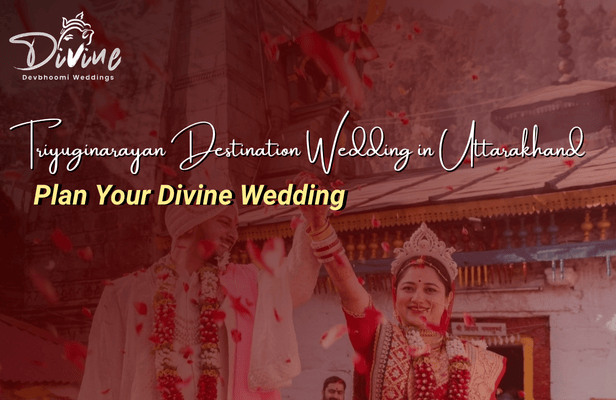
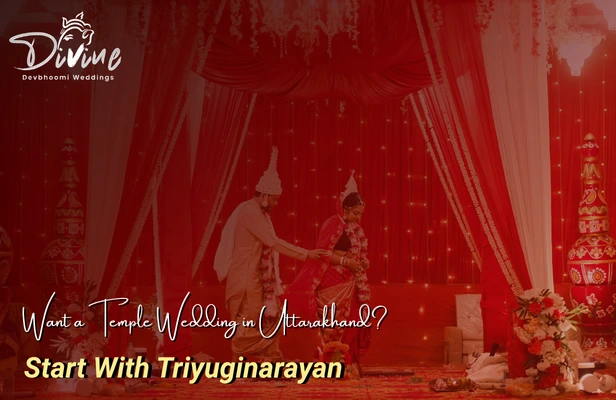
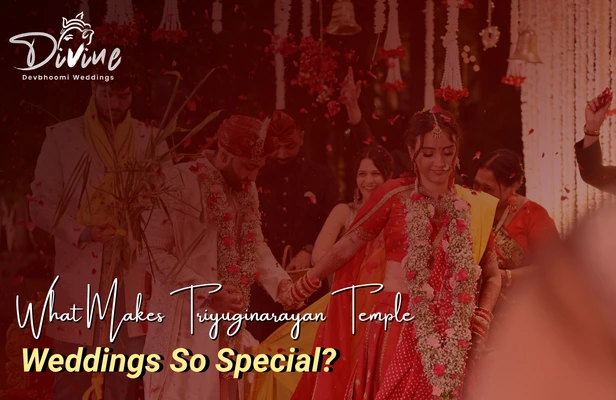
This is the heart of the wedding. The couple takes their pheras (rounds) around the sacred fire while the priest recites Vedic mantras. Ghee, samagri and wood are offered into the flame. Many couples say this is the moment that gives them goosebumps.
After the pheras, the groom applies sindoor and the bride wears mangalsutra. Elders bless the couple. The priests give prasad.
The temple side gives you a receipt or slip that shows the wedding was performed. Keep this safe. You will need it for legal registration. After the ceremony, most couples take photos near the temple and, if allowed, in the village lanes and with the mountain view.
Guests return to the stay for a family lunch and celebration. Many families add a small music evening or a bonfire dinner.
Here is the process in a simple order. Rules can change from year to year, so always confirm the latest steps with the temple committee (Teerth Purohit Samiti) or an experienced local planner.
|
Document |
Details |
Copies |
|
Aadhaar card or Passport |
For both bride and groom (photo ID) |
3–4 photocopies each |
|
Age proof |
Birth certificate, school leaving certificate, 10th mark sheet or passport |
3–4 photocopies each |
|
Passport-size photographs |
Recent colour photos of the bride and groom |
6–8 each |
|
Witnesses |
Two adults with valid ID (family or friends) |
ID copies of both |
|
Address proof |
Aadhaar, voter ID or utility bill (needed for legal registration) |
2–3 copies |
|
Divorce decree / death certificate |
Only if either person was married before |
Original + copies |
|
Wedding invitation card (optional) |
Some Sub-Registrar offices ask for it as extra proof |
1–2 |
|
Temple receipt / slip |
Given after the ceremony; needed for registration |
Original + copies |
Tip: Carry original documents as well as photocopies. Keep a digital scan of everything in your phone and email.
Read More - Triyuginarayan Temple 2026: Complete Guide — Distance, Route & How to Reach from Sonprayag
This is one of the most searched questions, and one of the most important.
A wedding at the temple is complete as a religious ceremony. The temple gives you a receipt or slip after the ritual. But this is not the same as the government marriage certificate.
For legal purposes such as visa, passport name change, bank joint accounts, insurance, property and spouse benefits, you should get your marriage registered under the Hindu Marriage Act at the Sub-Registrar or the local marriage registration office. You will need:
Rules and timelines differ by state, so check the local government website before you go. Many couples finish this within a few weeks of the wedding. Some also do the registration process online where their state allows.
Cost is the first question in every couple’s mind, so let us be honest and clear. There is no single fixed price. The total depends on your guest count, number of days, hotel category, décor, food, photography and travel. The numbers below are planning estimates for 2026 based on commonly quoted market ranges. Always ask for a written quote.
|
Item |
Approximate Cost (2026) |
What it usually covers |
|
Temple wedding ritual amount |
About ₹30,000 |
Pandit dakshina (usually two priests), puja items, samagri, wood/temple donation |
|
Official temple registration fee |
Commonly quoted at about ₹1,100 |
Registration slip through the temple committee (confirm current amount) |
|
Extra havan samagri or special rituals |
₹5,000 – ₹20,000 |
Optional add-ons based on your family customs |
|
Item |
Approximate Cost |
Notes |
|
Simple guesthouse / homestay room |
₹1,000 – ₹3,000 per night |
Basic rooms in nearby towns |
|
Comfortable hotel / cottage |
₹3,500 – ₹8,000 per night |
Better rooms, hot water, better views |
|
Premium resort room |
₹8,000+ per night |
Luxury stays and resort venues |
|
Vegetarian meals |
₹500 – ₹1,500 per person per day |
Depends on menu, buffet or thali |
|
Local taxi / tempo traveller |
₹4,000 – ₹9,000 per day |
Depends on distance, vehicle and season |
|
Haridwar/Rishikesh to Sonprayag by cab (round trip) |
Roughly ₹12,000 – ₹18,000 |
Sedan or SUV; varies by season |
|
Item |
Approximate Cost |
Notes |
|
Simple floral décor (marigold and brass style) |
₹10,000 – ₹30,000 |
Small mandap and entry décor |
|
Premium décor with lights |
₹50,000 – ₹2,00,000 |
For Haldi, Mehndi, reception |
|
Photographer (candid) |
₹15,000 – ₹40,000 |
Depends on hours and team |
|
Photo + video + drone |
₹40,000 – ₹1,00,000+ |
Multi-day coverage costs more |
|
Bridal makeup |
₹8,000 – ₹35,000 |
Artist travel and stay cost may be extra |
|
Mehndi artist |
₹3,000 – ₹15,000 |
Depends on guests and design |
|
Folk singers / music |
₹8,000 – ₹30,000 |
Garhwali folk night or DJ-free music |
|
Wedding Style |
Guests |
Estimated Total |
|
Simple temple wedding for two |
2 – 5 |
₹50,000 – ₹1,00,000 |
|
Close family wedding |
10 – 20 |
₹1,50,000 – ₹2,50,000 |
|
Classic multi-day wedding |
25 – 50 |
₹2,50,000 – ₹4,50,000 |
|
Premium family celebration |
50 – 80 |
₹5,00,000 – ₹12,00,000 |
|
Luxury resort destination wedding |
80 – 100+ |
₹15,00,000 – ₹25,00,000+ |
Up: peak-season dates, more guests, longer stay, premium rooms, big décor, photo + video + drone, Haldi + Mehndi + music nights.
Smart money tip: Never pick a planner only because the price is the lowest. Ask what is included: rooms, meals, transport, temple fees, décor, priest fee. A quote that hides items always looks cheaper at first.
Most planners offer packages based on guest count and days. Here is a simple way to think about them.
|
Package Type |
Best For |
Usually Includes |
Effort Level |
|
Just-the-Two-of-Us |
Couples marrying with few or no guests |
Temple booking, priest, samagri, 1–2 nights stay, meals |
Low |
|
Close Family |
Up to 10–20 guests |
Above + guest rooms, local transport help |
Low–Medium |
|
Classic Wedding |
20–40 guests |
Rituals, stay, meals, transport, simple décor, basic photography |
Medium |
|
Premium Wedding |
40–60 guests |
Above + Haldi/Mehndi setup, makeup, better décor |
Medium–High |
|
Luxury Wedding |
60–100 guests |
Resort stay, premium décor, full hospitality, entertainment |
High |
|
Fully Custom |
Any size |
Built after a planning call around your traditions |
Very High |
Advice: Do not treat a package as a rule. Take one as a starting point and change it. Good planners will let you add or remove items.
Triyuginarayan is at a high altitude, so weather matters a lot. Here is a simple season guide.
|
Season |
Months |
Weather |
Wedding View |
|
Spring / early summer |
March – June |
Pleasant days, cool nights, clear views |
Very popular. Book early. Kedarnath yatra crowd increases travel demand in May–June. |
|
Monsoon |
July – August |
Heavy rain, landslide risk, slippery roads |
Not recommended for weddings. |
|
Autumn |
September – November |
Clear sky, mild weather, great photos |
Excellent season. Also a popular wedding window. |
|
Winter |
December – February |
Cold nights, chance of snow at higher places |
Beautiful and quiet, but you need warm clothing and flexible travel plans. |
Tips for choosing your date
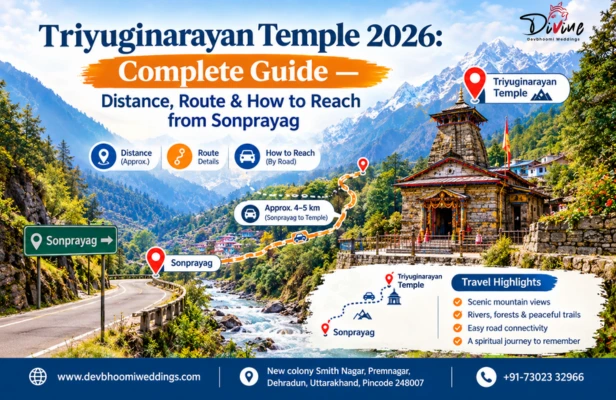
Triyuginarayan is around 12 km from Sonprayag and about 25 km from Kedarnath as the crow flies. From Delhi, the road distance is roughly 450 to 500 km, and it usually takes 12 to 15 hours with stops.
Typical route: Delhi → Haridwar → Rishikesh → Devprayag → Srinagar (Garhwal) → Rudraprayag → Guptkashi → Sonprayag → Triyuginarayan. Many families break the journey with a night in Rishikesh, Srinagar or Guptkashi to avoid tiring elders.
The nearest big railheads are Haridwar and Rishikesh (Yog Nagari). From there, you take a cab or tempo traveller for the mountain road.
Jolly Grant Airport (Dehradun) is the nearest major airport. You still need several hours by road after landing. Book a private cab in advance if you are travelling with a group and luggage.
Use drivers who know mountain roads.
There are no big hotels inside the temple village. Guests usually stay in nearby places where hotels, resorts, homestays and camps are available.
|
Area |
Why Choose It |
Best For |
|
Sonprayag |
Closest major base to the temple and Kedarnath route |
Simple weddings, short stays |
|
Guptkashi |
More hotel choices, good food, easier for bigger groups |
Family weddings and comfort |
|
Phata / Rampur |
Resorts and scenic properties |
Premium stays and pre-wedding functions |
|
Gaurikund |
Spiritual location, but limited room options |
Pilgrimage add-on trips |
|
Ukhimath / Chopta side |
Quiet, scenic, nature-focused |
Relaxed stays before or after the wedding |
Check hot water, heating (in winter), parking and generator or power backup.
The temple ceremony itself may take only a couple of hours, but many families turn the trip into a full multi-day celebration.
Usually held in the morning of the wedding day or the day before, at the stay. Keep it simple: yellow outfits, marigold petals, folk music. Use less water and powder in cold weather to avoid falling sick.
Held the evening before the wedding. A henna artist, music, tea and snacks are enough. Book the artist in advance because there are few options in the hills.
Choose a bonfire and folk-music evening rather than a loud DJ. Garhwali folk songs and dhol-damau add local charm.
Temple weddings follow a pure vegetarian (sattvik) approach. Popular options: aloo ke gutke, jhangora kheer, kandali saag, chainsoo, rajma-chawal, puri-sabzi, halwa, and simple North Indian thali. Ask the caterer to plan hot meals in winter and fresh, light meals in summer.
Simple works best: marigold garlands, brass diyas, banana leaves and rangoli. Follow temple rules on décor. Do not plan heavy structures, loud sound or open flames outside allowed areas.
The stone temple, mountain backdrop and soft light make the place naturally photogenic. But there is one important note: photography and videography rules inside the temple can change. Some reports mention restrictions during the ritual, so always confirm what is allowed with the temple side and your photographer before the day.
Temple entrance and courtyard: Classic wide shots that show the temple and setting.
Book a photographer who has worked at this temple before.
Day 1: Arrival in the afternoon, evening Mehndi and music, bonfire dinner.
Reaching too late: Mountain roads are unpredictable. Arrive at least one day earlier.
A very small wedding for two or three people can be planned on your own. But once guests, elders, children and multi-day functions are added, coordination becomes hard, especially because the place is remote.
|
Question |
DIY |
With a Local Planner |
|
Best for |
2–5 people, simple ceremony |
10+ guests, multi-day events |
|
Local knowledge |
You must research yourself |
Planner already knows priests, stays, roads |
|
Stress level |
High if plans go wrong |
Lower, one person coordinates |
|
Cost |
Can be lower, but mistakes can cost more |
Planner fee, but often saves on wrong bookings |
|
Emergency help |
Difficult from another city |
Quick help on the ground |
Documents: Originals and photocopies, plus digital scans.
Kedarnath Temple: One of the Char Dham and Jyotirlinga sites. Needs a separate full day or more, and travel rules or registration may apply.
Tip: Do not plan sightseeing on the wedding day. Keep it before the guests arrive or after the ceremony is over.
These short answers are written for people who search by speaking, for example: “Hey Google, how much does a Triyuginarayan wedding cost?”
|
If you ask... |
Short answer |
|
Where is Triyuginarayan Temple? |
In Rudraprayag district, Uttarakhand, at about 1,980 metres in the Garhwal Himalayas. |
|
Why is Triyuginarayan famous for weddings? |
Because it is believed to be the place where Lord Shiva married Goddess Parvati, with an eternal fire still burning. |
|
How much does a wedding at Triyuginarayan Temple cost? |
The temple ritual part is commonly about ₹30,000. A simple full wedding starts near ₹50,000. Family weddings are usually ₹1.5 to ₹4 lakh. |
|
What documents are needed? |
Aadhaar or passport, age proof, passport photos, and two witnesses with ID. |
|
What is the minimum age? |
18 years for the bride and 21 years for the groom. |
|
Is the temple receipt a legal marriage certificate? |
No. You must register the marriage at the Sub-Registrar office to get the legal certificate. |
|
What is the best time for a wedding there? |
March to June and September to November are the most comfortable. Avoid July and August. |
|
How many days should I plan? |
Two days for a simple wedding, three to four days for a family celebration. |
|
How do I reach Triyuginarayan from Delhi? |
By road via Haridwar, Rishikesh, Rudraprayag and Sonprayag. It takes about 12 to 15 hours. |
|
How early should I book? |
Three to six months before, especially for peak months. |
First choose your date and check availability. Then keep your documents ready and complete temple registration. On the wedding day, the priests perform puja, sankalp, varmala, kanyadaan and pheras around the Akhand Dhuni. After the ceremony, you collect the temple receipt and later register your marriage at the Sub-Registrar office.
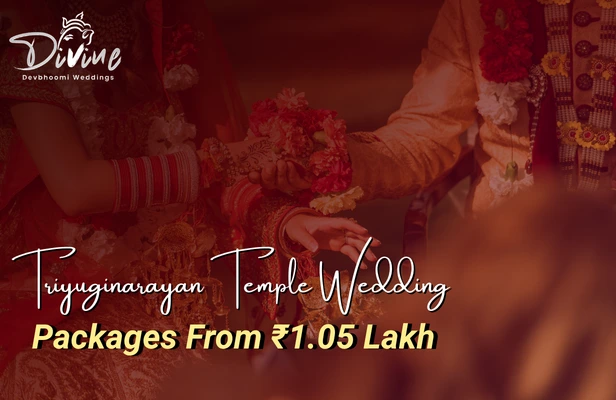
The temple ritual amount is commonly quoted at around ₹30,000. A simple wedding for two with stay and food usually starts near ₹50,000. A family wedding with 20–50 guests generally costs between ₹1.5 lakh and ₹4 lakh. Big resort weddings can cost much more. The final cost depends on guests, days, stay, décor, food and photography.
You need Aadhaar or passport of both bride and groom, age proof such as a birth certificate or school certificate, passport-size photographs and two witnesses with ID. If either person was married before, keep the divorce decree or death certificate of the earlier spouse. Requirements can change, so confirm before you travel.
The bride must be at least 18 and the groom must be at least 21, as per Indian marriage law. This is a legal rule and not only a temple rule.
No. The temple gives a receipt or slip that proves the ceremony took place. For a legal marriage certificate, you must register the marriage at the Sub-Registrar or local marriage registration office under the Hindu Marriage Act. The temple receipt works as supporting proof.
The ceremony follows traditional Hindu rituals, so it is mainly meant for Hindu couples. Foreign nationals or couples from different faiths should check with the temple committee before planning, and take legal advice. Couples who want a civil option can look at the Special Marriage Act.
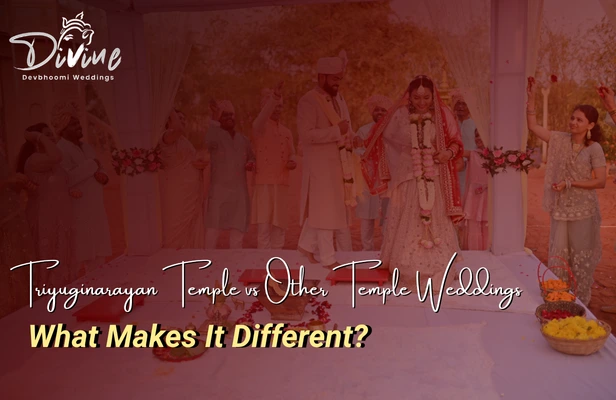
The space near the sacred fire is small, so only a limited number of people, often around 10 to 15, can stay close during the main rituals. A larger group of 20–50 or more guests can join the celebration at the stay location. Always confirm the current limit with the temple side.
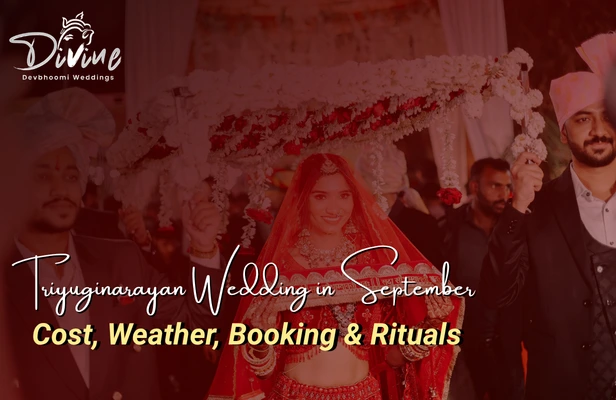
March to June and September to November are the best months because the weather is clear and comfortable. December to February is cold and can bring snow. July and August are risky due to heavy rain and landslides. A morning wedding slot is usually best.
Book at least 3 to 6 months in advance, and even earlier for peak months or special auspicious dates. The temple can host only a limited number of weddings each day, and nearby hotels and pandits also fill up quickly.
You can plan a very small ceremony on your own. But for 10 or more guests, elders, children or multi-day functions, a local planner saves time and stress because they arrange stay, food, priests, vehicles and last-minute changes. Always choose a planner who gives a written quote and clear terms.
A Triyuginarayan Temple wedding is not about showing off. It is about beginning your married life at a place that carries the story of Shiva and Parvati, with mountains around you and a sacred fire in front of you. It needs a little more planning than a normal wedding hall, because the place is remote, weather can change and temple rules must be followed. But with early booking, the right documents, realistic budgeting and good local support, it can be one of the calmest and most meaningful weddings you will ever have.
Start with three simple steps today: (1) choose your preferred month and a backup month, (2) decide your guest count, and (3) ask for a written quote from a trusted local planner or the temple committee.






















From pre-wedding celebrations to grand wedding days, we provide end-to-end services for all functions.
Copyright © 2024 | All Rights reserved by Divine Dev Bhoomi | Designed & Developed by Edtech Innovate Pvt. Ltd.